Facebook
 Google
 GitHub
 Linkedin

So have you estimated the payback time for the total cost and lifetime of your system?The plan is to double up on battery energy and solar panel power this summer.
EVs
- Thread starter crutschow
- Start date
Scroll to continue with content

Don't really care, it's play money amounts of money for a retirement hobby. Paid for house and cars with good retirement funds. I'm making a few systems for family living at the farm in Texas too. It's for energy security.So have you estimated the payback time for the total cost and lifetime of your system?

Took 3.0 years for my 7.2KW of panels on 6KW grid-tied inverter, -no batteries- to fully pay for itself exporting to the utility (at 100% credited energy fare !) meanwhile paying $0.0 monthly for power because I did buy, load, at the distributor, transport, unload, install everything alone with no contractor nor experts nor finance nor electricians involved, made my own anchorings to roof, no other mouths to feed. Installation can double or more the amortization cost/time of the system.
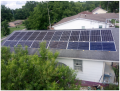
Last edited:

I don't mean to be snarky, but how do you go about reshingling that roof when it eventually needs it?Took 3.0 years for my 7.2KW of panels on 6KW grid-tied inverter, -no batteries- to fully pay for itself exporting to the utility (at 100% credited energy fare !) meanwhile paying $0.0 monthly for power because I did buy, load, at the distributor, transport, unload, install everything alone with no contractor nor experts nor finance nor electricians involved, made my own anchorings to roof, no other mouths to feed. Installation can double or more the amortization cost/time of the system.
View attachment 364691
Is a contractor going to know how to put that all back together? Or are you going to do it (again) yourself?
drjohsmith
- Joined Dec 13, 2021
- 1,650
For a European please .I don't mean to be snarky, but how do you go about reshingling that roof when it eventually needs it?
Is a contractor going to know how to put that all back together? Or are you going to do it (again) yourself?
Are shingles like tar / felt used on flat roofs but in squares ?
Do you have to replace them often ?
Why are they used ?
In Europe , these sort of things te.dcto be used on mam caves / garden sheds
Are they used in USA on main houses ?
Anyway , Im wondering how hot those panels get and the effect on the roofing,
Bitchamin felt would be rock solid after 20 years ..
I am unfamiliar with European roofing materials and practices, so I asked Grok to evaluate and answer your question. Hope this helps:For a European please .
Are shingles like tar / felt used on flat roofs but in squares ?
Do you have to replace them often ?
Why are they used ?
In Europe , these sort of things te.dcto be used on mam caves / garden sheds
Are they used in USA on main houses ?
Anyway , Im wondering how hot those panels get and the effect on the roofing,
Bitchamin felt would be rock solid after 20 years ..
Yes, I understand the question perfectly—it's from a European viewpoint comparing familiar bituminous felt roofing (common on sheds/garden buildings or flat roofs there) to the standard US "shingled" roof, especially when adding DIY solar panels on top. I'll break it down point by point, then address the solar heat concern directly.
What are these "shingles"? Are they like tar/felt on flat roofs but in squares?
Close, but not exactly.
- Asphalt shingles (also called composition or bitumen shingles) are made very similarly to the bitumen felt or modified bitumen membranes you see in Europe on flat roofs, sheds, or man caves/garden buildings. They use a fiberglass (or sometimes organic) mat soaked in asphalt (the "tar" or bitumen), then coated with protective mineral/ceramic granules on top for UV resistance and grip.
- They come as rectangular strips (usually 3-tab or more modern "architectural" styles), not true squares. You install them in overlapping rows on sloped roofs so water runs off.
- Flat roofs in the US (and Europe) don't use shingles at all—they use continuous rolled felt, torch-on bitumen, or modern membranes (TPO/EPDM) because shingles need slope to work. Shingles are strictly for pitched roofs.
In short: same family of materials as European bitumen felt, but cut and tabbed for sloped residential roofs.
Do you have to replace them often?
Not super often by roofing standards, but yes—they're not "forever" like European tile or slate.
- Typical lifespan: 20–30 years (3-tab shingles ~15–25 years; higher-quality architectural ones ~25–30+ years).
- Factors like climate, sun exposure, installation quality, and maintenance matter a lot. In hot/sunny areas they age faster; proper ventilation helps.
They're the cheapest, fastest, and most practical option for the US housing stock (mostly wood-frame houses with moderate slopes).
- Low cost, lightweight, easy for crews to install in a day.
- Wide range of colors/styles.
- Good enough weather protection in almost any US climate. They basically replaced wooden shakes historically because they're fire-resistant and scalable.
You're spot on:
- In Europe (especially UK), similar bitumen/felt-type materials are mostly for outbuildings, sheds, man caves, or flat roofs—not main houses. Main homes use clay/concrete tiles, slate, or metal that last 50–100+ years.
- In the USA, asphalt shingles are on ~80% of homes—it's the default for main houses, from suburbs to cities. Very rare to see tile/slate on everyday single-family homes unless it's a premium build.
This is the key question, and it's a good one. Bitumen felt on a shed can indeed stay "rock solid" after 20 years because it's often shaded or less exposed. Shingles on a house roof get hammered by sun/UV all day.
How hot do panels get? Solar panels commonly reach 50–65°C (122–149°F) on a sunny day (they run ~30–40°C hotter than ambient air). They can hit 70–80°C in extreme heat.
Effect on asphalt shingles underneath?
- No melting — shingles soften/melt at 150–260°C (300–500°F). Panels never get that hot.
- Heat trapping is the real issue — if panels are mounted flush (no air gap), they can bake the shingles underneath and accelerate aging.
- Proper installation (the fix) — DIY or pro, you must use racking with a 5–10 cm (2–4 inch) air gap underneath. This creates natural convection (chimney effect) that actually cools the roof. Studies show the shaded area under well-mounted panels can be 5°C cooler overall, plus the panels block direct UV, hail, snow, and debris. Many sources say this extends shingle life under the array.
DIY solar tip:
- Replace or inspect the roof before installing if it's already 10+ years old. Solar systems last 25–30+ years — you don't want to remove panels in 5–10 years to re-roof.
- Use proper flashing and seals around mounts to avoid leaks (biggest risk with any roof penetration).
- In hot climates, good airflow is extra important.
Bottom line for a European: US asphalt shingle roofs are basically upgraded versions of the bitumen felt you see on sheds — cheap and practical here, but they do wear out in 20–30 years. Adding DIY solar panels won't destroy them if you mount with airflow (standard practice). In fact, the shading often helps protect the shingles more than it hurts. Just treat the roof like you would any bitumen surface: keep it ventilated and don't trap heat.
BTW, some of us rich folk in the USA have clay or concrete tile roofs -- I've got concrete tile.For a European please .
Are shingles like tar / felt used on flat roofs but in squares ?
Do you have to replace them often ?
Why are they used ?
In Europe , these sort of things te.dcto be used on mam caves / garden sheds
Are they used in USA on main houses ?
Anyway , Im wondering how hot those panels get and the effect on the roofing,
Bitchamin felt would be rock solid after 20 years ..
Here in S. Florida, our insurance companies make us replace them every 20 to 25 years whether needed or not.
But, I'd hate to punch holes in my tile for solar panel racks -- it really is asking for trouble.
drjohsmith
- Joined Dec 13, 2021
- 1,650
thanks for that @joeyd999BTW, some of us rich folk in the USA have clay or concrete tile roofs -- I've got concrete tile.
Here in S. Florida, our insurance companies make us replace them every 20 to 25 years whether needed or not.
But, I'd hate to punch holes in my tile for solar panel racks -- it really is asking for trouble.
im amazed how different things are.
my panels certainly run hot on the few days we have air temp,of 40c, panels well near boiling . joys of black pv.
and yes, we have clay tiles, at about 60 degree slope , and a 80 mm air gap under, and you can see the chimney effect.
btw. big problem round here, pigions and squirels have learnt to nest under panels , thy never used to 15 years ago. big business now retro fitting mesh round edge to stop access.
regarding tiles , they are not drilled to fit panels.
there are brackets used, that fit up the tile , cables the same , fitted up the overlap in a sleve .
then long rail across roof fits to the brackets , and panels lock into the rail.
TBH, I have no idea how solar panels are installed here in S. Florida. Here's what Grok says; it's definitely not a DIY project:thanks for that @joeyd999
im amazed how different things are.
my panels certainly run hot on the few days we have air temp,of 40c, panels well near boiling . joys of black pv.
and yes, we have clay tiles, at about 60 degree slope , and a 80 mm air gap under, and you can see the chimney effect.
btw. big problem round here, pigions and squirels have learnt to nest under panels , thy never used to 15 years ago. big business now retro fitting mesh round edge to stop access.
regarding tiles , they are not drilled to fit panels.
there are brackets used, that fit up the tile , cables the same , fitted up the overlap in a sleve .
then long rail across roof fits to the brackets , and panels lock into the rail.
"How are solar panels attached to a barrel tile roof in south florida such that they meet hurricane building codes?"
Solar panels on barrel tile roofs (Spanish-style curved concrete or clay tiles, very common in South Florida) are attached using specialized racking systems that meet the strict Florida Building Code (FBC) requirements for High-Velocity Hurricane Zones (HVHZ). Parkland, FL (Broward County) falls under these rules, which reference ASCE 7 wind-load calculations for speeds often 170–180+ mph depending on risk category and exact location. The entire system—including racking, attachments, and flashing—must resist extreme uplift, and products typically need Florida Product Approval (FPA) or Miami-Dade County Notice of Acceptance (NOA).
This is not a DIY job—it requires a licensed roofing/solar contractor, building/electrical permits, and often professional engineer (PE)-stamped plans showing wind-load compliance. The roof must be structurally sound (inspect/re-roof if near end of life, as solar lasts 25–30+ years).
Main Attachment Methods for Barrel Tile Roofs
Barrel tiles are fragile and curved, so you cannot just drill through them or lay panels directly on top (they’d crack and leak). Two code-compliant approaches are used:
- Tile Hooks (S-Hooks or Profile-Specific Hooks) – Most common and cost-effective for concrete barrel tiles.
- Stainless-steel hooks (e.g., Unirac SOLARHOOKS for Spanish/curved profiles, or similar from IronRidge/QuickMount) are slid or placed under the lifted tile.
- The base is lagged (with structural screws/bolts) directly into the roof deck and rafters/trusses (not just sheathing—minimum 3" penetration recommended for uplift strength).
- Tiles are carefully replaced around the hook.
- Tile Replacement Mounts / FlashKit-Style Systems (Preferred for superior waterproofing).
- Specific barrel/Spanish-profile tiles are removed at each mount point.
- A universal base + profiled flashing (flat, S-curve, or W-shape to match barrel tiles) is installed in place of the tile.
- The base is anchored to the deck + rafters with lag bolts.
- Surrounding tiles interlock with the new flashing for a seamless look.
- Examples: Unirac FlashKit Tile Replacement (Miami-Dade NOA-approved for HVHZ), Quick Mount PV Tile Replacement, or IronRidge equivalents.
Here’s what the installed systems look like on barrel/Spanish tile roofs:

prostarsolar.net
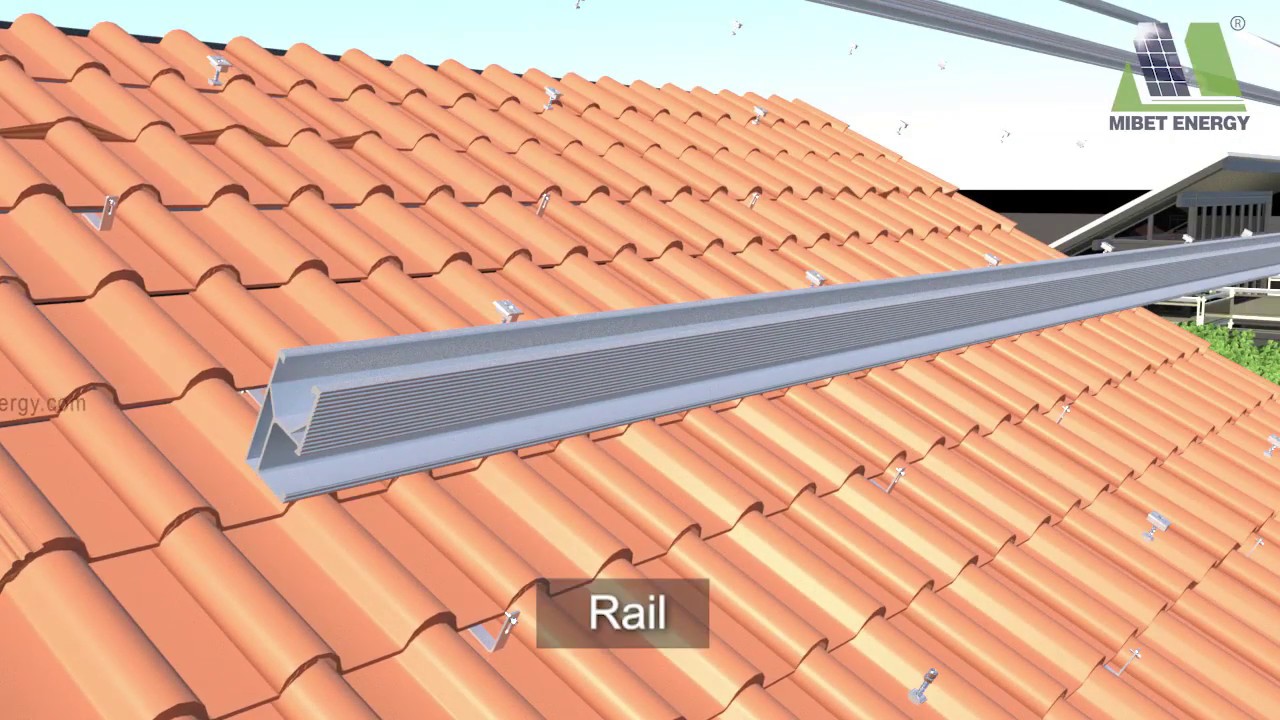
youtube.com
And a cross-section showing how the hook/rail attaches through the tile layer to the rafter:

wanhossolars.com
Customize Solar Tile Roof Structure,Wholesale
Critical Hurricane-Code Elements (Flashing, Anchoring & Wind Resistance)
- Structural anchoring: Every mount must tie into rafters/trusses with corrosion-resistant (stainless steel) lag screws/bolts. Attachment spacing and number of points are engineered denser in high-wind zones for uplift resistance.
- Flashing & waterproofing (biggest code focus to prevent leaks in driving rain): Follow the FRSA/TRI Florida High Wind Concrete and Clay Tile Installation Manual. Requires:
- Deck-level underlayment flashing (often 3-coursed on all four sides of the penetration).
- Tile-level counterflashing or collar.
- EPDM/butyl gaskets + compatible sealants.
- Racking & panels: Aluminum rails create an air gap under the panels (for cooling). The full racking system (e.g., Unirac SOLARMOUNT) must be tested/approved for HVHZ wind loads. Panels themselves stay attached; the system is designed so failures (rare) leave the roof watertight.
- Engineering & approvals: Plans calculate exact wind pressures per ASCE 7-16/22. Many installers use pre-approved systems with NOA to speed permitting.
- The FBC (Chapter 15) and HVHZ rules treat solar as a rooftop structure that must match or exceed the roof’s own wind rating.
- Post-hurricane inspections show properly installed systems perform well—panels don’t become projectiles when attached this way.
- Bonus: The shading from panels can actually help protect underlying tiles from UV and hail.
Bottom line: In South Florida, barrel-tile solar installs use either code-approved tile hooks or (better) tile-replacement flashings, all lagged into the structure with multi-layer flashing per the FRSA/TRI high-wind manual. It keeps the roof watertight and wind-resistant while complying with local HVHZ rules.
drjohsmith
- Joined Dec 13, 2021
- 1,650
IM getting to like this GOK,TBH, I have no idea how solar panels are installed here in S. Florida. Here's what Grok says; it's definitely not a DIY project:
"How are solar panels attached to a barrel tile roof in south florida such that they meet hurricane building codes?"
Solar panels on barrel tile roofs (Spanish-style curved concrete or clay tiles, very common in South Florida) are attached using specialized racking systems that meet the strict Florida Building Code (FBC) requirements for High-Velocity Hurricane Zones (HVHZ). Parkland, FL (Broward County) falls under these rules, which reference ASCE 7 wind-load calculations for speeds often 170–180+ mph depending on risk category and exact location. The entire system—including racking, attachments, and flashing—must resist extreme uplift, and products typically need Florida Product Approval (FPA) or Miami-Dade County Notice of Acceptance (NOA).
This is not a DIY job—it requires a licensed roofing/solar contractor, building/electrical permits, and often professional engineer (PE)-stamped plans showing wind-load compliance. The roof must be structurally sound (inspect/re-roof if near end of life, as solar lasts 25–30+ years).
Main Attachment Methods for Barrel Tile Roofs
Barrel tiles are fragile and curved, so you cannot just drill through them or lay panels directly on top (they’d crack and leak). Two code-compliant approaches are used:
- Tile Hooks (S-Hooks or Profile-Specific Hooks)– Most common and cost-effective for concrete barrel tiles.
- Stainless-steel hooks (e.g., Unirac SOLARHOOKS for Spanish/curved profiles, or similar from IronRidge/QuickMount) are slid or placed under the lifted tile.
- The base is lagged (with structural screws/bolts) directly into the roof deck and rafters/trusses (not just sheathing—minimum 3" penetration recommended for uplift strength).
- Tiles are carefully replaced around the hook.
- Tile Replacement Mounts / FlashKit-Style Systems(Preferred for superior waterproofing).
- Specific barrel/Spanish-profile tiles are removed at each mount point.
- A universal base + profiled flashing (flat, S-curve, or W-shape to match barrel tiles) is installed in place of the tile.
- The base is anchored to the deck + rafters with lag bolts.
- Surrounding tiles interlock with the new flashing for a seamless look.
- Examples: Unirac FlashKit Tile Replacement (Miami-Dade NOA-approved for HVHZ), Quick Mount PV Tile Replacement, or IronRidge equivalents.
Here’s what the installed systems look like on barrel/Spanish tile roofs:
prostarsolar.net
youtube.com
And a cross-section showing how the hook/rail attaches through the tile layer to the rafter:
wanhossolars.com
Customize Solar Tile Roof Structure,Wholesale
Critical Hurricane-Code Elements (Flashing, Anchoring & Wind Resistance)
Why This Meets South Florida Hurricane Codes
- Structural anchoring: Every mount must tie into rafters/trusses with corrosion-resistant (stainless steel) lag screws/bolts. Attachment spacing and number of points are engineered denser in high-wind zones for uplift resistance.
- Flashing & waterproofing (biggest code focus to prevent leaks in driving rain): Follow the FRSA/TRI Florida High Wind Concrete and Clay Tile Installation Manual. Requires:
- Deck-level underlayment flashing (often 3-coursed on all four sides of the penetration).
- Tile-level counterflashing or collar.
- EPDM/butyl gaskets + compatible sealants.
- Racking & panels: Aluminum rails create an air gap under the panels (for cooling). The full racking system (e.g., Unirac SOLARMOUNT) must be tested/approved for HVHZ wind loads. Panels themselves stay attached; the system is designed so failures (rare) leave the roof watertight.
- Engineering & approvals: Plans calculate exact wind pressures per ASCE 7-16/22. Many installers use pre-approved systems with NOA to speed permitting.
- The FBC (Chapter 15) and HVHZ rules treat solar as a rooftop structure that must match or exceed the roof’s own wind rating.
- Post-hurricane inspections show properly installed systems perform well—panels don’t become projectiles when attached this way.
- Bonus: The shading from panels can actually help protect underlying tiles from UV and hail.
Bottom line: In South Florida, barrel-tile solar installs use either code-approved tile hooks or (better) tile-replacement flashings, all lagged into the structure with multi-layer flashing per the FRSA/TRI high-wind manual. It keeps the roof watertight and wind-resistant while complying with local HVHZ rules.
yes they are the rails / mounting system we use in Europe, no holes drilled as you were worried about
Hi joey. I will be underground by then but if it had to be done tomorrow, Will remove the enchilada myself and rest it on the north slope until the south side is reshingled and screw them back as they are now. Contractors are money suckers that won´t do better work than myself. I made my own anchorings instead of the more-expensive-than-panels customary rails, another ripoff.I don't mean to be snarky, but how do you go about reshingling that roof when it eventually needs it?
Is a contractor going to know how to put that all back together? Or are you going to do it (again) yourself?
In U.S. shingles are some 2mm paperish mat material covered with coarse sand adhered to tar top coat and nailed on plywood.
---> https://www.lowes.com/pd/Owens-Corn...05-lin-ft-Black-Starter-Roof-Shingles/3341478
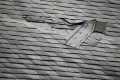
This image shows shingles applied on top of old material from lazy roofers after fast $$ instead of removing the old.
drjohsmith
- Joined Dec 13, 2021
- 1,650
fyi.Hi joey. I will be underground by then but if it had to be done tomorrow, Will remove the enchilada myself and rest it on the north slope until the south side is reshingled and screw them back as they are now. Contractors are money suckers that won´t do better work than myself. I made my own anchorings instead of the more-expensive-than-panels customary rails, another ripoff.
In U.S. shingles are some 2mm paperish mat material covered with coarse sand adhered to tar top coat and nailed on plywood.
---> https://www.lowes.com/pd/Owens-Corn...05-lin-ft-Black-Starter-Roof-Shingles/3341478
View attachment 365973
This image shows shingles applied on top of old material from lazy roofers after fast $$ instead of removing the old.
the rails are all but essential, the panels clip to then to allow expanion / contraction and isolation / reinforcments from the roof movments .
panels are strong, but brittle , the fixing system is criical to the long life of the system.

GetDeviceInfo
- Joined Jun 7, 2009
- 2,284
In our local market, the solar equation comes out to about a 10 year payback, based on average household usage. If you add an EV to the mix, the payback falls to 2 years, with substantial savings beyond. Our market is somewhat unique in that petro is high while hydro is low, but the trend is pointing toward local solar/EV.
How much vehicle travel-distance/year is that time based upon?If you add an EV to the mix, the payback falls to 2 years,

Interesting that their website makes no mention of using their motor design for EVs.