Facebook
 Google
 GitHub
 Linkedin

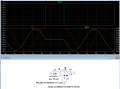
No.However at all times both voltage and current are present.
At the instant the voltage is maximum the current is zero and vice versa.
For example, if you opened the circuit at the instant the current is zero, then the inductor current will stay at zero, and the capacitor will stay charged at the maximum voltage, but when the switch is again closed, the oscillations will continue exactly from were they were suspended.
(LTspice sim of this below):
-------------------------------------------------------------------------------------------
So what's your point as related to the subject of this thread?If you apply a voltage from a source with zero source resistance to a capacitor without a resistor in series with it, and the capacitor itself has no resistance, how long does it take for the voltage drop across the capacitor to be equal to the applied voltage? According to the equation t = R*C, the charging should be instantaneous, but that implies that the current went from a maximum to zero current also instantaneously which is impossible.
Last edited: