Facebook
 Google
 GitHub
 Linkedin
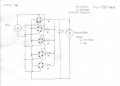
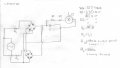
I'm trying to construct a viable power supply for copper electrolysis. My thinking is that current is my focus, so I have the circuit built to restrict and maintain currents with voltage as the "don't much care" factor. I have a standard household plug coming in with the "hot" going through a switch and then splitting into 5 rectifiers using 1N4007 Diodes. Each rectifier then runs through a 330Ohm 50W wire-round resistor then to a cap-bank rated to 175V 4400uF. The + then goes to the source-bar in the copper sulfate solution and the - to the target and then back through to the rectifiers. It seems pretty straightforward but something is just not right. The two diodes that feed from AC to + blew up on one of the rectifiers after a couple minutes, the resistors were getting hot enough to melt the plastic they were mounted on and the caps were reading 10V DC when going through the solution, but charging to the expected 170 without the tank on. My desire is to have about 2A of smooth DC current at 170V without overheating components or blowing up the circuit. Right now my draw through AC is 1.6A +-.2A.