Efficiency of battery over time

Thread Starter

varden

Joined Jul 11, 2016
38
Hi. I want to build a small circuit and use a lithium battery as a power source. The circuit will contain a small microprocessor, digital microphone and 4 small leds. Do I need to build voltage regulator even if voltage stays in the range that my components need? I mean, it says in the datasheet microprocessor can work between 2v-5v and so is the microphone. Can I just connect the battery to circuit and some voltage divider resistors for leds? Does the circuit work efficiently until battery drops to 2v ? The battery is a small rechargable li-ion battery.
 

dendad

Joined Feb 20, 2016
4,639
You can get away with no voltage regulator in may instances. As long as you do not need the supply as a fixed reference voltage for ADC/DAC or similar.
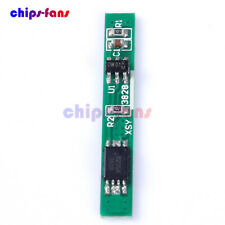
One thing I would add is a Li-ion battery charge/discharge controller to protect the battery. Ebay has small boards for less then $2 each. Get the one that has discharge protection too as some are only chargers.
 

joeyd999

Joined Jun 6, 2011
6,305
Hi. I want to build a small circuit and use a lithium battery as a power source. The circuit will contain a small microprocessor, digital microphone and 4 small leds. Do I need to build voltage regulator even if voltage stays in the range that my components need? I mean, it says in the datasheet microprocessor can work between 2v-5v and so is the microphone. Can I just connect the battery to circuit and some voltage divider resistors for leds? Does the circuit work efficiently until battery drops to 2v ? The battery is a small rechargable li-ion battery.
As long as you stay within the "Standard Operating Conditions" of all components in question, yes, you can do this. Do not rely on "Absolute Maximum Ratings".

Your LEDs will dim as the battery voltage drops. One of my solutions -- which I have practiced in the past:

Select a current limiting resistance that gives you the desired LED current at the lowest operating battery voltage. Use a PWM to reduce LED brightness at the higher voltages. This requires continuously sampling the battery voltage and computing a PWM value that simulates a constant average power to the LED at higher battery voltages. This can be done via lookup table.
 

oz93666

Joined Sep 7, 2010
742
Normally lithium ion are not discharged below around 3 V ... 95% of their energy has been delivered by then , and going lower adversely effects life...

You should have a BMS (battery management system ) for your cell $1, ebay

This will switch it off at 3V , allow you to charge it no higher than the required voltage of 4,2V , and protect it from too high discharge current ....

That's all you need , keep the BMS permanently connected to the battery , and the battery connected to your device
 
Top