Edison is dead and now so is his Lightbulb!

nsaspook

Joined Aug 27, 2009
16,450
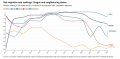
I suspect that the assertion that crime is lower without streetlights is less about criminals staying at home than about potential victims staying at home.
The sad part is that's very true but it quickly leads to the destruction of city nightlife, businesses, the tax base for things like schools and basic services and, eventually, the basic social fabric unwinds once the perception of risk makes people stay home. That negative risk assessment has destroyed a once vibrant culture in those parts of Portland as young people adjust and move to places that are perceived as safe.

The other at risk areas then become a playground for open criminality, vagrancy, open drug use that starts a 'Doom Loop', where the social Momentum is expended in destruction.

"Nature Abhors a Vacuum"
1730309804426.png
If potential victims are not there then something else will be there. Bright lights are a cheap disinfectant.
 

schmitt trigger

Joined Jul 12, 2010
2,180
Back in topic, I’ll share a photo of my pride and joy, a 150 watt incandescent bulb. 29 years old, it still lights up.
It’s so old that the lettering has vanished, with the exception of the GE logo.

Not used continuously, no. It was in an attic and only got turned on when I would go there, and only for a few minutes.

IMG_0367.jpeg
 

MisterBill2

Joined Jan 23, 2018
28,062
Only thing that is constant in life is change.
I am the one who considers the secondary result to those who only focus on their idea of the immediate fix, not realizing the secondary results. And those secondary results are what we get stuck with. Sometimes not so very good as we might wish.

"There are those who find solutions to the problem, and then there are those who only find problems with the solution."
 

nsaspook

Joined Aug 27, 2009
16,450
Back in topic, I’ll share a photo of my pride and joy, a 150 watt incandescent bulb. 29 years old, it still lights up.
It’s so old that the lettering has vanished, with the exception of the GE logo.

Not used continuously, no. It was in an attic and only got turned on when I would go there, and only for a few minutes.
I have one of the old 300W utility bulbs in my attic, It was there when I bought the house. The heat is nice to warm your hands in winter if I need to go up there and it actually works instantly instead of flickering when it's near zero outside.
 

MisterBill2

Joined Jan 23, 2018
28,062
Consider that the standard incandescent light bulb does not mind a whole lot of noise or distortion or under voltage on the AC supply. AND consider that it will also work well on DC of either polarity. Also, consider that the supporting system is generally an on/off switch. No complex electronics that can fail at the very worst time.
 

MisterBill2

Joined Jan 23, 2018
28,062
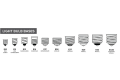
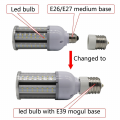
I had to replace an LED bulb with a mogul base that was in a walk in commercial cooler. Why use a mogul base, except to try and force the user to pay a lot more for the replacement? So a normal LED bulb with a standard base and a $6 adapter.
 

joeyd999

Joined Jun 6, 2011
6,442
Once upon a time, one only need rely on the MTBF of a single tungsten filament.

Now, the MTBFs of dozens of components need to be stacked -- and somehow the answer is 14 years?

It comes down to math: the probability of non-failure of a device is the product of the probabilities of non-failure of each component in the device.

And it comes down to money: the components with the highest probability of non-failure are expensive.

I think one LED bulb might last 14 years. But not most of them.
 

schmitt trigger

Joined Jul 12, 2010
2,180
Like everything else, it all depends on a robust design and quality manufacturing.
Anecdotal evidence;
When I moved to my actual home back in 10/2013, I decided to install energy saving lights everywhere.
LED lamps were quite expensive then, so I ended up with a mix of CFL and LED lamps. The latter I chose the lowest cost ones with the exception of three lamps located on the main entrance door. I chose some Toshiba lamps, still made in Japan and significantly more expensive.
These lamps are automatically activated by a photocell, and thus have turned on every single night for the last 11+ years. And exposed to the elements.
Yet those are the only lamps that I haven’t had to replace, with the exception of the guest room which is seldom used.

I know, it is anecdotal evidence.
 

Elektrishun

Joined Dec 27, 2016
66
Raise your hand if, in the early days of retro-fit LEDs, you put one in a totally enclosed fixture, have it fail within 3-6 months, and then read on the box "not intended for totally enclosed fixtures".
 

nsaspook

Joined Aug 27, 2009
16,450
Yes
After putting one in a totally enclosed fixture...
That's the problem, it should be the default that any off the shelf LED bulb should work in any normal residential lighting fixture. Saying they shouldn't be installed in common fixtures is a dodge to make cheap junk that won't last under the same normal use conditions as the filament bulbs.
 

cmartinez

Joined Jan 17, 2007
8,838
That's the problem, it should be the default that any off the shelf LED bulb should work in any normal residential lighting fixture. Saying they shouldn't be installed in common fixtures is a dodge to make cheap junk that won't last under the same normal use conditions as the filament bulbs.
The box clearly says that said LEDs should be installed freely hanging from a wire at least 1.5 meters away from the ceiling so that normal convection, with the aid of natural outdoors ventilation, will cool its internal PWM switching power supply. Provided it IS BEING USED at a location at least at 60 degrees latitude north of the equator of a country not belonging to the European Union that has a 178VDC standard double filtered and regulated mains electricity supply.

But said instructions are in Klingon.

Good luck, Ethan.
 

Elektrishun

Joined Dec 27, 2016
66
That's the problem, it should be the default that any off the shelf LED bulb should work in any normal residential lighting fixture. Saying they shouldn't be installed in common fixtures is a dodge to make cheap junk that won't last under the same normal use conditions as the filament bulbs.
The manufacturers should have done a better job of making that detail a little more obvious. Likely millions of incandescent bulbs were replaced with retro-fit LEDs in enclosed fixtures only to fail due to excessive heat.
On the other hand, I have retro-fit LEDs with massive heat sinks around the base in enclosed outdoor fixtures that have lasted almost 10 years. But they were more expensive than the standard retro-fit LED.
 
Last edited:

Ya’akov

Joined Jan 27, 2019
10,278
The idea that a given lamp (technically, “bulbs” are just the envelope around the bright part(s) has particular usage requirements is not new. Many people found out the hard way that ignoring the “BURN BASE DOWN” label on incandescent lamps (90% of consumer types) means the high hat fixtures in their 15 foot ceilings will be populated with lamp bases that can be very (very) hard to remove thanks to having to work in the dark, and not having the correct tool causing the process of attempting to remove them make them even more determined to stay well in.

Yes, there are BURN BASE UP (or down) lamps, but most folks don’t even know that might need them. Also, in general, lamps expect to take advantage of rising heat as part of the thermal management but if you burn them base up you are not only eliminate that mechanism, you actually turn it into a weapon of destruction. LED lamps will last a lot longer if the power supply—in the bottom—isn’t constantly heated causing the electrolytic caps to dry out quickly.

The other mechanism of heat death in LED lamps is simply overdriving the LEDs, often to surprising levels. This kills the diodes and burns the phosphor. One of Big Clive‘s* staples is showing the resistor(s) needing replacement to drop the current to the LEDs, reducing the heat (and light) output. While this does make the lamps less bright, you are better of using more lamps that are being properly driven than one that is overdriven. The really good LED lamps use more LEDs driven at lower current to achieve their rated output.

Back when I was doing stage and commercial lighting goop one of the “secrets” of the trade was using the right order code when purchasing new lamps. We would order the 130V version of any lamp. These would have reduced output compared to 120V versions with thinner, lower resistance filaments. In practice, using the 130V lamps gave us as much as 10x life because as the lamp is burned, the filament thins, and so most failures happen as power up when the inrush current of the tungsten filament is prodigious. The fail with a pop and a flash, often tungsten plating the inside of the bulb.

The 130V lamps would tolerate a lot more of the mechanical shock of turning on. This could be enhanced by ordering RD (Rough Duty) lamps as well. These were designed to be used in portable fixtures like trouble lights and so had five supports for for the filament which was formed into a small semicircle instead of the two (or three) points in an standard lamp which was in a straight line and much more vulnerable to mechanical shock.

The 130V incandescent is the moral equivalent of the non-overdriven LED lamp. By the way, people would often complain about the lack of correspondence between the lifetimes listed on the packaging and the ones they saw in practice. The truth is, if you keep an incandescent lamp burning continuously they seem to last indefinitely. It’s the powering on that kills them, and LED lamps seem to have the same trouble. I have had LED lamps that burned for years (with some reduction in output) that were killed by being turned off—then back on.

*This is an example video, covering a typical case. If you don’t know Big Clive’s YouTube channel and you are interested in LED bulbs—and thematically related topics—it is well worth checking it out. He is one of the few YouTube creators I support on Patreon with a couple of bucks a month because I believe he deserves to be able to make more of his content. The link above is to the video below.

 
Top