Eddy Current Retarder Help

Status
Not open for further replies.
Hi Everyone,
Looking for some assistance driving an eddycurrent retarder.
My Skills - I have some basic soldering skills and some limited understanding of circuits and their components. Enough to build a timer circuit with Resistor/capacitor and understand basic logic chips jk flipflop ..etc Not enough to build a circuit that uses them. I can write software in many languages.

Essentially I have a very old Dyno for tuning race cars. It has a retarder in it.
This is connected to a slotted disc (12 slots read by optical circuit (Sensor).
This connects to a torsion spring.
This connects to another slotted disc and sensor.
This connects to the roller that the wheels go on.

The current circuit boards used a lot of old chips (1980's) that would measure the rotational speed of 1 disc. It would use the jk flipflop chips to determine the difference in position between the 2 discs. With that information is calculates speed and torque. It feeds a speed signal to a second board that drives the retarder to limit the speed in a desired range.

All the boards are fried so I have purchased an arduino and programmed it. I calculate speed and load based on the input sensors and send a PWM signal output with my desired load for the retarder. This is where I need help -

How do I drive the retarder with my PWM signal? I have approximately 40v coming from the existing transformer. As per the attached pic there is a small circuit board that sends 2 signals to 2 plates (On the left) each plate has
diode and a triac/SCR 2N3898. The SCR connector goes back to the main driver board on the SKA connector. The 2 signals are fed from the 2 resistors just to the right of that and the source of the resistors is the same rail.

So I hope that's enough for someone to understand what's going on. I have purchased one of these in the hopes that it might be what I need. I basically need to know how to take my PWM output from my arduino and drive the retarder through the small circuit board or directly to the plates. I can wire, I can solder. I just can't design the circuit.

Thankyou for any advice. An entire club of race car drivers would sincerely appreciate your help.
BTW we are only driving 1 coil on the retarder.
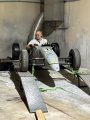
Hi, I just joined this site and also recently acquired a Vane VP 930 unit. Its missing the hand control and hasnt been used in years. Needs a lot of work, tracing cut off / broken wires etc so will be on same path as you so happy to help if possible and see your progress. I also have a Crypton Triangle water brake rolling road dyno to up grade to electronic control. Regards Richard.
 

Thread Starter

Rocketman12

Joined Apr 20, 2022
13
Update -
Sorry everyone for the long delay. Had to pack up everything and move buildings twice. Have now pulled it back out of storage and can provide an update.

I have removed all of the electronic internals from the Dyno. Leaving the Retarder, The cooling fan and the 2 Light Pickups on the slotted rotating discs.

I have built an arduino project that connects to the light pickups and reads one as speed and the other as load. (Load values yet to be tested and calibrated)

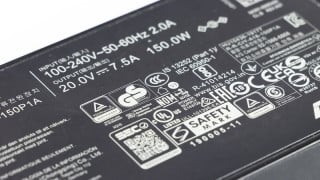
I have purchased a 24v power supply on Ali Express to operate the retarder.
1500w Switching Power Supply With Displayer 0-24v 36v 48v 60v 70v 80v 90v 110v 220v 300v 350v Adjustable Dc Voltage& Current - Switching Power Supply - AliExpress
I have tested this with the retarder using 24v and the adjustable trim pot for Amps.

It works correctly. It also has a PWM input to control the AMPS it supplies. My DTEC dyno controller has a PWM output option to control a power supply, so I have contacted the vendor to get one. If it is not available I will write a PID controller that can provide ramping through the arduino.

In short, your vane VP 930 will be usable as long as the retarder and the 2 light sensors still work. The rest of the electronics can be discarded if they are broken. Once complete I will supply pictures, instructions and code for the rest.
 

MisterBill2

Joined Jan 23, 2018
27,543
Glad to have you back!
Using a remotely programmed power supply should be much simpler than creating a new supply and control circuit. I lookforward to hearing about the final results.
 

Thread Starter

Rocketman12

Joined Apr 20, 2022
13
Update -

Thanks everyone for your input.

I now have a running Dyno. I was able to complete the final stages this week after a good friend install the extraction vents for exhaust. It's not perfect yet. I'm still tuning my hold speed, my ramp and the dyno software calibration.

So in the end I did the following -

  • Purchased the power supply as per my previous update
  • Removed all dyno internals (contents of the big black box)]
  • Installed the power supply in it's place. Connected to 240v and to the 24v retarder
  • Created a small box with an arduino mega
  • Connected pin 5 arduino to the pwm input on the power supply.
  • Connected the 2 x light sensors on the dyno to pins 2 and 3 arduino
  • Connected pin 6 to the Dynertia Load Cell input
  • Connected pin 7 to the Dynertia user output (Turns on at start of run and off at end)

I then wrote a program to control everything.
  • Reads the 2 light sensors to determine speed and torque.
  • Applies a PID algorithm to hold the vehicle at a set speed using the PWM output signal to the retarder power supply.
  • Waits for in input on pin 7 from Dynertia to start ramping over a specified time. (Reduces load gradually over that time.)
  • Continuously sends the calculated torque figure to the Dynertia system

and Bingo that's it.

As to my original question "How to drive the retarder". It's simple. An amperage controlled 24v power supply.

OnDyno.jpg
 

MisterBill2

Joined Jan 23, 2018
27,543
If the question, which I am guessing at, is how does the dynamic brake for the slot-car work, the answer is that it puts a variable load on the slot-car motor, which is acting like a generator when it is not being powered. And that variable load requires torque to spin it, taking mechanical energy in from the car motion and converting it into heat energy in the braking circuit. Much different from the eddy current brake for the race car dyno.
If that was not your question, then I guessed wrong. But that is how the circuit works as a brake.
 

LowQCab

Joined Nov 6, 2012
5,101
OK, I'm confused .........
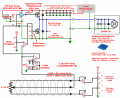
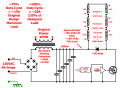
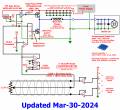
The Schematic attached is one I made for controlling a Slot-Car,
but You are working on a Chassis-Dyno in this Thread ?????
( which I also created a Schematic for, seems like years ago, but I still have an original copy ).

After looking this Slot-Car-Circuit over again, after having almost forgotten it,
it occurs to me that it may need one additional Component,
a Choke between the N-FET and the the rather large Capacitors installed inside the Car.
It's not a good plan to have that N-FET slamming directly into those Capacitors with
almost zero-Inductance to smooth things out.

As far as "how it works",
it might be better to start-off with telling me how You think it works,
or whether You understand any of it at all.

Is there a particular part of the Project that doesn't make sense to You ?

And which Project are we talking about anyway ????
.
.
.
Dyno Retarder .png
.
Updated Schematic for Slot-Car-Control
Slot Car Control .png
 

MisterBill2

Joined Jan 23, 2018
27,543
The circuit for the dyno eddy current brake brings back the recollection of how I was attacked by another for suggesting that all four coils in series would produce the same braking at half the current and they would be easier to control. Glad to see that it has been working well!!
As for the slot-car brakes, I explained dynamic braking, but not the circuit that controlled it. Sorry about that omission.
 

amoni

Joined Oct 15, 2024
1
Update -

Thanks everyone for your input.

I now have a running Dyno. I was able to complete the final stages this week after a good friend install the extraction vents for exhaust. It's not perfect yet. I'm still tuning my hold speed, my ramp and the dyno software calibration.

So in the end I did the following -

  • Purchased the power supply as per my previous update
  • Removed all dyno internals (contents of the big black box)]
  • Installed the power supply in it's place. Connected to 240v and to the 24v retarder
  • Created a small box with an arduino mega
  • Connected pin 5 arduino to the pwm input on the power supply.
  • Connected the 2 x light sensors on the dyno to pins 2 and 3 arduino
  • Connected pin 6 to the Dynertia Load Cell input
  • Connected pin 7 to the Dynertia user output (Turns on at start of run and off at end)

I then wrote a program to control everything.
  • Reads the 2 light sensors to determine speed and torque.
  • Applies a PID algorithm to hold the vehicle at a set speed using the PWM output signal to the retarder power supply.
  • Waits for in input on pin 7 from Dynertia to start ramping over a specified time. (Reduces load gradually over that time.)
  • Continuously sends the calculated torque figure to the Dynertia system

and Bingo that's it.

As to my original question "How to drive the retarder". It's simple. An amperage controlled 24v power supply.

View attachment 302611
I know it’s been a while but, do you still have the code? Or even a block diagram of the program?
How do you calculate the torque and hp of the motor being tested?
 
Status
Not open for further replies.
Top