DS3231 module schematic question

Thread Starter

farzad latifeh

Joined Oct 3, 2017
99
I don't know if I'm posting it in the right place or not, so, sorry about that, but there is a question regarding the DS3231 module,
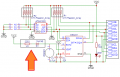
why there is a connection between VCC and VBAT using a 220 Ohm resistor and the 1N4148 Diode, why is that so, what if someone drop those parts for the sake of being too smart :), actually I was curious if the VCC get the positive pole of the battery charged, because the coin cell batteries usually 2032 are 3 volts while the VCC is 3.3, if we take the voltage drop of the resistor and diode in the calculation too, it would be less than 3 volts, so what is happening in there? help me to find out please.
DS3231.png
 

ericgibbs

Joined Jan 29, 2010
21,412
Hi farzad,
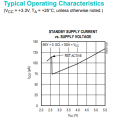
The DS3231 draws approx 80uA at 3.3V.
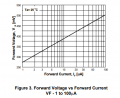
The forward drop at this low diode leakage current is 0.5V.
If the battery voltage falls to 2.8V, the 220R and Diode will conduct and contribute to the DS3231 operating current.
The DS3231 will work OK with a 2.8V supply.

I would recommend you fit those two components, when you consider the small cost and the confidence that the RTC will continue to run if the battery starts to fail.
E
EG57_ 2006.pngEG57_ 2007.png
 

Thread Starter

farzad latifeh

Joined Oct 3, 2017
99
Hi farzad,
The DS3231 draws approx 80uA at 3.3V.
The forward drop at this low diode leakage current is 0.5V.
If the battery voltage falls to 2.8V, the 220R and Diode will conduct and contribute to the DS3231 operating current.
The DS3231 will work OK with a 2.8V supply.

I would recommend you fit those two components, when you consider the small cost and the confidence that the RTC will continue to run if the battery starts to fail.
E
View attachment 328754View attachment 328755
thanks ericgibbs, you saved the day for sure,
 

ronsimpson

Joined Oct 7, 2019
4,658
I looked at a number of schematics with the DS3231. Most do not have the R&D. Some do. Three are different versions of R&D.
Last time I used a higher value of resistor. My idea was to charge the battery. (I know, non-rechargeable battery) If you top off the battery it lasts longer.
I am not saying it is a good idea, just I did it.
 

Jon Chandler

Joined Jun 12, 2008
1,565
I would recommend you fit those two components, when you consider the small cost and the confidence that the RTC will continue to run if the battery starts to fail.
Are you sure about that? As Ron said, a CR2032 is not rechargeable. It won't like that.

The diode and resistor are shown for a rechargeable battery.
 

ronsimpson

Joined Oct 7, 2019
4,658
The diode and resistor are shown for a rechargeable battery.
Agree.
I was using a non-rechargeable battery and giving it 10uA or (don't remember) some small, trickle charge. From much testing most batteries have the ability to recharge if they are not allowed to discharge all the way.
I tested 9V batteries. We used them to the 75% level and recharged them 52 times before we replaced them. At replacement they still held 50% power. My friend has copper top 1.5D batteries. He took 10% out every day and put it back in. At 100 cycles he stopped.
 

ericgibbs

Joined Jan 29, 2010
21,412
The diode and resistor are shown for a rechargeable battery.
Are you sure about that? As Ron said, a CR2032 is not rechargeable. It won't like that.
hi Jon,
Yes I am sure about that, those components also keep a regular CR2032 'topped up',
I have a number of DS3231 operating using this circuit for a number of years, with no problems.

What experiences in using this method do you have in using the DS3231 module in this way, justifies you claiming, It won't like that. What ever that means????

This same issue was raised a number of years ago, on AAC, and the consensus was, it is acceptable.

Many non-rechargeable battery types can be recharged, albeit not back to full capacity, but usable.

E
 

Jon Chandler

Joined Jun 12, 2008
1,565
CR2032 manufacturers state that these lithium batteries are not rechargeable.

Argue with that if you wish, but it seems somewhat pointless as a CR2032 will keep a DS3231 running for many years.
 

ericgibbs

Joined Jan 29, 2010
21,412
Hi,

No one has said the battery would not run for many years, so why have you fallen back on that point?

It is statements like this: It won't like that... that I have an issue with.

Have you carried out any empirical testing of a regular CR2032 connected in this way in a DS3231 module, using a diode and resistor??

E
 

Jon Chandler

Joined Jun 12, 2008
1,565
It is statements like this: It won't like that... that I have an issue with.
IT in this case is the lithium battery. Sure, non-rechargeable batteries can be recharged against manufacturers warning, but the potential for damage through leakage or worse outweighs the benefits of extending life from years to more years.

I do have a number of digital clocks I've made using DS3231s with CR2032 backup and I love them. Power goes out....and the time is right when the power comes back on. Since I don't think I have replaced any of the batteries in the ~7 years they have been in use, I'm not too worried about the cost of replacement batteries.

Just a note – the DS3231 keeps time to within a minute or two a year.
 

ericgibbs

Joined Jan 29, 2010
21,412
Hi,
We are not discussing the life or cost of these batteries.

So you are now saying that you have no personal experience of batteries going 'bad' when using this diode/resistor method with a regular CR2032/DS3231 module.

I also have had a number of these modules operating for a number of years, no signs of
damage through leakage or worse.

E
 

ronsimpson

Joined Oct 7, 2019
4,658
So you are now saying that you have no personal experience of batteries going 'bad' when using this diode/resistor method with a regular CR2032/DS3231 module.
I have no experience with that exact circuit, using CR2032/DS3231with 220 ohm and diode. I do have experience with a much higher resistor and diode. I have used almost the same circuit with AA and AAA batteries using "trickle charge".
 

ericgibbs

Joined Jan 29, 2010
21,412
Hi Ron,
I have a RTC module in front of me, it has a 201 SMT resistor and a IN914 diode, connected to a Varta 2032 coin cell.

If required, I will post a photo-shot.

E
 

cho

Joined Dec 24, 2015
7
Diode and resistor is only used for rechargable battery. If its non rechargeable battery remove diode and resistor.
 

ericgibbs

Joined Jan 29, 2010
21,412
Diode and resistor is only used for rechargable battery. If its non rechargeable battery remove diode and resistor.
hi cho,
Could you say why you think it is necessary to remove those components?
When the modules work without any problems, with regular CR2023 batteries.

E
Update:
Hi cho,
I think I can see where the difference of opinion has arisen over the diode and resistor, people have not read what the TS posted, on which I based my reply.

TS Quote:
because the coin cell batteries usually 2032 are 3 volts while the VCC is 3.3, if we take the voltage drop of the resistor and diode in the calculation too,
it would be less than 3 volts,

No one is suggesting that you would use a Vcc of 5V, and have diode/resistor in place.
Otherwise, you would overcharge the battery.
 
Last edited:

Hemi

Joined Mar 17, 2012
34
I believe the diode serves two purposes. It's used to prevent the CR2032 from attempting to supply power back to VCC and drop the voltage below the nominal voltage of a CR2032 to prevent charging when the CR2032 is fully charged. If you're worried about charging the coin cell, put a second diode out of the CR2032 at pin 2.

If the DS3231 is the same as the DS3232 I've used many times, the RTC will function just fine when VBAT isn't connected as it's only used to keep time in the event VCC power fails.
 

JohnSan

Joined Sep 15, 2018
124
That module can use either a CR2032 battery or Lir2032 (rechargeable) battery.
U4 & D1 fitted will provide charging for a Lir2032.
If a CR2032 is being used, technically, it should have either U4 or D1 snipped / disconnected.
CR2032 is around 210mAh
Lir2032 is around 40mAh

It's hardly worth using a rechargable since a CR2032 should last 10years+
 
Top