Dropping current for electrolysis cell

Danko

Joined Nov 22, 2017
2,169
The initial post suggested a possible range of 10-50mA:
Well, then
4-100mA Current Source Generator Panel Mount Meter
$32.68
BRT 100mAG-HM 4-100mA current source generator panel mount meter can generate 3.3mA to 102mA current signal, and display output signal accurately in LED screen. Its output is adjustable through high accuracy potentiometer adjusting knob. Its power supply required is 9-30VDC wide range. Small size, simplified design, pluggable wiring terminal blocks and standard panel meter shell design make developers easy to do integration and DIY.
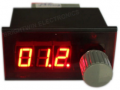
mA2.PNG
 

ebeowulf17

Joined Aug 12, 2014
3,307
Well, then
4-100mA Current Source Generator Panel Mount Meter
$32.68
BRT 100mAG-HM 4-100mA current source generator panel mount meter can generate 3.3mA to 102mA current signal, and display output signal accurately in LED screen. Its output is adjustable through high accuracy potentiometer adjusting knob. Its power supply required is 9-30VDC wide range. Small size, simplified design, pluggable wiring terminal blocks and standard panel meter shell design make developers easy to do integration and DIY.

View attachment 162784
Sorry - my post was meant to answer the dragon's complaints about current ranges in my previous post, not to criticize your recommendation.

Certainly looks like there are easy current limiting options out there though!
 

ebp

Joined Feb 8, 2018
2,332
I would consider an LM317-based circuit, if something is to be built rather than purchased, to be a very good choice for the application. It is simple, performs well and is inexpensive. The minimum current for guaranteed regulation is 10 mA and the minimum input to output voltage differential must be maintained, but other than that I think it has a very high benefits to complexity+cost ratio.

Whenever any type of experimental work is being done it is usually highly advantageous from the perspective of gathering useful data to be able to eliminate as many variables as possible. Since current is a key parameter in the application, being able to have some confidence when the crystals are examined throughout the process or at the end that the current used to grow them was what it was thought to be and not just some vague approximation would seem to me to be well worth a little extra complexity.
 

Danko

Joined Nov 22, 2017
2,169
Since current is a key parameter in the application, being able to have some confidence when the crystals are examined throughout the process or at the end that the current used to grow them was what it was thought to be and not just some vague approximation would seem to me to be well worth a little extra complexity.
ebp, I fully agree with you!
And more - if my everyday work is soldering, I never will build soldering iron, I will buy it.
So, for crystal grow hobbyist much cheaper, faster and reliable is to get commercial current source.
 
Last edited:

oz93666

Joined Sep 7, 2010
742
I would consider an LM317-based circuit, if something is to be built rather than purchased, to be a very good choice for the application. It is simple, performs well and is inexpensive. The minimum current for guaranteed regulation is 10 mA and the minimum input to output voltage differential must be maintained, but other than that I think it has a very high benefits to complexity+cost ratio.

Whenever any type of experimental work is being done it is usually highly advantageous from the perspective of gathering useful data to be able to eliminate as many variables as possible. Since current is a key parameter in the application, being able to have some confidence when the crystals are examined throughout the process or at the end that the current used to grow them was what it was thought to be and not just some vague approximation would seem to me to be well worth a little extra complexity.
I think you are going overboard here ... I suspect this is just a lad who want's to experiment a bit ... resisters in series with a power source will keep current very steady ...

If TS was making a life time career of this , then I wouldn't argue against obtaining an accurate current source ...but most people will try a few experiments then move on to something else...

To clarify, the aim should not be to keep the current constant ... it's about current per surface area of crystal .... So as the crystal doubles it's surface area , the current can double without interfering too much with growth pattern (causing smaller offshoot crystals to appear) ... how on earth can you accurately tell when the crystal has doubled it's surface area .....

There are so many variables , solution concentration , surface area of copper anode which is decreasing with time , distance between anode and cathode ...

Using resisters is perfectly fine considering the operation takes weeks or months. Increase the current slightly, as the days go by , by reducing the resisters ....

More of a priority is to get a dedicated ammeter like this one


This is the result from mid range currents ....


By cutting off one of the larger crystals in that cluster , re mounting it and using low currents , it should be possible to grow one single crystal as large as you want .
 
Last edited:

ArakelTheDragon

Joined Nov 18, 2016
1,366
The initial post suggested a possible range of 10-50mA:


So I gave basic examples with standard value resistors that would cover most of that range (based on the 1.2V reference value used in the datasheet I was looking at):


If you want 20mA, that's fine, choose a different resistor accordingly.


And this may all be moot, because the people in this thread who actually have experience doing this stuff seem to think constant current sources are overkill, and that an appropriate voltage with some resistors works great. I defer to those with more experience in the field.
Your idea is good. I also do not know anything about growing crystals. But if I have to guess I'd say a voltage and current regulator circuit with LM317 would be good. He can use pots to be able to change the values if he wants to and if possible he can test on 2 experiments - 1 with a lower and 1 with a higher current.
 
Top