DIY inverter for adjustable output frequency for TIG welding. (60Hz to up to 400Hz)

Thread Starter

Ric Whatley

Joined Sep 25, 2024
12
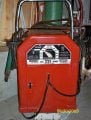
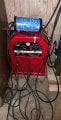
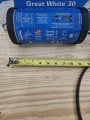
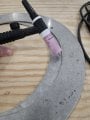
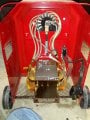
Hi, I'm new I don't know how to start a new thread but this might be the place. I didn't see a category that really matched my project. I hope I'm doing this right. I want to build a DIY inverter for adjustable output frequency for TIG welding. (60Hz to up to 400Hz) I have a Lincoln AC 225 ARC Welder machine. It runs on 220 volts. Adjusting the output frequency allows for fine tuning of the welding process. I don't know what information is needed to answer my questions but I'll do my best to provide it if someone can help. There's not much to this machine. On, off and amperage up and down. I also have an Arc Pig arc stabilizer that that allows this machine to weld aluminum. It's basically like a tesla coil and spark plug that keeps restarting the welding arc. It has electronics and is suposed to adapt to input voltages.

Arc Pig manual

https://www.arcpig.com/arc_pig_user_manual.pdf

How it works

https://www.arcpig.com/howitworks.html#:~:text=The Pig is a Tesla,called HF, for High Frequency.

https://www.arcpig.com/specs.html

I have no idea where to start with the inverter. I read in one of the comments that someone needed to know what shape of wave. Square wave welders are common. I couldn't tell you what this is.

There is a place where someone did modifications to one of these machines but I don't think he did what I want to do.

https://www.hildstrom.com/projects/2009/01/ac-225/index.html
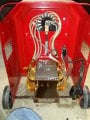

dc-225-3.jpg

2.jpg
tombstone and pig.jpg
This is not my machine but my set up is basically like this.
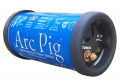


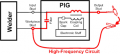
arcpig.pngpig diagram.pngThey like to be amusing with their manuals.
 

Thread Starter

Ric Whatley

Joined Sep 25, 2024
12
Inverter-based welders can adjust the output frequency from 20 to 250 Hz, allowing the operator to change the frequency from 60 Hz to a higher value for welding. The frequency setting can affect the appearance and penetration of the weld, as well as the arc's focus and directional control:
Lower frequency
A lower frequency produces a softer arc and a broader weld bead, which can help remove impurities from the metal's surface.
Higher frequency
A higher frequency produces a more focused arc, which can help with penetration and is useful for welding in corners, on root passes, and fillet welds.
120–200 Hz
This frequency range is ideal for most aluminum welding.
400 Hz
This frequency produces a very tight and focused arc cone, which can be useful for fillet welds and other fit-ups that require precise penetration.
150–250 Hz
This frequency range is useful for thin materials that require accurate weld placement.
80–120 Hz
This frequency range is useful for welding thick materials that are 3⁄8 in.
 

MisterBill2

Joined Jan 23, 2018
27,164
Based on the circuit shown in post #1, THE device called an "Arc Pig" is an inverter magically powered from the existing welder transformer that superimposes a higher frequency on the 60Hz weld current. That is quite reasonable. The challenge at that point is in providing that added power. The circuit shown does not provide any details of the small box tagged "electronic stuff. THAT is the hard part.
 

Thread Starter

Ric Whatley

Joined Sep 25, 2024
12
Based on the circuit shown in post #1, THE device called an "Arc Pig" is an inverter magically powered from the existing welder transformer that superimposes a higher frequency on the 60Hz weld current. That is quite reasonable. The challenge at that point is in providing that added power. The circuit shown does not provide any details of the small box tagged "electronic stuff. THAT is the hard part.
I'm sure the "electronic stuff" is some kind of proprietary electronic stuff and unlikely to be available for scrutiny. To speak to your assesment, I believe the arc pig does not increase output frequency. Rather I think it just provides arc stabilization by acting like a stun gun while the welding amperage is pass through. I believe the welding arc still vibrates at 60Hz and the arc pig delivers a spark at 60Hz. Somewhere on their website it says that at inputs of 120Hz the arc pig will strike at every other wave.

This is a quote from their FAQ page.

Q: Will the Pig let me TIG-weld aluminum with my stick welder?
A: Yes, customers do it all the time, but read this whole answer.

First, you need AC. You can't weld aluminum with DC, even with HF.

Continuous-fire HF keeps your AC TIG arc lit, which lets you weld aluminum, even with a stick-welding machine. (Provided you can turn off your machine's lift-start.)

Unfortunately, the term High Frequency has multiple meanings, which can be confusing. The Pig gives you High-Frequency Ignition and Stabilization, similar to what you get by enabling Continuous Fire Ignition on a high-end TIG machine.

This can be confusing, because a high-end TIG machine can also do another kind of "high frequency," simply by cranking the Frequency knob past 60Hz, say 200Hz. This is not the kind of HF you get from the Pig.

Welding at 200Hz gives two main benefits. First, 200Hz helps prevent arc extinction and rectification. The Pig does the same thing, and probably cheaper.

Second, 200Hz gives a narrower weld channel. You cannot get this benefit from an Arc Pig.
 
Last edited:

MisterBill2

Joined Jan 23, 2018
27,164
OK, so now my question: Has anybody opened up an arc pig and reverse-engineered it???
Building a high enough powered inverter for welding is certainly possible, but not simple.
 

Thread Starter

Ric Whatley

Joined Sep 25, 2024
12
OK, so now my question: Has anybody opened up an arc pig and reverse-engineered it???
Building a high enough powered inverter for welding is certainly possible, but not simple.
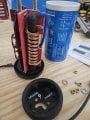
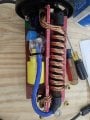
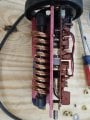
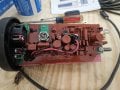
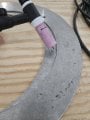
I don't think so but I'm not sure if any of the components would help. The arc pig is only a spark igniter to stabilize the plasma stream between the welding machine's electrode and the aluminum being welded. Without the arc pig, the plasma stream can be initialized by lightly scratching the electrode against the metal and drawing away to the proper distance for welding. (Striking an arc like striking a match) A tiny bit too much distance and the stream stops. The arc pig makes this distance more forgiving by providing a spark for the plasma to follow. Hence the term arc stabilizer. It doesn't really have any way to change the frequency of the power being fed to it. I would like to know if an adjustable frequency adapter can be made and would it be best to install it between the power source (wall outlet) and the welding machine, between the welding machine and the arc stabilizer or between the arc stabilizer and the TIG torch (welding lead) that holds the electrode.
 

Attachments

MisterBill2

Joined Jan 23, 2018
27,164
I can solder with the best, but for my welding to approach "fair" I need a correctly set up wire feed MIG welder. And after seeing the pictures, I can tell you that reverse engineering it would be a big task indeed.
 

Thread Starter

Ric Whatley

Joined Sep 25, 2024
12
I just recieved an email from the manufacturer letting me know that pumping higher frequencies through the Arc Pig will not damage it. The Spark igniter will not be able to keep up but there will be no damage.
 

Thread Starter

Ric Whatley

Joined Sep 25, 2024
12
I have located a variable frequency motor drive. (0-500Hz) This looks very near exactly what I need. The unit is 220v input and 220v output. I believe this sort of thing is what I need but this one is only 10amp output current. Can anyone speculate about the possibility of uping the output amperage to maybe 50amp? If I could plug my welding machine directly into the Variable Frequency Drive Inverter I'm sure the coil and copper windings could handle it.

https://www.aliexpress.us/item/3256...LjE3MjczNTczNDkuNjAuMC4w&gatewayAdapt=glo2usa
 

Thread Starter

Ric Whatley

Joined Sep 25, 2024
12
Okay so might have found what I'm looking for. Here is a

VFD 7.5KW 10HP 220V 1 or 3 Phase Input 3 Phase 0-400HZ Output 50A Variable Frequency Drive Controller Vector Control Inverter Converter for CNC Motor Speed Control.

https://www.amazon.com/HKS-Variable-Frequency-Controller-Converter/dp/B09C5P3RB5?th=1

This looks like I can plug this into my wall, Plug my welder into this and voila, done.

The only problem I can see is, will the higher frequency harm the coil and windings of the welder?

dc-225-3.jpg
 

Attachments

MisterBill2

Joined Jan 23, 2018
27,164
IF the variable frequency package does not need to deliver all of the weld power, but only modify it with the added frequency being a fraction of the total power, then you could have the VS drive feed a transformer to reduce the voltage and increase the current. A 10:1 step down from 220 volts to 22 volts could give you a variation of 22 volts at up to 100 amps. That might be useful.
 
Top