Hello! We want to start developing a device based on the NUC7I7DNBE motherboard. how to implement on the motherboard a software adjustment of the brightness of the screen backlight (slider in windows). Our display is NL192108BC18. Thank!
This display has a pwm driver input for display brightness control.
So you could -
1) Use an Arduino and using Python message the Arduino to set its PWM
values. Done over USB, maybe use mBlock to program.
2) Possibly use motherboard chipset and develop a pwm signal from it. You
would have to look at motherboard connections/pinout to see if you have
access to that.
3) Use MB optical IR interface, and an Arduino, Python, to control a PWM on
Arduino.
This display has a pwm driver input for display brightness control.
So you could -
1) Use an Arduino and using Python message the Arduino to set its PWM
values. Done over USB, maybe use mBlock to program.
2) Possibly use motherboard chipset and develop a pwm signal from it. You
would have to look at motherboard connections/pinout to see if you have
access to that.
3) Use MB optical IR interface, and an Arduino, Python, to control a PWM on
Arduino.
Where do you see the PWM driver on display?
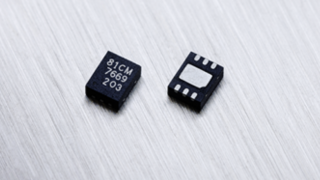
This display need voltage IForvard 53 volt. (at -30 degrees) For this, I think need to install a driver MC34844. The display needs a constant current, so I think the PWM will not work.
It may be possible to extract the brightness signal from the AUX channel and transmit via i2c to MC34844? True, I did not find such microcircuits.
PS Motherboard changed to IB916AF-7600.
Where do you see the PWM driver on display?
This display need voltage IForvard 53 volt. (at -30 degrees) For this, I think need to install a driver MC34844. The display needs a constant current, so I think the PWM will not work.
It may be possible to extract the brightness signal from the AUX channel and transmit via i2c to MC34844? True, I did not find such microcircuits.
PS Motherboard changed to IB916AF-7600.
Is that chip mounted on a complete display driver or are you creating your own driver using that chip? Are you connecting it to a micro controller? It appears that registers within the MC34844 are written with I2C. I don’t know, but suspect that you change the PWM frequency in the registers.
Is that chip mounted on a complete display driver or are you creating your own driver using that chip? Are you connecting it to a micro controller? It appears that registers within the MC34844 are written with I2C. I don’t know, but suspect that you change the PWM frequency in the registers.
Really all you need to do is generate PWM input signal for
34844. Board chipset must have a PWM capability in it, you
would have to write a driver or modifiy the exisiting one, or
use a UART or other protocol and separate low end micro
board with PWM, and Python API to make it windows ready.
You could even do it with lowend PIC or ATTINY or PSOC 4......

 Facebook
 Google
 GitHub
 Linkedin