Digital Counting Circuit Using 4026 Counters

Thread Starter

aac044210

Joined Nov 19, 2019
178
To save space and cost; because it operates the device inside its maximum limits, and because the actual value of the output current really does’t matter too much,

Perfectly. I have used 4000 series CMOS many times with no current limiting resistors, in designs which have sold in the thousands with no reliability problems. I see them on eBay 20+ years old and still working.
THIS IS A JOKE.! LOL.
 

dl324

Joined Mar 30, 2015
18,330
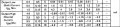
These are the recommended operating conditions from page 2 of the TI/Harris/RCA datasheet:
clipimage.jpg
clipimage.jpg
clipimage.jpg
The manufacturer doesn't recommend sourcing current that will reduce the HIGH level output voltage to less than 50% of the supply voltage.

There is also a limit to the power that can be dissipated by any output transistor (100mW) and for the total package (500mW). The device isn't guaranteed to survive being operated at or above the absolute maximums.
 

dl324

Joined Mar 30, 2015
18,330
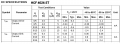
The datasheet from ST for the HFC4026 states some lower output currents:
The OP should use the datasheet for the part he's using to make sure he's operating within the limits given the manufacturer specifies.

@aac044210 Operating parts near, or above, the maximum ratings will lead to premature failure. No reputable engineer would design a circuit to operate above the minimum guaranteed output current.

If you wanted the design to be able to use parts from any manufacturer, you need to find the lowest current among them. In this case, it would be about 0.44-1.6mA if operating at room temperature.
 

Ian0

Joined Aug 7, 2020
13,132
These are the recommended operating conditions from page 2 of the TI/Harris/RCA datasheet:
View attachment 221601
View attachment 221602
View attachment 221603
The manufacturer doesn't recommend sourcing current that will reduce the HIGH level output voltage to less than 50% of the supply voltage.

There is also a limit to the power that can be dissipated by any output transistor (100mW) and for the total package (500mW). The device isn't guaranteed to survive being operated at or above the absolute maximums.
Unfortunately, the way the images appear it looks as though you are trying to imply that the Static Electrical Characteristics are the Recommend Operating Conditions. The two are entirely separate. The Static Electrical Characteristics are the output currents one would expect to achieve, and do not imply a level that must not be exceeded. You will note that the 25 degrees section has a minimum, a typical but no maximum. The figures for other temperatures are minima not maxima - although it is not specified, one would observe that the figure MINIMUM for 25 degrees fits neatly between the figures for -40 degrees and +85 degrees.

Similarly SGS-Thomson's datasheet shows MINIMUM and TYPICAL figures but specifies no MAXIMUM.

One could argue that "minimum" means "most negative" but that is not borne out by the figures for sink current.
 
Top