Digital and Analog Supply Decoupling

Thread Starter

Vinnie90

Joined Jul 7, 2016
86
Hi all,

I have a system with a 3V3 digital supply (provided by a MIC5225) and a dual analog supply +/-3V (generated by a LM27762). As load I have two AD5262 digital potentiometers, an analog switch ADG419 and a LM6144 (all decoupled with 100nF capacitors). When I have no load plugged and I disable the output of the LM27762 I read only few millivolts at the analog supply. However, as I start adding the loads, even if I disable the output of the analog regulator I see between 1.5V and 2V at the positive supply and -0.5 to -0.8V at the negative supply.

I'm attaching the schematic for the regulators:
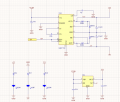
Screen Shot 2019-08-27 at 10.46.21 AM.png
What do you think the problem could be?

Thanks for the help :D

 

Thread Starter

Vinnie90

Joined Jul 7, 2016
86
I almost forgot:

If I desolder the MIC5225 from the PCB when I disable the LM27762 only few milliVolts. There must be some coupling between the two supplies.
 

TeeKay6

Joined Apr 20, 2019
573
I almost forgot:

If I desolder the MIC5225 from the PCB when I disable the LM27762 only few milliVolts. There must be some coupling between the two supplies.
@Vinnie90
It seems highly likely that one or more of the load devices (and associated circuitry) connects to both +3.0V and +3.3V. Current could flow through such a device from the +3.3V terminal to IC circuitry that connects to the 3.0V terminal of the device. Show the rest of the load circuitry if you want a better analysis.
 

Thread Starter

Vinnie90

Joined Jul 7, 2016
86
@Vinnie90
It seems highly likely that one or more of the load devices (and associated circuitry) connects to both +3.0V and +3.3V. Current could flow through such a device from the +3.3V terminal to IC circuitry that connects to the 3.0V terminal of the device. Show the rest of the load circuitry if you want a better analysis.
I think so too. However, I measured the resistance between the 3V3 and the other two supplies and I measure couple of hundreds of kiloohms.

Ps do you think that showing all the circuit will be helpful or just how the loads are connected to the power?
 

TeeKay6

Joined Apr 20, 2019
573
I think so too. However, I measured the resistance between the 3V3 and the other two supplies and I measure couple of hundreds of kiloohms.

Ps do you think that showing all the circuit will be helpful or just how the loads are connected to the power?
@Vinnie90
Let's start with just the power-to-loads schematic. I don't think an ohmmeter test is valid for this. The likely approach would be to disconnect loads, one by one, until the effect disappears...if it does. Conversely, disconnect all loads and reconnect, one by one, until the effect appears; assuming that the effect is still absent with no loads connected.
 

Thread Starter

Vinnie90

Joined Jul 7, 2016
86
So I have disconnected all the loads keeping both the regulators for 3V3 and +/-3V. Then I soldered them but leaving only one at the time soldered on the board (so for example first soldered LM6144 then desolder it, then solder AD5260 and then desolder it). I always see a voltage when disabling the +/-3V. This means that all the ICs have the same problem and probably is not related to the IC itself.
Without any load I don't see any voltage when disabling the dual supply regulator. Without the 3V3 regulator I don't see any voltage when disabling the dual supply regulator

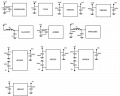
Interestingly enough, even when I have only the LM6144 (that does not have any connection to the 3v3 Supply) I still read almost 1.8V. I made a quick schematic of how the loads are connected to the power. But it is basically just connection to the IC with 100nF decoupling at the power pins

upload_2019-8-28_13-33-15.png
 

TeeKay6

Joined Apr 20, 2019
573
So I have disconnected all the loads keeping both the regulators for 3V3 and +/-3V. Then I soldered them but leaving only one at the time soldered on the board (so for example first soldered LM6144 then desolder it, then solder AD5260 and then desolder it). I always see a voltage when disabling the +/-3V. This means that all the ICs have the same problem and probably is not related to the IC itself.
Without any load I don't see any voltage when disabling the dual supply regulator. Without the 3V3 regulator I don't see any voltage when disabling the dual supply regulator

Interestingly enough, even when I have only the LM6144 (that does not have any connection to the 3v3 Supply) I still read almost 1.8V. I made a quick schematic of how the loads are connected to the power. But it is basically just connection to the IC with 100nF decoupling at the power pins

View attachment 184957
@Vinnie90
From post#1: "As load I have two AD5262 digital potentiometers..." I see only one AD5262 in post#6. ???
UPDATE: Perhaps you meant one AD5262 dual digital potentiometer..."
MORE UPDATES:
Incidental: In the AD5262 datasheet I can find no statement that VL "for normal operation" can be 3.3V rather than 5V. Can you point me to it? For AD5262, "VL must be same voltage used for logic control." Your schematics do not show logic; does VL meet the requirement? For LM27762: Enable input must be either <0.4V or >1.2V; your "Enable" signal meets this requirement? MIC5225: I assume that 3.3V output of this regulator powers your "logic" devices. Thus, removing MIC5225 leaves the "logic" circuitry unpowered. So, does any of your logic circuitry connect to the LM27762? (e.g. ENABLE?)
 
Last edited:

Thread Starter

Vinnie90

Joined Jul 7, 2016
86
@Vinnie90
From post#1: "As load I have two AD5262 digital potentiometers..." I see only one AD5262 in post#6. ???
Update: Perhaps you meant one AD5262 dual digital potentiometer..."

Incidental: In the AD5262 datasheet I can find no statement that VL "for normal operation" can be 3.3V rather than 5V. Can you point me to it? For AD5262, "VL must be same voltage used for logic control." Your schematics do not show logic; does VL meet the requirement? For LM27762: Enable input must be either <0.4V or >1.2V; your "Enable" signal meets this requirement?
Ahahah even if today is typo day this time I got it right :p I have two AD5262 but in the schematic I drew only one because the other is exactly identical.

As for the VL I couldn't find indications for normal operations but absolute maximum ratings is between 0V to 7V. My logic runs at 5V but I have level adapters to run the logic lines at 3V3
 

TeeKay6

Joined Apr 20, 2019
573
Ahahah even if today is typo day this time I got it right :p I have two AD5262 but in the schematic I drew only one because the other is exactly identical.

As for the VL I couldn't find indications for normal operations but absolute maximum ratings is between 0V to 7V. My logic runs at 5V but I have level adapters to run the logic lines at 3V3
@Vinnie90
And how would I know that you disconnected both, from the "loads" schematic you provided? :)
As for VL, the Abs Max spec of 7V merely assures you that the device won't explode because your +5V rail is actually 5.3V; it says nothing about what will happen at less than 5V input. All the tables in the datasheet clearly specify VL=5V.
Pls review all the updates I added to post#7.
 

Thread Starter

Vinnie90

Joined Jul 7, 2016
86
@Vinnie90
From post#1: "As load I have two AD5262 digital potentiometers..." I see only one AD5262 in post#6. ???
UPDATE: Perhaps you meant one AD5262 dual digital potentiometer..."
MORE UPDATES:
Incidental: In the AD5262 datasheet I can find no statement that VL "for normal operation" can be 3.3V rather than 5V. Can you point me to it? For AD5262, "VL must be same voltage used for logic control." Your schematics do not show logic; does VL meet the requirement? For LM27762: Enable input must be either <0.4V or >1.2V; your "Enable" signal meets this requirement? MIC5225: I assume that 3.3V output of this regulator powers your "logic" devices. Thus, removing MIC5225 leaves the "logic" circuitry unpowered. So, does any of your logic circuitry connect to the LM27762? (e.g. ENABLE?)
Tomorrow I'll try to connect instead of +/-3V a +/-5V from bench supplies to see if that was the problem. It's weird though because also with only the LM6144 or the ADG419 connected I still see more than 1V even with disables supply.
Yes the enable meets levels requirement
The only logic connected to the LM27762 is the enable from a uC. The rest of the analog/digital circuit is connected to LM27762 only through supplies
 

Thread Starter

Vinnie90

Joined Jul 7, 2016
86
So now I am proceeding this way:
- I disconnected every load from the 3V3 and the +/-3V supplies.
- I disconnected both the regulators from the board
- I supplied the 3V3 from a benchtop power supply. Started with 5V and then tried with 3V3
- I start soldering back all the ICs on the PCB. Every time I add a new component I check whether on the pin +3V and -3V there is a voltage (remember I desoldered the LM27762, so no voltage coming from there).

Outcome:
The only ICs that give me problems are the two AD5262 and the ADG419.
- Whenever I add one of the AD5262 the power supply starts supplying 200 mA (when normally is at 40 mA) and at the +3V and -3V I measure almost 1V (positive in both cases). I checked desoldering again the IC whether the component is fried but there are no shorts on the chip nor on the board.
- When I add the ADG419 the current does not increase, but I still measure 1V at the analog supplies.
This occurs both if I supply with my benchtop power supply 5V or 3V3.

Additional Comments:
- When switching the power supply off, and with the USB cable supplying the 5V3 I read almost 2.5V at the 3V3 supply pin.
- Without adding the AD5262s and the ADG419, I tried to solder back the 3V3 regulator. When doing so I measure 1V at the +/-3V supply. When double checking all the ICs I found out that that comes from a AD9833 that is supplied only with a 3V3.

I'm adding a simplified of my power with the loads to make it more clear:
upload_2019-8-29_17-19-31.png
I've been turning my head around this for a week almost. I didn't think multiple supply on the same board would have caused such a mess.
 

TeeKay6

Joined Apr 20, 2019
573
So now I am proceeding this way:
- I disconnected every load from the 3V3 and the +/-3V supplies.
- I disconnected both the regulators from the board
- I supplied the 3V3 from a benchtop power supply. Started with 5V and then tried with 3V3
- I start soldering back all the ICs on the PCB. Every time I add a new component I check whether on the pin +3V and -3V there is a voltage (remember I desoldered the LM27762, so no voltage coming from there).

Outcome:
The only ICs that give me problems are the two AD5262 and the ADG419.
- Whenever I add one of the AD5262 the power supply starts supplying 200 mA (when normally is at 40 mA) and at the +3V and -3V I measure almost 1V (positive in both cases). I checked desoldering again the IC whether the component is fried but there are no shorts on the chip nor on the board.
- When I add the ADG419 the current does not increase, but I still measure 1V at the analog supplies.
This occurs both if I supply with my benchtop power supply 5V or 3V3.

Additional Comments:
- When switching the power supply off, and with the USB cable supplying the 5V3 I read almost 2.5V at the 3V3 supply pin.
- Without adding the AD5262s and the ADG419, I tried to solder back the 3V3 regulator. When doing so I measure 1V at the +/-3V supply. When double checking all the ICs I found out that that comes from a AD9833 that is supplied only with a 3V3.

I'm adding a simplified of my power with the loads to make it more clear:
View attachment 185041
I've been turning my head around this for a week almost. I didn't think multiple supply on the same board would have caused such a mess.
@Vinnie90
I am confused by your description of power sources. Is all power supplied via the USB cable or do you also supply power via some separate lab supply? Regardless of supply, is it correct to say that in this sentence "- When switching the power supply off, and with the USB cable supplying the 5V3 I read almost 2.5V at the 3V3 supply pin" the 5V3 should have been 3V3? What/where is the 3V3 supply pin? If there are two power sources, what voltages do they supply?

I feel sure that I will want to see full circuitry around a AD5262 that seems to cause a problem. Show AD5262 pinout (names/numbers) and immediate connections to nearby components. I will likely want to see the PCB layout of the AD5262 area as well. It gets tiresome asking always for more detail. If you are afraid to publicly show more of your schematic & layout, perhaps you are willing to send me more via PM(conversation)? I will be happy to sign any reasonable non-disclosure.
 

mlsirkis

Joined Aug 11, 2010
32
@Vinnie90
I am confused by your description of power sources. Is all power supplied via the USB cable or do you also supply power via some separate lab supply? Regardless of supply, is it correct to say that in this sentence "- When switching the power supply off, and with the USB cable supplying the 5V3 I read almost 2.5V at the 3V3 supply pin" the 5V3 should have been 3V3? What/where is the 3V3 supply pin? If there are two power sources, what voltages do they supply?

I feel sure that I will want to see full circuitry around a AD5262 that seems to cause a problem. Show AD5262 pinout (names/numbers) and immediate connections to nearby components. I will likely want to see the PCB layout of the AD5262 area as well. It gets tiresome asking always for more detail. If you are afraid to publicly show more of your schematic & layout, perhaps you are willing to send me more via PM(conversation)? I will be happy to sign any reasonable non-disclosure.
 

TeeKay6

Joined Apr 20, 2019
573
@Vinnie90
I am confused by your description of power sources. Is all power supplied via the USB cable or do you also supply power via some separate lab supply? Regardless of supply, is it correct to say that in this sentence "- When switching the power supply off, and with the USB cable supplying the 5V3 I read almost 2.5V at the 3V3 supply pin" the 5V3 should have been 3V3? What/where is the 3V3 supply pin? If there are two power sources, what voltages do they supply?

I feel sure that I will want to see full circuitry around a AD5262 that seems to cause a problem. Show AD5262 pinout (names/numbers) and immediate connections to nearby components. I will likely want to see the PCB layout of the AD5262 area as well. It gets tiresome asking always for more detail. If you are afraid to publicly show more of your schematic & layout, perhaps you are willing to send me more via PM(conversation)? I will be happy to sign any reasonable non-disclosure.
UPDATE: I chose to look at the AD5262 first because a stray current of 200mA is quite large. Also, for the AD9833, powered solely by 3.3V, to affect the ±3V levels needs to be explained--presumably via non-power supply connections of the AD9833. Hence, more schematic detail & layout detail of the AD9833 is desirable. In both cases I will be looking for mislabeled pins, misconnected pins, improperly-used pins, connections to other ICs and the power supplies, and layout/schematic errors such as false connections where nets cross but are not actually to be connected. As @mlsirkis asks, how is grounding of analog vs digital signals handled?
 
Last edited:

Thread Starter

Vinnie90

Joined Jul 7, 2016
86
@Vinnie90
I am confused by your description of power sources. Is all power supplied via the USB cable or do you also supply power via some separate lab supply? Regardless of supply, is it correct to say that in this sentence "- When switching the power supply off, and with the USB cable supplying the 5V3 I read almost 2.5V at the 3V3 supply pin" the 5V3 should have been 3V3? What/where is the 3V3 supply pin? If there are two power sources, what voltages do they supply?
I haven't been very clear it is true. I didn't think my problem was so extended, therefore I tried to keep it limited to the most obvious things. So in my system I have three supplies:
- USB power @5V3 used for uC and Serial2USB converter
- 3V3 regulator generated by a MIC5225 used for a temperature sensor IC (MAX31865) and the AD9833, an XCO, the AD5262 and the ADG419. The input power for this regulator comes from the USB power
- an analog supply +/-3V generated from a LM27762 for the analog operation of the digital potentiometers and for the supply of the LM6144. The input power for this regulator comes also from the USB power

After reading your comment (comment#9), I thought that maybe the problem was that the logic voltage for the potentiometers was too low and therefore I tried to use a 5V supply instead of the 3.3V. So I desoldered the 3V3 voltage regulator from the board and hooked up a benchtop power supply to provide 5V instead of the 3V3.

It gets tiresome asking always for more detail. If you are afraid to publicly show more of your schematic & layout, perhaps you are willing to send me more via PM(conversation)? I will be happy to sign any reasonable non-disclosure.
I feel you and I'm also upset when other users do not fully show what they are talking about. However in this case I tried to give only the necessary information (apparently not enough :p) instead of posting the full design, which could be too much information to share in one post only. But clearly I was wrong :p I'll try to post something on the full design after lunch.

Are all grounds tied together, or is there separate analog and digital grounds?
As @mlsirkis asks, how is grounding of analog vs digital signals handled?
The ground is unique. I decided not to split ground but I kept the analog section of the circuit separated from the digital side (probably in the next version of the board I'll try to partially split the ground, if the situation improves at all).

UPDATE: I chose to look at the AD5262 first because a stray current of 200mA is quite large. Also, for the AD9833, powered solely by 3.3V, to affect the ±3V levels needs to be explained--presumably via non-power supply connections of the AD9833. Hence, more schematic detail & layout detail of the AD9833 is desirable. In both cases I will be looking for mislabeled pins, misconnected pins, improperly-used pins, connections to other ICs and the power supplies, and layout/schematic errors such as false connections where nets cross but are not actually to be connected.
I'm double checking the schematics and the layout as well as the PCB to see if there is any short or something that I missed in the first iteration.

Thank you guys for the help (even if it seems that I'm trying to hold back information), I appreciate it a ton ;)
 

TeeKay6

Joined Apr 20, 2019
573
I haven't been very clear it is true. I didn't think my problem was so extended, therefore I tried to keep it limited to the most obvious things. So in my system I have three supplies:
- USB power @5V3 used for uC and Serial2USB converter
- 3V3 regulator generated by a MIC5225 used for a temperature sensor IC (MAX31865) and the AD9833, an XCO, the AD5262 and the ADG419. The input power for this regulator comes from the USB power
- an analog supply +/-3V generated from a LM27762 for the analog operation of the digital potentiometers and for the supply of the LM6144. The input power for this regulator comes also from the USB power

After reading your comment (comment#9), I thought that maybe the problem was that the logic voltage for the potentiometers was too low and therefore I tried to use a 5V supply instead of the 3.3V. So I desoldered the 3V3 voltage regulator from the board and hooked up a benchtop power supply to provide 5V instead of the 3V3.


I feel you and I'm also upset when other users do not fully show what they are talking about. However in this case I tried to give only the necessary information (apparently not enough :p) instead of posting the full design, which could be too much information to share in one post only. But clearly I was wrong :p I'll try to post something on the full design after lunch.


The ground is unique. I decided not to split ground but I kept the analog section of the circuit separated from the digital side (probably in the next version of the board I'll try to partially split the ground, if the situation improves at all).


I'm double checking the schematics and the layout as well as the PCB to see if there is any short or something that I missed in the first iteration.

Thank you guys for the help (even if it seems that I'm trying to hold back information), I appreciate it a ton ;)
@Vinnie90
Partial info is fine IF it contains all info needed to analyze the problem; that is certainly a judgment call in which too much is better than too little. In this case it seems that it must be true that something outside of supply connections is wrong (or at least not yet explained). For example, the AD9833 with only 3.3V connection is affecting ±3V supply. Yet we have zero info on what connections the AD9833 might have to other elements of your circuit.
 

Thread Starter

Vinnie90

Joined Jul 7, 2016
86
Back on here after having tried a few things and waited for components to arrive.

@TeeKay6 totally feel you and from my next post on, I'll try to be more complete with the description of what I have. In the specific case, it turned out that I damage the components with the hot gun while soldering/desoldering during debugging. I got new ICs and magic no more troubles. Funny thing because I checked the supply pins of the old ICs and the resistance didn't seem to show any trouble with the component.

Appreciate the help anyway :D
 

TeeKay6

Joined Apr 20, 2019
573
Back on here after having tried a few things and waited for components to arrive.

@TeeKay6 totally feel you and from my next post on, I'll try to be more complete with the description of what I have. In the specific case, it turned out that I damage the components with the hot gun while soldering/desoldering during debugging. I got new ICs and magic no more troubles. Funny thing because I checked the supply pins of the old ICs and the resistance didn't seem to show any trouble with the component.

Appreciate the help anyway :D
@Vinnie90
Most important is that you did (yourself!) find and fix the problem. Congratulations. And thank you for letting us know! Resistance measurements with semiconductors are only useful as very crude tests; you can detect direct shorts and open circuits (where you know for a fact they should not be) but other semiconductor failures are very hard to find with an ohmmeter since most ohmmeters--by design--apply only very small voltages to the probes, not nearly enough to make most semiconductors respond, whether they are good or bad. As you are probably aware, some multimeters provide a "diode" test function that is similar to a resistance test except that a higher voltage (e.g. >1V) is applied so that silicon diodes will conduct and thereby be detected. Good luck on your future projects!
 
Top