Facebook
 Google
 GitHub
 Linkedin

I understand that an isolated amplifier uses capacitors for isolation, and a linear optocoupler uses an LED and photodiodes.
But, assuming unity gain, why would i choose one over the other?
I'm guessing the main difference is that the isolated amplifier offers some gain/buffering.
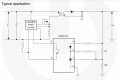
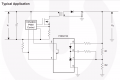
Here's an example of an isolated amplifier:
TI AMC1311x High-Impedance, 2-V Input, Reinforced Isolated Amplifiers
https://www.ti.com/lit/ds/symlink/amc1311.pdf
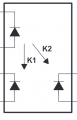
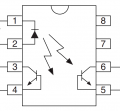
Here's a linear optocoupler:
Ixys/LittelFuse LOC110 Linear Optocoupler
https://www.littelfuse.com/media?re...ttelfuse-integrated-circuits-loc110-datasheet
Personally, I'm interested in DC applications for the iso, but AC is also interesting.
But, assuming unity gain, why would i choose one over the other?
I'm guessing the main difference is that the isolated amplifier offers some gain/buffering.
Here's an example of an isolated amplifier:
TI AMC1311x High-Impedance, 2-V Input, Reinforced Isolated Amplifiers
https://www.ti.com/lit/ds/symlink/amc1311.pdf
Here's a linear optocoupler:
Ixys/LittelFuse LOC110 Linear Optocoupler
https://www.littelfuse.com/media?re...ttelfuse-integrated-circuits-loc110-datasheet
Personally, I'm interested in DC applications for the iso, but AC is also interesting.
Last edited: