Hello,
How to a Display humidity sensor DHT11 on leds?
First you need to draw a schematic with headers for a DHT11, socket for you PIC, and some kind of display. When you say you want to display humidity sensor on leds, what exactly do you mean?5mm LED or 7-segments?Hello,
How to a Display humidity sensor DHT11 on leds?
not build right now!round graphical LED display
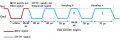
What datasheet?The sensor with 7 segment. there is 3 pin sensor of 40 bits data according to data sheet.
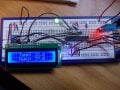
I mean to say that the DHT11 is to be connected with micro and micro will display the Humidity on it.Please attach one. I got some DHT11, and they do not have any 7-segments.
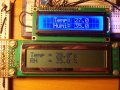
// LCD module connections sbit LCD_RS at RB2_bit; sbit LCD_EN at RB3_bit; sbit LCD_D4 at RB4_bit; sbit LCD_D5 at RB5_bit; sbit LCD_D6 at RB6_bit; sbit LCD_D7 at RB7_bit; sbit LCD_RS_Direction at TRISB2_bit; sbit LCD_EN_Direction at TRISB3_bit; sbit LCD_D4_Direction at TRISB4_bit; sbit LCD_D5_Direction at TRISB5_bit; sbit LCD_D6_Direction at TRISB6_bit; sbit LCD_D7_Direction at TRISB7_bit; sbit Data at RA0_bit; sbit DataDir at TRISA0_bit; char message1[] = "Temp = 00.0 C"; char message2[] = "RH = 00.0 %"; unsigned short TOUT = 0, CheckSum, i; unsigned short T_Byte1, T_Byte2, RH_Byte1, RH_Byte2; void StartSignal(){ DataDir = 0; // Data port is output Data = 0; Delay_ms(25); // Low for at least 18us Data = 1; Delay_us(30); // High for 20-40 us DataDir = 1; // Data port is input } unsigned short CheckResponse(){ TOUT = 0; TMR2 = 0; T2CON.TMR2ON = 1; // Start TMR2 while waiting for sensor response while(!Data && !TOUT); // If there's no response within 256us, the Timer2 overflows if (TOUT) return 0; // and exit else { TMR2 = 0; while(Data && !TOUT); if (TOUT) return 0; else { T2CON.TMR2ON = 0; return 1; } } } unsigned short ReadByte(){ unsigned short num = 0, t; DataDir = 1; for (i=0; i<8; i++){ while(!Data); TMR2 = 0; T2CON.TMR2ON = 1; // Start TMR2 from 0 when a low to high data pulse while(Data); // is detected, and wait until it falls low again. T2CON.TMR2ON = 0; // Stop the TMR2 when the data pulse falls low. if(TMR2 > 40) num |= 1<<(7-i); // If time > 40us, Data is 1 } return num; } void interrupt(){ if(PIR1.TMR2IF){ TOUT = 1; T2CON.TMR2ON = 0; // stop timer PIR1.TMR2IF = 0; // Clear TMR0 interrupt flag } } void main() { unsigned short check; TRISB = 0b00000000; PORTB = 0; TRISA = 0b00100001; CMCON = 7; INTCON.GIE = 1; //Enable global interrupt INTCON.PEIE = 1; //Enable peripheral interrupt // Configure Timer2 module PIE1.TMR2IE = 1; // Enable Timer2 interrupt T2CON = 0; // Prescaler 1:1, and Timer2 is off initially PIR1.TMR2IF =0; // Clear TMR INT Flag bit TMR2 = 0; Lcd_Init(); Lcd_Cmd(_Lcd_Clear); Lcd_Cmd(_LCD_CURSOR_OFF); do { Delay_ms(1000); StartSignal(); check = CheckResponse(); if (!check) { Lcd_Cmd(_Lcd_Clear); Lcd_Out(1, 1, "No response"); Lcd_Out(2, 1, "from the sensor"); } else{ RH_Byte1 = ReadByte(); RH_Byte2 = ReadByte(); T_Byte1 = ReadByte(); T_Byte2 = ReadByte(); CheckSum = ReadByte(); // Check for error in Data reception if (CheckSum == ((RH_Byte1 + RH_Byte2 + T_Byte1 + T_Byte2) & 0xFF)) { message1[7] = T_Byte1/10 + 48; message1[8] = T_Byte1%10 + 48; message1[10] = T_Byte2/10 + 48; message2[7] = RH_Byte1/10 + 48; message2[8] = RH_Byte1%10 + 48; message2[10] = RH_Byte2/10 + 48; message1[11] = 223; // Degree symbol Lcd_Cmd(_Lcd_Clear); Lcd_Out(1, 1, message1); Lcd_Out(2, 1, message2); } else{ Lcd_Cmd(_Lcd_Clear); Lcd_Out(1, 1, "Checksum Error!"); Lcd_Out(2, 1, "Trying Again ..."); } } }while(1); - See more at: http://embedded-lab.com/blog/?p=4333#sthash.K0Vlw2cl.dpuf
I have written sub-routines in mikroC Pro for PIC for initializing the DHT11 sensor and reading the 40-bit of data in sequence.