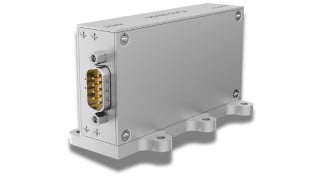
DC source that outputs a constant current also the useful load is variable

LowQCab

Joined Nov 6, 2012
5,101
I have already stated in my first post that what I shown as a battery is not a battery but a complicated DC power source that can only work well if the current extracted from it is constant. After that I explained what this DC source is, in reality.
.
So, it would "appear" that You have a special "Buck-Regulator" that has an unstable output with no Load.
It's most likely that it was never intended to have no-Load, like always having at least an attached Battery.

But any Regulator that comes mounted to a Turbine would normally be sophisticated enough
to not have this type of an issue.
This could also be pointing-out a flaw in your measurement technique.

Why all the "special" nomenclature when well defined terms are readily available ?

How about a Link to the super-special-device that You are working with ?
Without specifics, You are only likely to get almost random "around-the Water-Cooler" ramblings
because nobody knows what it is that you're talking about.

That "special" Box that you're talking about has a manufacturers name and part-number on it,
or it wouldn't be on any Helicopter.
How about providing us with at least a part-number ?

Also, please explain, specifically,
how it is that You know that it won't work correctly with Unregulated-Current-Output,
and what "not-correctly" specifically means.
.
.
.
 

MisterBill2

Joined Jan 23, 2018
27,524
OK, I missed that part, it seems. It was post #14 that got me confused as far as which was which.
But now I have an idea, which is to take a clue from the UK motorcycles that have an unregulated alternator. Use a monster Zener diode to burn the excess voltage quite simple and fairly effective. And nothing to adjust..

The original switcher power supplies for the first few generations of PCs had a serious problem in that the five volt high current logic power supply was not able to regulate under no load conditions. So any testing had to be done with a high power load resistor on the five volt output. Eventually the problem was reduced, but it took a whole lot of years before that happened at all. In the helicopter alternator case, it is probably the electronics in the regulator that are unable to survive the input voltage under no-load conditions.

But now for the hard question of why not regulate the alternator?? or, if that is not possible, then why not something similar to a buck regulator. Or is this a case where somebody made an error a few years back and so a poor design was released an the price to do it correctly is out of sight high. And nobody wants to admit that it was a terrible goof-up because it will damage the stock price and the board of directors will execute somebody if share prices drop.
 
Last edited:

LowQCab

Joined Nov 6, 2012
5,101
I simply get tired of people requesting help with "un-named" "mystery-boxes", I don't care for "guessing".
It happens quite regularly in these Forums, so you're not special in this regard.
I certainly have no need to provide any assistance to You.
Have a nice Day.
.
.
.
 

MisterBill2

Joined Jan 23, 2018
27,524
@ LQC: I think that I understand the situation a bit, and while the problem is caused by a poor design, I have come across, and in fact, fought and lost, in cases where the way some organization operates is that changes to correct the results of poor choices ARE TOTALLY FORBIDDEN. So in plants where one product to get the line moving has a 30 day delivery while a better power supply is sitting on the shelf, but not allowed to be used, they struggle and suffer.
The nasty fact is that"You can't fix stupid." ( I did not originate the phrase, and I admit that it is indeed nasty and perhaps even judgemental).
 

LowQCab

Joined Nov 6, 2012
5,101
The Plot thickens !!!

If the proposed scenario is indeed the case, ( and who really knows ??? ),
I would vote for a Toroidal-Current-Sensor positioned around the Main-Power-Out-Cable,
and a rather large Heat-Sink with a bunch of MOSFETs mounted to it.

The selected MOSFETs should not be of the more plentiful "High-Speed-Switching" variety,
but rather be selected on the basis of having a HUGE SOA, and large Package to facilitate lots of HEAT Dissipation.

There would potentially be very few other Components, other than a simple Voltage-Regulator,
and maybe an Op-Amp, depending on the operating Voltages of the Current-Sensor.

Of course the amount of Power that must be dissipated must be within the realm of practicality.
Maybe SiC-FETs, or Gan-FETs could better withstand the Heat-Dissipation abuse better ?

Maybe I missed the "Minimum-Current" requirement, at what Voltage, Post.
Were these figures actually quoted somewhere ?

Did somebody just Fart ???:oops:
.
.
.
 
Last edited:
Top