Converting PC to 12-5-3.3V

Thread Starter

camerart

Joined Feb 25, 2013
3,867
Hi,
I want to power a motherboard from 12V,so 5V and 3.3V is also needed.
What is the best way to make a power supply for all of these voltages, please?
Smaller and lighter is best!
Cheers, C.
 

Papabravo

Joined Feb 24, 2006
22,116
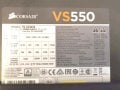
Small and light are not exactly compatible with those requirements. To make your own would be a substantial design project. How much does the one in the picture cost? I'm just curious.
 
FIRST, my assumption that the TS term "Motherboard" means a "PC computer motherboard."
A Linear Regulator scheme would be the simplest design, BUT it would not be cheap or small, nor efficient. So itwould be a poor choice.
Switcher power supplies are available from many good suppliers , and the detailed design information for the different circuits is readily available.
Check the "Schematics for free" website for a lot of actual circuits.
 

panic mode

Joined Oct 10, 2011
5,466
PC power supplies for desktops do need ability to supply large current. CPU alone can dissipate 80-160W and that means they draw hundreds of amps (CPU supply voltage is stepped down on motherboard itself). using linear regulators to power PC motherboard is absolutely absurd.
then add graphic card, memory, storage etc. and things quickly end up at pretty crazy levels. the 550W envelope for that particular model is actually modest compared to models used in some systems (for most people that would be gaming rigs and high end workstations).

the simplest solution is to not replace that PSU. if you want it to run from 12V, juste add inverter (12V to your mains level).

if you do want to make it 12V -> 5V and 3V3, without mains as intermediate levels you do need to know actual peak current levels and - this will NOT be simple.
 
Last edited:

crutschow

Joined Mar 14, 2008
38,946
I agree with pm
The best solution is likely to use a 12V inverter to generate the required AC voltage for the shown power supply, otherwise you would require five switching power supplies.
The inverter should be a pure sinewave, not quasi-sinewave output type.
But note that such an inverter could draw upwards of 50A from your 12V source.
 

Thread Starter

camerart

Joined Feb 25, 2013
3,867
Small and light are not exactly compatible with those requirements. To make your own would be a substantial design project. How much does the one in the picture cost? I'm just curious.
Hi P,
Note this is for a mobile home, so the 12V will be battery, then 5 and 3.3V.
The power supply is from the PC, that I've used for years, and I don't recall how much any of it cost.
C
 

Thread Starter

camerart

Joined Feb 25, 2013
3,867
FIRST, my assumption that the TS term "Motherboard" means a "PC computer motherboard."
A Linear Regulator scheme would be the simplest design, BUT it would not be cheap or small, nor efficient. So itwould be a poor choice.
Switcher power supplies are available from many good suppliers , and the detailed design information for the different circuits is readily available.
Check the "Schematics for free" website for a lot of actual circuits.
Hi Mr B,
Ok.
C
 

Thread Starter

camerart

Joined Feb 25, 2013
3,867
PC power supplies for desktops do need ability to supply large current. CPU alone can dissipate 80-160W and that means they draw hundreds of amps (CPU supply voltage is stepped down on motherboard itself). using linear regulators to power PC motherboard is absolutely absurd.
then add graphic card, memory, storage etc. and things quickly end up at pretty crazy levels. the 550W envelope for that particular model is actually modest compared to models used in some systems (for most people that would be gaming rigs and high end workstations).

the simplest solution is to not replace that PSU. if you want it to run from 12V, juste add inverter (12V to your mains level).

if you do want to make it 12V -> 5V and 3V3, without mains as intermediate levels you do need to know actual peak current levels and - this will NOT be simple.
Hi P,
Sounds too complicated!
C
 

WBahn

Joined Mar 31, 2012
33,346
Hi P,
Note this is for a mobile home, so the 12V will be battery, then 5 and 3.3V.
The power supply is from the PC, that I've used for years, and I don't recall how much any of it cost.
C
Which means that the 12 V won't be 12 V, it could be anywhere from about 11 V to 15 V depending on state if charge and whether it is being charged.

Simplest and possibly lightest and cheapest is to get an inverter to power the existing power supply.
 

Thread Starter

camerart

Joined Feb 25, 2013
3,867
Hi,
I wanted to strip my oldish PC, into it's component parts and use it in a van in a similar way to how, I've been using it in my house.
I'll have a 12V leisure battery, and could charge 3.3V batteries up, and I suppose I could make something for 5V.
Would this be sensible, or should I throw the whole project in the bin (minus the disc drives) and use a laptop?
C.
 
you don't seem to understand the reality of the problem at hand. each of three rails has some tolerances. if i recall it is ok if 12V rail stays within +/-0.5V of the nominal value (12V) and that is while load fluctuates unpredictably from some low value up to some 40A. vehicle power is not exactly 12V it fluctuates a lot (11-15V) and - it is VERY dirty. PC power rails need to be very clean and stable. so getting 12V rail is not going to be easy easy. 5V rail tolerances are tighter (some +/-0.2V of nominal) etc. just heed advices - this is not easy or a good idea. and it is not just those three rails, you are forgetting -12V and 5Vsb. just do yourself a favour and use DC/AC inverter.
 
One option that hasn't come up yet: DC-input ATX supplies made for exactly this (car PCs, vans, boats). They plug into the 24-pin connector and make 3.3 V, 5 V, 5 V standby and 12 V from a DC input. Search for "DC-ATX" or "wide input DC-DC ATX". A few things to watch:
  • Get a wide-input type (roughly 6 to 30 V in). The cheap "12 V only" boards pass the battery straight through to the 12 V rail, which is the problem panic mode and WBahn described: a leisure battery sits anywhere from about 11.5 V to over 14 V while charging.
  • Size it to the real load, not the label. The 42 A on your current PSU is what it can deliver, not what the PC draws. An older office-type PC without a graphics card often runs at 40 to 80 W. Plug it into a mains plug-in watt meter for a normal session and you'll know.
  • Check the connectors: most boards also need the 4- or 8-pin CPU 12 V plug, and drives need SATA power. Make sure the DC-ATX unit has what your board uses.
If the measured draw is under about 100 W, a DC-ATX board is smaller and more efficient than an inverter plus your existing PSU (you avoid DC to AC to DC, and the inverter's own idle draw). If it's well above that, I'd go with the laptop: most use 15 to 45 W and many have 12 V car chargers, which matters a lot on one leisure battery.
Do you know what CPU and graphics are in it?
 
One more (actually2or 3 considerations that did not get much attention, are the interconnections and the sequence of the voltages appearing. These are VERY BIG DEAL parts of the project. FIRST, the sequence that the voltages rise in does matter, at least that is whatthe warnings that folks never see tell.
AND those pesty interconnectionsbetween the power supply and that motherboard connector. Consider how many wires from the PWS to that connector and only three or four voltages. It IS A BIT MORE COMPLEX than a home project in a box. THEN the really bad news: Mostly the supply specifications are rather NON-FORGIVING!! And motherboards are not cheap.
So the very best advice has already been presented by others: Use an inverter to supply a faked mains AC 120 volt source. Keep the voltages quite close to the spec. The component data sheets always give the acceptable voltage range. The AC waveform does not need to be perfect , but it should not have spikes. The computer's power supply is a switcher so the AC feed does get rectified back to DC.
 
Last edited:

Thread Starter

camerart

Joined Feb 25, 2013
3,867
you don't seem to understand the reality of the problem at hand. each of three rails has some tolerances. if i recall it is ok if 12V rail stays within +/-0.5V of the nominal value (12V) and that is while load fluctuates unpredictably from some low value up to some 40A. vehicle power is not exactly 12V it fluctuates a lot (11-15V) and - it is VERY dirty. PC power rails need to be very clean and stable. so getting 12V rail is not going to be easy easy. 5V rail tolerances are tighter (some +/-0.2V of nominal) etc. just heed advices - this is not easy or a good idea. and it is not just those three rails, you are forgetting -12V and 5Vsb. just do yourself a favour and use DC/AC inverter.
Hi P,
True, I don't understand the reality of the problem, this is why I asked you experts.

I won't be driving when I use the computer so the 12V and 3.3V will will be coming from calm batteries.
C
 

MisterBill2

Joined Jan 23, 2018
28,595
I realize that the common power supply for the "big box" PCs is quite large, and certainly there are smaller supplies available presently. But switch-mode DC supplys are one of the rather more difficult to get right. THAT is the unfortunate reality. It is also why power supply transformers are still available from most of the larger electronics parts suppliers.
The good news is that an inverter adequate to power a typical desktop computer is not that difficult.

A totally different aproach would be a used "notebook" computer that uses an external DC supply, mostly in the 17 to 23 volt range. Creating an external single voltage supply will be much less demanding.
 

ericgibbs

Joined Jan 29, 2010
21,649
Hi E,
If possible, measure the actual power drawn by the desktop PC, when running on mains power Usually it should be approx 100 to 200 Watts.

The current ratings shown on that posted label are typical Chinese 'enthusiastic' values.

Let's know what you measure.
E
Footnote:
Using my home Smart meter I get a value of ~100W when using a 32 Inch Monitor with a GigaByte Model Desktop PC.
That's ~0.43A, so using a 12Vdc to 240Vac Mains step up inverter 8.6A, say at 85% conversion efficiency, approx 10 Amps. A good condition 12V 60Ahr car battery would be suitable for Caravan use.
 
Last edited:
Top