Converting mini AC ceramic coil stove to DC help

Thread Starter

consciousimplement

Joined Feb 17, 2018
4
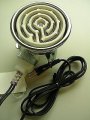
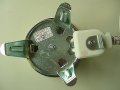
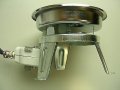
I found an electric stove for sale that I'd like to modify to work on 12v DC power. Images are attached. I would like to remove the power cord and accompanying white circuit box, leaving only the coils, ceramic pad, and metal base/stand. I feel that if I took just that and connected it to a battery, the coils would burn out, the battery would have some type of unpleasant short-out, or both. What would I need to buy or build to put in between the battery and stove to make this work properly? I am not interested in just connecting it to an inverter, either. This is for a mobile camping setup, so its important to eliminate the extra inefficiency that the inverter's power draw would represent. I know that a battery can make those coils glow red hot. So how to do so both safely and with the longevity of the stove in mind?

The power specifications listen on the bottom on the stove are 100v, 200w.
 

Attachments

DickCappels

Joined Aug 21, 2008
10,661
You will need to supply the burner with the same RMS voltage it was designed to take. That will require a 12V to 100V inverter (going by the label in your photograph).
 

MisterBill2

Joined Jan 23, 2018
27,587
I found an electric stove for sale that I'd like to modify to work on 12v DC power. Images are attached. I would like to remove the power cord and accompanying white circuit box, leaving only the coils, ceramic pad, and metal base/stand. I feel that if I took just that and connected it to a battery, the coils would burn out, the battery would have some type of unpleasant short-out, or both. What would I need to buy or build to put in between the battery and stove to make this work properly? I am not interested in just connecting it to an inverter, either. This is for a mobile camping setup, so its important to eliminate the extra inefficiency that the inverter's power draw would represent. I know that a battery can make those coils glow red hot. So how to do so both safely and with the longevity of the stove in mind?

The power specifications listen on the bottom on the stove are 100v, 200w.
This stove is purely a resistance heating element. Probably the resistance increases as the element heats, reducing the steady state current. But if I ignore that possibility to make the math simpler, it reduces to: power=voltage times voltage divided by resistance. when it is heating using 100volts, then power=100v X100v/ R (resistance.). P= 10000/R, If it is operated on 12 volts, and we assume that the resistance, R, does not change, then the Power=12vX12v/ R P=144/R. Thus you can see that there will not be much heat provided if you run it on 12 volts.

But if you have found that a battery can make the coils glow red hot then you are all set, because that is how an electric stove is intended to work. But that brings my attention to the question as to where will you find the 12 volts power while you are camping? And if it is from a vehicle battery then you need to avoid running the battery down to where the engine will no longer start.
 

Thread Starter

consciousimplement

Joined Feb 17, 2018
4
In response to what the above 2 have said, it looks more then like my aim would be to match the wattage of the stove? If that were the case, I found another dc converter similar to the one that I posted the link of. It gives an output of 20v 10a for a total of 200w.

But that brings my attention to the question as to where will you find the 12 volts power while you are camping? And if it is from a vehicle battery then you need to avoid running the battery down to where the engine will no longer start.
A small portable deep cycle bank would be used to power this and other applications.
 
Last edited:

dendad

Joined Feb 20, 2016
4,639
You need to have the voltage the same, and, ideally, the wattage greater.
That sort of power from a 12V battery will flatten it before you can cook anything so I'd stick to propane gas.
 

MisterBill2

Joined Jan 23, 2018
27,587
You need to have the voltage the same, and, ideally, the wattage greater.
That sort of power from a 12V battery will flatten it before you can cook anything so I'd stick to propane gas.
Matching the wattage is secondary to matching the voltage. If there is no way to change the resistance of the heater element then to get the same wattage you must have the same current, which will come from the same effective voltage. If you use DC then you can get the same power with less voltage , although RMS volts are close to the effective DC volts. A 20 volt inverter would be one-fifth of the voltage, resulting in one fifth of the current and thus 1/25 of the power.
Therefore, my advice is similar to dendad's advice, which is to get a propane stove, or perhaps a charcoal grill. I have cooked on both, and they both do work. BUT if you are planning on cooking inside a vehicle then I caution against that, because I consider it unsafe. One other option is to find camping areas with Ac power available.
 

Janis59

Joined Aug 21, 2017
1,894
1) Go to nearest high temperature components shop and buy the another diameter of Kantal wire. The diameter will determine the maximum Amperage, what accordingly determines the maximum permitted power. My feeling says You need somewhat about 1 mm thick for less than 10 Amps or 1,5 mm thick for 16-20 Amps.
2) Condemn the electric, as the 200W is too small even for very small kettle, but 100W may kill Your accu. If it will happen in middle of nowhere, You are in the really deep s*. To avoid, I am using the gas burner, my gas cooker takes 15x15x10 centimeter and 100 grams, the 5 liter bottle takes bit more weighty but it may be shifted to the 25 liter or 50 liter depending on expected camping period. At least with this I am able to cook the any soup, pan of potatoes or gril, what on the electric be plainly impossible.
 

Janis59

Joined Aug 21, 2017
1,894
RE:""So how to do so both safely and with the longevity of the stove in mind?""
I am using the very similar of russian product of 60~ies. If it is still operable after 60 or 70 years, it means it was extraordinary well done. I am using it for warm-up the gas bottle for my house heating system. In every cycle of bottle filling some 1 or 2 lietrs of LPG is the "garbage gas" or just very high polymeres what are not readily evaporating. Just owen is saying "end of flame", manometer says 0,00 but with a hand shivering You feel the bottle is far not empty. If to do nothing, the "garbage" sonn will fill the half, and then as one put the baloon in the warm room, then BOOOOM!! Therefore one of ways is turn the baloon with feets up and spill it somewhere whilst no-one is seeing (but this place will smell badly for years) or culturally burn this smelly liquid. So, I put the heater under baloon, warm it up the 100 C and in 20 minutes all liquid is used.
Take a caution, warming any gas bottle over 60 C means unavoidable boom! Warming any bottle where still is liquid propane or butane mixture, the same - boom!. Only 100% empty bottles may be warmed.
 

Thread Starter

consciousimplement

Joined Feb 17, 2018
4
When I initially asked this question, I didn't have a full understanding of a few concepts in basic electricity itself. Some of the first replies to this post and plenty of reading have helped clear that up though. I have located a good off-the-shelf power solution that will adequately heat everything up, so the question is now virtually closed. The goal of this exercise is to eliminate as many consumables as possible for camping. In the area of food and cooking the main one is fuel. At this time I am looking at a 1200wh battery system with a good energy density-to-wieght ratio and the capability to be fully discharged, making the full capacity available for use. This is the minimum planned power system, with possible room for more. Thanks everybody for their insight and time taken to reply!
 

MisterBill2

Joined Jan 23, 2018
27,587
When I initially asked this question, I didn't have a full understanding of a few concepts in basic electricity itself. Some of the first replies to this post and plenty of reading have helped clear that up though. I have located a good off-the-shelf power solution that will adequately heat everything up, so the question is now virtually closed. The goal of this exercise is to eliminate as many consumables as possible for camping. In the area of food and cooking the main one is fuel. At this time I am looking at a 1200wh battery system with a good energy density-to-wieght ratio and the capability to be fully discharged, making the full capacity available for use. This is the minimum planned power system, with possible room for more. Thanks everybody for their insight and time taken to reply!
The information about the solution that you found may be useful to others if you share it.
 

LesJones

Joined Jan 8, 2017
4,511
Yes it would be useful information to find a source of 12 volt 100 AH batteries that weighed less than a few butane canisters.

Les.
 
Top