Convert current millivoltmeter to voltage meter.

Thread Starter

whitehaired novice

Joined Jul 15, 2017
289
I have two separate problems with my 5 digit panel meters so I am posting two threads. My previous thread explains why I bought these two meters. What I ordered were two 0-100 microamp meters, but when I went to use them they were clearly not what I had ordered. Looking closely at the label I saw in handwriting, 2A written over the printed 75millavolt label.


So, what I have is a voltmeter which is intended to be used with a shunt to read 2 amps—not at all what I need.


The meter is, however, very sensitive so I am guessing it is maybe a 0-100 millavolt meter instead of the microamp meter I need.


How do I go about figuring out what shunt I need to make these into 0-100 microamp meters?


My first attempt is R = 100 mV/100uA = 10 ohms. Is that a good starting place or should I just reorder the meters?
 

profbuxton

Joined Feb 21, 2014
421
Firstly what is a millavolt meter?
Secondly you cannot use a shunt to make these read 0-100uA if they maybe already have an internal shunt to allow them to read 2A.
You will need to check if they have an internal shunt fitted or CAREFULLY connect them to a suitable source to see what the fullscale range actually is.
If they read 0-2A full scale then they have an internal shunt which needs to be removed/changed to allow 0-100uA scaling.
Easy way to check is to connect a ohmmeter(correct polarity) to see what the internal resistance is. And if my maths hasn't succumbed to dementia the R needed is 1000ohms.
 

DickCappels

Joined Aug 21, 2008
10,661
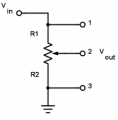
Do you have a DVM or DMM? If you do you can put a pot across a battery (Vin in the circuit below) and connect the panel meter to pins 2 and 3 and adjust the pot to achieve full scale on the panel meter then measure the input voltage with your DVM or DMM. I would use something like a 10 k pot with an additional resistor in series with Vin to limit current just in case your panel meter turns out to actually be an ammeter.

upload_2018-7-23_11-34-18.png
 

Thread Starter

whitehaired novice

Joined Jul 15, 2017
289
This is what I have found about those odd meters.

I used a 2.5 volt precision source connected to a precision 10k resistor in series with a 5k, three turn pot. This gave me a variable voltage of about 2.5 / 3 = .8 volts down to 0 volts. I connected the voltmeter in parallel with the digital panel meter—called dpm. The voltmeter was on the 2 volt range.

I took seven readings and compared the voltage with what was displayed on the dpm.

Example: voltage 0.256 volts dpm 67.98 factor of dpm over voltage 265.22.

For all seven readings the factor was between 266.67 and 265.54, indicating a large degree of linearity.

Obviously, the dpm reads a much larger number but it is an odd number; when the dpm reads 100 the real voltage is pretty close to 0.376. Weird.

Next I arranged a variable shunt with a resistance adjustable between 200 ohms and 400 ohms—a 200 ohm resistor in series with a 200 ohm twenty turn trimmer.

I changed to voltage to 10 volts and connected the two meters in series with a 51k resistor to the 10 volts. This was found by trial and error to give me a reading on my multimeter set to the 200 uamp range of 190.12 uamps.
I adjusted the trimmer till the two meters read exactly the same. The measured value of the shunt is 391.7 ohms though that is not necessarily exact since I distrust my LCR meter, especially on values under 1k.

I swapped the two meters and found the shunt performed perfectly on both. So now I have two working meters which measure 0 to 199.99 uamps. I'll have to do more tests to be confidant, but I think I have solved this problem.
 
Top