Facebook
 Google
 GitHub
 Linkedin
I'm not sure if anyone will be able to help me out and I'm sorry to just burst in here. I'm new to the forum, so I'm hoping I'm not going to offend anyone.
As I approach retirement, I'm hoping to get a better understanding of electronics - really to 'close the loop' a bit on a hobby and interest I had from childhood.
When I was younger, I tinkered and built things - heck, I even managed some decent repairs. But I was always a bit weak on theory. That haunted me when I came up against my nemesis - a Pulsar ZERO 2250 sound to light controller mostly used by mobile DJs. These were commonly available in the 1980s, but a bit prone to failure. I was often presented with them, but never able to repair them myself.
They had a weird power-supply set up. Unlike the transformers and bridge rectifiers common at the time, these little babies dispensed with that bulky part and opted to connect the PCB to mains voltage (220v/110v). They make use of a zener diode, a large wire-wound resistor, and some low voltage electrolytes, and a couple of diodes.
But mentally, I just don't 'get it'.
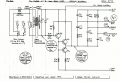
I've attached the diagrams, does the way this work make sense to the more experienced people here? Is anyone able to explain it?
Thank you.
Riko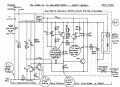
As I approach retirement, I'm hoping to get a better understanding of electronics - really to 'close the loop' a bit on a hobby and interest I had from childhood.
When I was younger, I tinkered and built things - heck, I even managed some decent repairs. But I was always a bit weak on theory. That haunted me when I came up against my nemesis - a Pulsar ZERO 2250 sound to light controller mostly used by mobile DJs. These were commonly available in the 1980s, but a bit prone to failure. I was often presented with them, but never able to repair them myself.
They had a weird power-supply set up. Unlike the transformers and bridge rectifiers common at the time, these little babies dispensed with that bulky part and opted to connect the PCB to mains voltage (220v/110v). They make use of a zener diode, a large wire-wound resistor, and some low voltage electrolytes, and a couple of diodes.
But mentally, I just don't 'get it'.
I've attached the diagrams, does the way this work make sense to the more experienced people here? Is anyone able to explain it?
Thank you.
Riko