Complete noob stacked MOSFET question

Alec_t

Joined Sep 17, 2013
15,121
I can't see any constant current module being happy with having its load switched on and off at umpteen Hz, but I could be wrong. You might find some modules would survive, but others could fail spectacularly.
 

shortbus

Joined Sep 30, 2009
10,050
I'm ultimately trying to make an external circuit thats universally attachable to any AC-DC driver (CC or CV, up to 650w continuous and 250v) on the output side, so that I can dim the LEDs attached.
Your back to 250V output for LEDs!! Have you done any looking at how a LED works?? Most of them are only going to need around 3VDC, so why the insistence of needing 250V?? https://en.wikipedia.org/wiki/Light-emitting_diode

I'm really trying/wanting to help you but think Spinnaker was correct, this should be shut down before you hurt yourself. Or you need to do more to explain your idea. Maybe give a link to what you want?
 

Thread Starter

Chiefrunningphist

Joined Feb 22, 2019
37
Your back to 250V output for LEDs!! Have you done any looking at how a LED works?? Most of them are only going to need around 3VDC, so why the insistence of needing 250V?? https://en.wikipedia.org/wiki/Light-emitting_diode

I'm really trying/wanting to help you but think Spinnaker was correct, this should be shut down before you hurt yourself. Or you need to do more to explain your idea. Maybe give a link to what you want?
I'm not back to 250v, I've never moved!

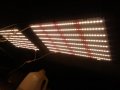
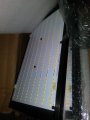
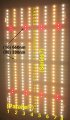
I posted pics of a possible LED array I would be PWM dimming. Here it is again...
0112190624.jpg

1 board is 8 parallel strings of 38 lm561 in series. 38 × 3 = 114v!...
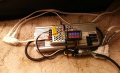
0111191954c.jpg

Here's the driver (320h-2800a), 2 duct tape plugs for boards [parallel, (notice the voltage is over 100v), but could wire in series if using a 1400mA 320w CC driver (or 228v!)], 2 white plugs for heatsink fans (using the driver that powers my ammeter)...
USER_SCOPED_TEMP_DATA_MSGR_PHOTO_FOR_UPLOAD_1549944173609.jpg_1549944175839.jpeg

Look up Quantum Board, or COB. Many LED options that are over 3v!
https://m.alibaba.com/amp/showroom/quantum-board.html

You need to read my posts before jumping to conclusions. LEDs are something I'm fairly competent in. It's the PWM dimming of CC drivers via their output side that I'm requesting help on.

The QB's I posted pics of are only 1 style of many different designs. Different brand chips, different sizes, different layouts, ect. The driver I posted is only 1 of many different drivers that is capable of powering variable LED design arrays.

I'm trying to design a cct by where the driver and/or light setup connected (within the 650w, 250v, 14A maxes, yes there's headroom in those figures) can be controlled with 1 controller.


Any driver ----> controller ----> any light setup.
(Within maximums)


I've got most of the controller designed except for a way to dim CC drivers. That's what I'm requesting help on. A way to externally dim a CC driver, or any variable PS within the max ratings I've stated. I figured they probably make PWM capable CC drivers and was going to use those for my aux DC lines, but its the main DC line that I'm designing for, as I have "a" style MW CC drivers with no PWM leads ("b" styles include PWM leads).

So far @Alec_t is the only one that's actually grasped what it is I'm trying to do. Thanks for your input Alec, I'm thinking you may be right, or at least the workaround is more effort than just obtaining PWM capable drivers in the first place, but seems there may be some utility in a device capable of dimming CC drivers, so perhaps it's worth figuring out after all (aside from my personal application, and if not already existing)?
 

Thread Starter

Chiefrunningphist

Joined Feb 22, 2019
37
@shortbus

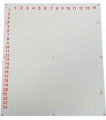
Here's a few other examples of multi mid-power LED arrays, or commonly called QBs, or quantum boards..
USER_SCOPED_TEMP_DATA_orca-image-617894793.jpeg_1548084376822.jpeg
USER_SCOPED_TEMP_DATA_orca-image--1349352753.jpeg_1547807355840.jpeg

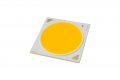
COB = chip on board, another type of multi LED array, here's a CREE cxb3590 with a forward voltage of 36v...
CREE__00436.1504213123.jpg
 

Thread Starter

Chiefrunningphist

Joined Feb 22, 2019
37
EDIT: I continually say CC drivers, because I'm working with LED, but I'm guessing due to the variability that both/either CC and/or CV drivers would have compatibility issues attempting to adjust V/I outside their limits of operation if an external dimming device was applied to the DC output...
 

Thread Starter

Chiefrunningphist

Joined Feb 22, 2019
37
I can't see any constant current module being happy with having its load switched on and off at umpteen Hz, but I could be wrong. You might find some modules would survive, but others could fail spectacularly.
What if I switched the AC side (slower) and had the output power go through a slow discharge cap cct and then finally through a PWM switching cct to power the LEDs? This is all just "generally speaking."
 

Thread Starter

Chiefrunningphist

Joined Feb 22, 2019
37
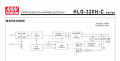
Well I can't find an "a" style schematic, or a schematic with the POT instead of PWM leads, but it looks like the PWM dimming leads are actually manipulating current on the AC side..
Screenshot_2019-02-26-00-52-01~2.png

I'm thinking Id have to switch the AC side and wire a CAP cct in parallel on the output side to regulate the flow and voltage of the LED cct. Essentially as I continue on down this path it seems like I'm almost making a redundant DC-DC driver. Idt I'm going to find the easy solution I was hoping for. :/

I hate to give up, if someone might be able to drop a few breadcrumbs of possible workarounds it would be greatly appreciated. I don't know much about cct's but have the capacity to learn, I'm just looking for a direction to start looking...
 

Alec_t

Joined Sep 17, 2013
15,121
Whether you try switching the input side or the output side of a rated non-dimmable CC or CV driver, the feedback loop inside the driver will be doing its best to compensate and maintain its preset current/voltage, so I don't think you'll win. My guess is you'll end up with flashing LEDs, driver shut-down, or magic smoke release.
 

Thread Starter

Chiefrunningphist

Joined Feb 22, 2019
37
Whether you try switching the input side or the output side of a rated non-dimmable CC or CV driver, the feedback loop inside the driver will be doing its best to compensate and maintain its preset current/voltage, so I don't think you'll win. My guess is you'll end up with flashing LEDs, driver shut-down, or magic smoke release.
Yes, thanks @Alec_t. I've come to accept the bitter taste of defeat. Pshluey! It tastes horrible! lol (but honestly it's not so bad Ill just have to use "b" style drivers or PWM dimmable drivers, so be it).

Thanks for all your patience everyone.
 

Alec_t

Joined Sep 17, 2013
15,121
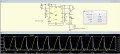
Here's a simulation of the effect of PWM-ing the output of a constant-current LED driver.
This driver is designed normally to give a constant 100mA drive to a 10-LED string represented by the single LED, but I added FET M1 and a 50% duty-cycle 1kHz pulse source V2 to drive the FET.
GatedCCsource.PNG
As you can see, the LED current (blue trace) is now very spikey, with 1.3A peaks, but still has an average value of 106mA. In other words the 50% PWM does'nt result in any dimming; rather, the average current actually increases to 106mA from the original 100mA!
 

Thread Starter

Chiefrunningphist

Joined Feb 22, 2019
37
Here's a simulation of the effect of PWM-ing the output of a constant-current LED driver.
This driver is designed normally to give a constant 100mA drive to a 10-LED string represented by the single LED, but I added FET M1 and a 50% duty-cycle 1kHz pulse source V2 to drive the FET.
View attachment 171079
As you can see, the LED current (blue trace) is now very spikey, with 1.3A peaks, but still has an average value of 106mA. In other words the 50% PWM does'nt result in any dimming; rather, the average current actually increases to 106mA from the original 100mA!
Thanks for that.

I'm just curious what would happen if you switched on the AC side in that simulation? If the detection cct wasn't trying to compensate?

I know this next line of thinking is based in DC, but it makes sense that the driver would operate within some upper and lower bounds of input limits, ie input V/I, and possibly, one could design a cct by where the input limits needed for operation of the driver were controlled by how fast a cap (sized to meet the required driver operation V/I) charged and discharged. This discharging cap would power the driver momentarily until the cap discharged again. I'd control how fast the cap charges via some digital POT or PWM cct?

^^ This all just "generalizations"

And then finally, after this line of reasoning has been spent, ill leave ya all alone lol
 

Thread Starter

Chiefrunningphist

Joined Feb 22, 2019
37
^^^ Scrap my last post, a charging discharging cap at the power trying to be supplied by the hand made settings on the driver, will just flicker or blink trying to output the externally "dimmed" light desire, in stages. On off on off on off, ... Or at least I think, and I'd rather put more effort into a possibly more fruitful idea..


@shortbus , @Alec_t

What about using a SSR & P-MOSFET combo to switch the driver output between the light array and a DC->AC converter?

So that the time duration while the duty cycle is off, the driver output is diverted elsewhere and wasn't actually effecting the averaged current measurement made by the driver (which would traditionally try to adjust the voltage but be outside its bounds), and ultimately avoiding a trip of its overload voltage protection cct?
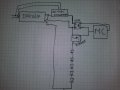
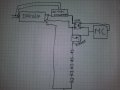
0227190107.jpg
 

Thread Starter

Chiefrunningphist

Joined Feb 22, 2019
37
Do a 180 and take a look at DALI LED dimmers.
Ive looked into DALI, and I like it, but still don't see how they could externally dim "a" style MW drivers?

I was originally going to put a DALI router in the control box, but they get spendy and I think the NodeMCU (Esp8266) is pretty capable of doing what it is I want. I better go back and give it a second look though lol, thanks. As of now, I'm attempting to use MQTT and the ESP8266.
 

shortbus

Joined Sep 30, 2009
10,050
I'm not now sure what your trying to do, yet again. Have you looked into the Meanwell LED drivers? The page has many "option" boxes that you can chose from to get exactly what YOU need. Using their catalog will allow you to make the best choice for your project. On another note, are you sure your LEDs are capable of being dimmed? Not all are.
https://www.trcelectronics.com/mean...eSize=15&viewMode=list&orderBy=5&pageNumber=1
 

Alec_t

Joined Sep 17, 2013
15,121
I'm just curious what would happen if you switched on the AC side in that simulation?
That sim had a DC input. Haven't added AC/rectifier/reservoir cap at the input to do the AC bit, but here's a sim of the effect of PWM-ing the input of a 5VDC-to-12VDC boost converter, at 1kHz with a 50% duty cycle.
The result is an output lower than the hoped-for one, with huge ripple. A similar result could be expected if PWM-ing an off-line converter.
 

Thread Starter

Chiefrunningphist

Joined Feb 22, 2019
37
I'm not now sure what your trying to do, yet again. Have you looked into the Meanwell LED drivers? The page has many "option" boxes that you can chose from to get exactly what YOU need. Using their catalog will allow you to make the best choice for your project. On another note, are you sure your LEDs are capable of being dimmed? Not all are.
https://www.trcelectronics.com/mean...eSize=15&viewMode=list&orderBy=5&pageNumber=1
Yes I know about the different driver options, I'm trying to make a controller for ANY driver, no matter the checkbox chosen. :)


Ok, a couple of assumptions I'm making here.

1.
A P-channel MOSFET is a "closed" switch until acted upon, and basically an inverted N-channel MOSFET, which is an "open" switch until acted upon.

2.
The SSR (or all SSRs) are "open" switches until acted upon.


The explanation:
I'm wiring an SSR and P-Channel MOSFET in parallel to the MC PWM output pin.

These components are opposite switches of each other, ie, when one switch is "open," the other is "closed." (See assumptions)

I then run the driver output to this diversion cct which diverts driver power to either the LED or an AC-DC converter (to recycle the power spent not lighting up the LED).

When the MC supplies the 5v it goes to both components but the SSR is "closed" and the P MOSFET is "open," so the current gets directed to the inverter. When the MC supplies no voltage, then the P MOSFET is "closed" and the SSR is "open" and the current is directed to the LED array.


A CC driver will adjust its output voltage dependepent on the resistance of the load in order to remain at a "constant current." This voltage adjustment made by the driver causes problems with PWM dimming on the driver output because the driver averages the current per time and views the PWM dimming as a variable resistor and when you try to dim low, the driver has to kick up the voltage trying to maintain its CC through what it thinks is a high resistance till eventually it trips its overload voltage protection cct (that part I'm assuming on via driver block schematic and personal experience).

Here's the PWM dimming cct that makes the entire cct LESS efficient as you dim lol (which negates dimming the LEDs - the inverter is not 100% efficient)..
0227190107.jpg

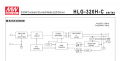
Here's the block diagram of a basic MW driver...
Screenshot_2019-02-26-00-52-01~2.png

I'm pretty much giving up unless @Alec_t you can find a way without using an inverter (although I don't even know if it would work in the first place?)? Because that's pretty expensive, and like what @shortbus said, there's plenty of drivers that are PWM capable to begin with.
 

Alec_t

Joined Sep 17, 2013
15,121
to recycle the power spent not lighting up the LED)
You are looking to design for 650W power. It won't be trivial to divert that amount. Do you have a suitable load to handle that? Bear in mind the likely unregulated output of the inverter, such as shown in the second sim. It ain't a pretty sight. Also, it results in current spikes several times the amplitude of the un-modulated /un-chopped supply. Whether the internal semiconductors will cope with that is debatable.
 
Top