Facebook
 Google
 GitHub
 Linkedin

Hello and thanks in advance for your help.
I started playing with electronics about 5 years ago when I got my first Alexa. Purchased some Wemos D1 Minis (Esp8266's modules) and some cheap USB power supplies. Quickly realized that no all USB power supplies were equal, as the cheap ones would make the D1 Mini act up, especially when it came to using touch sensors. As I got more experiance I stopped buying USB power supplies and instead got some real 5v power supplies, mainly the HiLink HLK-PM01 (5v .6A). I never looked at its datasheet or anything. I just soldered some wires to the pins, connected the AC lines to the AC, and connected my 5v devices directly to the 5v output. I have about 10 devices currently set up like this for over 3 years and haven't had any issues. I connected most of my modules with cat5 cables, and ended up with the nest of wires, but all the devices work as expected.
About 3 months ago I realized I could easily design my own pcb boards and have them done and shipped from China very cheap. Now that I am designing my own pcb's I am actually taking the time to look at the datasheets. I am now looking to start working with HiLinks HLK-10M05 wich is a 5v 3A ac to dc power supply.
The datasheet can be seen here https://www.rhydolabz.com/documents/30/HLK-10M05 Datasheet.pdf
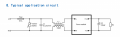
I now have a few questions. First is the classic "if it ain't broken don't fix it". I have used over 10 similar power supplies for the last 3 years without any of the capacitors, varistor, etc., and didn't have an issue. In fact only 3 or 4 have a fuse on the Live wire, the rest are connected straight to the mains. They have gone through many power outages, some caused by thunder and so far ZERO issues.
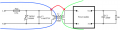
The data sheet mentions "Fuse and varistor are basic protective circuits." I had already implemented a fuse on my PCB design, and was able to locate correct varistor on the LCSC site (I design using EasyEDA) so plan to use them.
Now the C1, L1 and C2 are the ones I haven't figured out yet.
The datasheet states "If you need to pass the authentication, the Anchorage capacitance and common-mode inductance must not be omitted." I have no idea what they mean by "pass the authentication". Since I don't know what it means I am assuming I am not passing authentication, so I could be ok not using them?
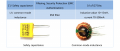
What would be the downfall of not using the safety capacitance and the common-mode inductance? (If I do have to include them I would have to find a bigger box and re design my board since with my current setup I am MAXED out on space)
Assuming it is very important that I use those parts, how would I find them? Well as I was typing this post I did manage to find the Safety Capacitor in LCSC. I wasn't finding anything that was .1uF but after quick google search found out .1uf is 100nF. However the Common-mode inductance I seem to be hitting a dead end.
When I go to https://www.lcsc.com/products/Inductors-Coils-Chokes_316.html I don't know which section I should look in.

I started playing with electronics about 5 years ago when I got my first Alexa. Purchased some Wemos D1 Minis (Esp8266's modules) and some cheap USB power supplies. Quickly realized that no all USB power supplies were equal, as the cheap ones would make the D1 Mini act up, especially when it came to using touch sensors. As I got more experiance I stopped buying USB power supplies and instead got some real 5v power supplies, mainly the HiLink HLK-PM01 (5v .6A). I never looked at its datasheet or anything. I just soldered some wires to the pins, connected the AC lines to the AC, and connected my 5v devices directly to the 5v output. I have about 10 devices currently set up like this for over 3 years and haven't had any issues. I connected most of my modules with cat5 cables, and ended up with the nest of wires, but all the devices work as expected.
About 3 months ago I realized I could easily design my own pcb boards and have them done and shipped from China very cheap. Now that I am designing my own pcb's I am actually taking the time to look at the datasheets. I am now looking to start working with HiLinks HLK-10M05 wich is a 5v 3A ac to dc power supply.
The datasheet can be seen here https://www.rhydolabz.com/documents/30/HLK-10M05 Datasheet.pdf
I now have a few questions. First is the classic "if it ain't broken don't fix it". I have used over 10 similar power supplies for the last 3 years without any of the capacitors, varistor, etc., and didn't have an issue. In fact only 3 or 4 have a fuse on the Live wire, the rest are connected straight to the mains. They have gone through many power outages, some caused by thunder and so far ZERO issues.
The data sheet mentions "Fuse and varistor are basic protective circuits." I had already implemented a fuse on my PCB design, and was able to locate correct varistor on the LCSC site (I design using EasyEDA) so plan to use them.
Now the C1, L1 and C2 are the ones I haven't figured out yet.
The datasheet states "If you need to pass the authentication, the Anchorage capacitance and common-mode inductance must not be omitted." I have no idea what they mean by "pass the authentication". Since I don't know what it means I am assuming I am not passing authentication, so I could be ok not using them?
What would be the downfall of not using the safety capacitance and the common-mode inductance? (If I do have to include them I would have to find a bigger box and re design my board since with my current setup I am MAXED out on space)
Assuming it is very important that I use those parts, how would I find them? Well as I was typing this post I did manage to find the Safety Capacitor in LCSC. I wasn't finding anything that was .1uF but after quick google search found out .1uf is 100nF. However the Common-mode inductance I seem to be hitting a dead end.
When I go to https://www.lcsc.com/products/Inductors-Coils-Chokes_316.html I don't know which section I should look in.