Facebook
 Google
 GitHub
 Linkedin
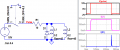
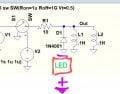
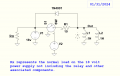
Let's say I have a 2, 12 Volt solinoids. They each have a resistance of 45 Ohms and placed in parellel and are powered by 2, 18.V Batteries and driven through a 10 ohm resistor via pulsed DC.
Without a freewheeling diode, there would be a high arc that would destroy the contacts and cause many more issues because of the "emf kickback" when the pulse is in its "off" state and creates an "open" in the circuit.
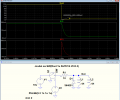
Adding the freewheeling diode, or diode resistor in series across the solinoid prevents this condition. My question is that if only a single diode is used across the coils and not needing to be Accurate how much current would generally be dissipated across the diode? 10ma 50ma 100ma ? Just a general idea would be ok.
Without a freewheeling diode, there would be a high arc that would destroy the contacts and cause many more issues because of the "emf kickback" when the pulse is in its "off" state and creates an "open" in the circuit.
Adding the freewheeling diode, or diode resistor in series across the solinoid prevents this condition. My question is that if only a single diode is used across the coils and not needing to be Accurate how much current would generally be dissipated across the diode? 10ma 50ma 100ma ? Just a general idea would be ok.