Thanks for your interest, but none of that is really relevant if you read the whole thread, and am now confident that I have a solution for thermostatic control over the system to avoid having to operate the AC ON/OFF button manually.Does it not have a 3 or 4 blower speed controller switch + a hot / cold controller, switch / button / slider ?
what make, model, year of vehicle is it ?
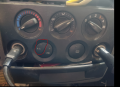
I wonder if anyone can help me with this. My vehicle, a camper van, was not able to be purchased with the optional full climate control system, so I am stuck with a manual system whereby the cooling function is turned on or off by a simple button on the heating control panel. On a recent trip to sunnier climes, this led to us alternately freezing and sweltering due to having to remember to manually control this in a timely manner.
I think it is relevant, I dont think there is a vehicle manufacturer on this planet that would be allowed to sell a vehicle that froze the occupants half to death, specially the driver? even with a manual system the compressor will cut in and out when neededThanks for your interest, but none of that is really relevant

The way mine seems to work it that the temp knob simply controls the hot water flow through the heater core and ranges from very hot air at one extreme to no heating and so ambient temperature air at the other extreme. If you want to be cooler than ambient you turn on the AC and in my experience there is no linkage with the heater setting so it will just keep getting colder until you turn the AC off.
Now it sounds like when you have the AC operating and it starts to get too cold you just turn the temperature knob up a bit but leave the AC running. However I strongly suspect that rather than that action intelligently controlling the AC all you are actually doing there is warming up the cold air from the AC by allowing some hot water flow through the heater core.
I would be very surprised with a manual system if there is any electronic linkage between the AC control system and the hot water flow control, as the latter appears to be entirely mechanical and operated by a metal rod moved by the knob on the fascia. I suppose it is possible that the other end of the metal rod operates some sort of sensor but this seems unlikely as the logical place to do this would be on the control panel temperture knob but there are no electronics attached to that knob. It appears that the only interfacing to the AC from the heater/fan controls is that if the fan speed is set to zero then the AC won't operate
Adjusting temperature by mixing heat from the heater core with the cold air from a continually running AC seems rather wasteful of the energy required to run the AC compressor which will be the case if there is no thermostat telling the AC when to run and when to stop.
It is a Fiat Ducato, 23 model year with 2.2l diesel engine and 9 speed auto gearbox.Tell us what make model and year the vehicle is and we can have a look how your system operates
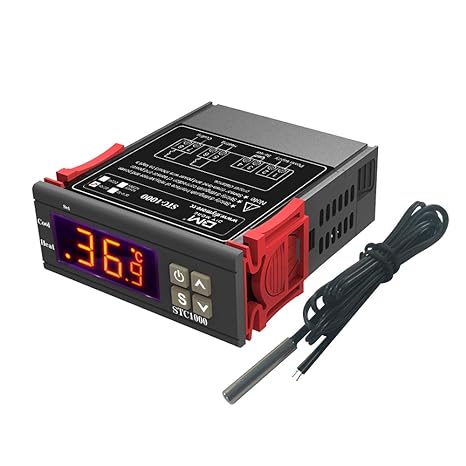
Yes, we have been using the fan as a form of control. Maybe I should increase the hysteresis setting on the thermometer module to perhaps 5 or 6 degrees as that should give a reasonably long time between AC operations without allowing an uncomfortable rise in temperature.I agree that your system likely controls the temperature of the AC by adding heat from the heater core, which obviously is not an efficient way.
I find that I can usually adjust the temperature to a comfortable level, by controlling the speed of the fan.
The one negative consideration to turning the AC on and off, is that it can reduce the life of the compressor clutch, which will be frequently and suddenly engaging the compressor when the engine is at cruising speed.
And is that with the AC on or off?Normal AC, same as in my van, never found it a problem, I normally have it on fan speed 1 with the temp control nearly all the way cold
And is that with the AC on or off?
Being a 2023 vehicle it probably will not have a clutch on the AC comp, times have changed they have clutch-less variable displacement compressors these daysIn several of my vehicles the AC clutch cycled off and on every few minutes. Never had a bit of trouble with it, partly, probably, because by the time it re-engaged the evaporator pressure had fallen. So it is not at all like a refrigerator compressor trying to start after a 3-second power outage. Besides that if you understand the compressor clutch mechanism, it is made for that sort of use.
Take a look at under the hood of a classic car in one of those car shows, and ask the owner to point out the AC compressor and the clutch. OR, if you happen to be lucky enough to know a MASTER MECHANIC, ask them about AC clutch wear.
From the limited information I have been able to find I think you are right. It seems that these days the aircon is managed by an electronic module which reduces fuel consumption by taking account of engine load and other factors in optimising the operation of the aircon compressor.Being a 2023 vehicle it probably will not have a clutch on the AC comp, times have changed they have clutch-less variable displacement compressors these days
Yes, the gate has many megohms impedance.Given that the CMOS logic input is pretty high impedance should it be OK to connection this signal directly to the input of the XOR gate?
Thanks, that is very helpful. I will do that.Yes, the gate has many megohms impedance.
But I would add a 20kΩ resistor in series with the gate to protect it in case voltage is applied to the gate if the gate is inadvertently unpowered.
It will be interesting to see if a lower level AC WITHOUT ANY TEMPERATURE CONTROL would go to the much added expense of what must be a more complex compressor, given that the sole benefit of such is better control. The efficiency would come from not using heated water to adjust the cooling temperature.From the limited information I have been able to find I think you are right. It seems that these days the aircon is managed by an electronic module which reduces fuel consumption by taking account of engine load and other factors in optimising the operation of the aircon compressor.
[I guess it is down to economies of scale. Once they start using different technologies for models with a more high end climate control type AC, I guess it is simpler to use the same hardware for all variants of a vehicle. My van has a whole load of extra unused connectors behind the dashboard which I guess are there to accomodate other variantsIt will be interesting to see if a lower level AC WITHOUT ANY TEMPERATURE CONTROL would go to the much added expense of what must be a more complex compressor, given that the sole benefit of such is better control. The efficiency would come from not using heated water to adjust the cooling temperature.