Facebook
 Google
 GitHub
 Linkedin
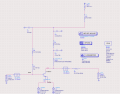
Im currently working on a two stage LNA, and im getting inspiration from the evaluation board infinionen designed to test the BFP842ESD transistor. Here they state that the RF-choke used, is also apart of the matching circuit for both ports. And that C4 is used for output matching and stability improvement. They state that C2 and C3 is decoupling capacitors.
I decided then to tune the RF-choke at the output together with C4 for stability improvement and together with a series resistor i could achieve unconditional stability.
So the questions is
how does the choke and the capacitor results in stability improvement?
Is this understood correctly?
In GHz application a 2nH inductor will be sufficient to function as a RF-choke, what makes the difference is the self resonance frequency of the inductor
Will a parallel decoupling capacitor have an influence on the RF-choke ?
How do i decide a value for the decoupling capacitors?
I decided then to tune the RF-choke at the output together with C4 for stability improvement and together with a series resistor i could achieve unconditional stability.
So the questions is
how does the choke and the capacitor results in stability improvement?
Is this understood correctly?
In GHz application a 2nH inductor will be sufficient to function as a RF-choke, what makes the difference is the self resonance frequency of the inductor
Will a parallel decoupling capacitor have an influence on the RF-choke ?
How do i decide a value for the decoupling capacitors?