ChatGPT

nsaspook

Joined Aug 27, 2009
16,421
It's called capital investment.

They see something in the future that we mere mortals may not.

And they might be wrong. But, such is business on the bleeding edge.
They are gambling a sizable hunk of their future on a product, any mere mortal can see that.

If the effects were isolated most of use would not care but that capital investment is distorting the entire semiconductor infrastructure for products that people use and depend on today in a bad way.
 
They are gambling a sizable hunk of their future on a product, any mere mortal can see that.

If the effects were isolated most of use would not care but that capital investment is distorting the entire semiconductor infrastructure for products that people use and depend on today in a bad way.
You're retired. You don't get a vote. :)
 

nsaspook

Joined Aug 27, 2009
16,421
You're retired. You don't get a vote. :)
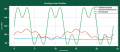
But I do get to pay. My retirement capital investment was buying expected future project parts before the insane price increases on things like once cheap SoC boards and used server machines.

This was $200 at the end of 2024.
1786222283822.png

Now it's almost $700.

1786222961543.png
These were about $35each on my last order. The bang for buck in electronics that uses parts affected by LLM capital investments is very much going negative and is expected to get worse.
 
Last edited:
But I do get to pay. My retirement capital investment was buying expected future project parts before the insane price increases on things like once cheap SoC boards and used server machines.

This was $200 at the end of 2024.
View attachment 370237

Now it's almost $700.

View attachment 370238
These were about $35each on my last order. The bang for buck in electronics that uses parts affected by LLM capital investments is very much going negative and is expected to get worse.
And, when AI goes bust, think of how cheap parts (and high-end GPUs!) will be on the surplus market.

Something to look forward to, no?
 

nsaspook

Joined Aug 27, 2009
16,421
And, when AI goes bust, think of how cheap parts (and high-end GPUs!) will be on the surplus market.

Something to look forward to, no?
Only time will tell but I don't think there will be a surplus parts bonanza under any scenario. Most of it is far too specialized for general compute use and is being run hard with workloads cycles known to kill equipment. The manufacturing capacity that was making GP compute parts (consumer GPU and memory) was allocated for specialized AI parts. Those AI GPUs that could also be used for GP computing are going to get run into the ground before replacement or AI goes bust.
https://blog.citp.princeton.edu/2025/10/15/lifespan-of-ai-chips-the-300-billion-question/
Here is the puzzle: the chips at the heart of the infrastructure buildout have a useful lifespan of one to three years due to rapid technological obsolescence and physical wear, but companies depreciate them over five to six years. In other words, they spread out the cost of their massive capital investments over a longer period than the facts warrant—what The Economist has referred to as the “$4trn accounting puzzle at the heart of the AI cloud.”
...
Technical analyses have converged on estimating the useful lifespan of AI chips at one to three years. One unnamed Google architect assessed that GPUs running at 60-70% utilization—standard for AI workloads—survive one to two years, with three years as a maximum. The reason: thermal and electrical stress is simply too high.

But physical failure isn’t the only concern. Technological obsolescence drives replacement cycles. Nvidia’s GB200 (“Blackwell”) chip provides 4-5x faster inference than the H100. When competitors deploy hardware with significantly better performance, three-year-old chips become economically obsolete even if they still function.
For that ~trillion dollars in capital expenditures, they are grossing a total of ~$45b/year (their likely inflated number), industry-wide. IMO, they have one long shot chance for something us mere mortals can't see.
 
Last edited:

WBahn

Joined Mar 31, 2012
33,060
If they need to replace parts in three years because of obsolescence, then there's no reason not to push them hard enough so that they fail in that same time frame. Though, if that's the case in practice, I doubt it's by design.
 
If they need to replace parts in three years because of obsolescence, then there's no reason not to push them hard enough so that they fail in that same time frame. Though, if that's the case in practice, I doubt it's by design.
From the power problem @nsaspook brought up in a previous post, it sounds like they're only run at full power intermittently, with lots of no- or low-load time. So, they may not be worked nearly as hard as they are spec'd for.
 

nsaspook

Joined Aug 27, 2009
16,421
From the power problem @nsaspook brought up in a previous post, it sounds like they're only run at full power intermittently, with lots of no- or low-load time. So, they may not be worked nearly as hard as they are spec'd for.
1786237702614.png
https://io.net/blog/ai-training-vs-inference
It depends on if they are training or doing inference. Likely the turbine power issues are training related while semiconductor lifetime issues are related to both.

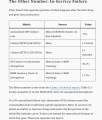
https://fullhoffman.com/2026/03/21/gpu-failure-rates/

1786238644661.png

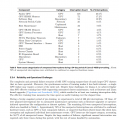
https://arxiv.org/pdf/2407.21783
1786238750756.png
 
View attachment 370243
https://io.net/blog/ai-training-vs-inference
It depends on if they are training or doing inference. Likely the turbine power issues are training related while semiconductor lifetime issues are related to both.

https://fullhoffman.com/2026/03/21/gpu-failure-rates/

View attachment 370245

https://arxiv.org/pdf/2407.21783
View attachment 370246
Wow. I see some low hanging fruit for a smart group of engineers and materials scientists.

Small, incremental improvements are worth lots of money!
 

Alec_t

Joined Sep 17, 2013
15,149
I just asked Meta AI's chatbot if it retained users' chats. It feigned deafness and didn't even indicate that it had received my query, yet alone provide any answer.
 

nsaspook

Joined Aug 27, 2009
16,421
https://finance.yahoo.com/technology/ai/articles/top-economist-warns-ai-math-070000978.htmlTop economist warns that the AI math doesn’t make sense: ‘Profits are currently being funded by investors rather than earned from customers’

Slok broke down AI companies into four categories: models and applications, cloud and compute, energy and grid, and silicon and equipment. Using data from PitchBook and Bloomberg for companies including OpenAI, Anthropic, Microsoft, Amazon, Constellation Energy, Nvidia, AMD, and Micron, Slok calculated that the silicon and equipment category—which includes chipmakers—has the highest profit margin, 41%, in the AI value chain. Meanwhile, models and applications—like Anthropic—have a -59% operating margin.
Slok warns that this sharp disparity is because money from the AI boom is not coming from natural demand for AI applications, but rather shareholders looking to cash in on what they hope is the next technological revolution.
 

nsaspook

Joined Aug 27, 2009
16,421
https://www.the-independent.com/tech/claude-anthropic-update-watermark-new-b3031096.html

Looks like they are using something similar to this.

https://www.nature.com/articles/s41586-024-08025-4
Scalable watermarking for identifying large language model outputs

Generating text with an LLM is often autoregressive: the LLM assigns probabilities to the elements (tokens) of the vocabulary and then selects the next token by sampling according to these probabilities conditional on text generated so far (Fig. 1, top). Generative watermarking (Fig. 1, bottom) works by carefully modifying the next-token sampling procedure to inject subtle, context-specific modifications into the generated text distribution. Such modifications introduce a statistical signature into the generated text; during the watermark detection phase, the signature can be measured to determine whether the text was indeed generated by the watermarked LLM.

1786461773687.jpeg
 
Last edited:
Top