Facebook
 Google
 GitHub
 Linkedin

Then, by all means, feel free to do so.Call me old fashioned, but I think questions should be answered in the order they are asked.
ChatGPT
- Thread starter MisterBill2
- Start date
Scroll to continue with content

You insist on equating different things, namely bad grammar and the evolution of word definitions by way of zero derivation, whereas I'm only interested in addressing the latter as I have no qualms with objections over the former.


When Elon Musk owes anybody money, they have a problem.
When somebody owes you ten bucks, that's his problem. When somebody owes you 136 million bucks, that's your problem.
https://arstechnica.com/culture/202...-so-badly-that-58000-students-must-retake-it/
Earlier this summer, nearly 160,000 applicants took the entrance exam for UNAM, Mexico’s largest university. For the first time, they did it completely remotely, using a “lockdown” browser and AI-powered webcam proctoring software, over several weeks from late May through early June.
It was a disaster.
When exam results came in, they bore little resemblance to past results, especially at the top. Between 2021 and 2025, 3.5 percent of test takers scored 100 or more on the 120-question UNAM test. This year, 16.3 percent did so.
The story was even worse at the highest of the high end. Between 2021 and 2025, 0.9 percent of test takers scored 110 or more; this year, 5.5 percent did so.
The surge in top scores led to accusations of widespread cheating, and UNAM appointed a commission of experts to investigate the situation.
Earlier this summer, nearly 160,000 applicants took the entrance exam for UNAM, Mexico’s largest university. For the first time, they did it completely remotely, using a “lockdown” browser and AI-powered webcam proctoring software, over several weeks from late May through early June.
It was a disaster.
When exam results came in, they bore little resemblance to past results, especially at the top. Between 2021 and 2025, 3.5 percent of test takers scored 100 or more on the 120-question UNAM test. This year, 16.3 percent did so.
The story was even worse at the highest of the high end. Between 2021 and 2025, 0.9 percent of test takers scored 110 or more; this year, 5.5 percent did so.
The surge in top scores led to accusations of widespread cheating, and UNAM appointed a commission of experts to investigate the situation.

This has all the stench of a preexisting quota policy. I'm willing to bet that the real numbers are closer to the AI assisted result, and that the previous statistics are nothing more than manually trimmed evaluations that would guarantee that the state sponsored university is not overflowed by the surge of new recruits that would overwhelm its government assigned resources. Regardless of the amazing talent that would go to waste.https://arstechnica.com/culture/202...-so-badly-that-58000-students-must-retake-it/
Earlier this summer, nearly 160,000 applicants took the entrance exam for UNAM, Mexico’s largest university. For the first time, they did it completely remotely, using a “lockdown” browser and AI-powered webcam proctoring software, over several weeks from late May through early June.
It was a disaster.
When exam results came in, they bore little resemblance to past results, especially at the top. Between 2021 and 2025, 3.5 percent of test takers scored 100 or more on the 120-question UNAM test. This year, 16.3 percent did so.
The story was even worse at the highest of the high end. Between 2021 and 2025, 0.9 percent of test takers scored 110 or more; this year, 5.5 percent did so.
The surge in top scores led to accusations of widespread cheating, and UNAM appointed a commission of experts to investigate the situation.
Gee, big surprise.https://arstechnica.com/culture/202...-so-badly-that-58000-students-must-retake-it/
Earlier this summer, nearly 160,000 applicants took the entrance exam for UNAM, Mexico’s largest university. For the first time, they did it completely remotely, using a “lockdown” browser and AI-powered webcam proctoring software, over several weeks from late May through early June.
It was a disaster.
When exam results came in, they bore little resemblance to past results, especially at the top. Between 2021 and 2025, 3.5 percent of test takers scored 100 or more on the 120-question UNAM test. This year, 16.3 percent did so.
The story was even worse at the highest of the high end. Between 2021 and 2025, 0.9 percent of test takers scored 110 or more; this year, 5.5 percent did so.
The surge in top scores led to accusations of widespread cheating, and UNAM appointed a commission of experts to investigate the situation.
When I was teaching at the Air Force Academy, one of the very top LMS (Learning Management System) vendors came to the Computer Science Department because they wanted us to see if they could break out of their lockdown browser that they had already released and that many schools were using. They seemed real confident that they had it down and, I think, were just looking for a shiny gem to be able to point to from an advertising talking point (but that's pure speculation on my part). Barely into the initial meeting where they were describing what they wanted us to try, one of the faculty got up and went back to her office. She came back about fifteen minutes later and demonstrated how you could break out of the lockdown browser, go out and serve the Internet, and then come back into the lockdown browser without the system knowing any better.
Now, granted, this gal was scary competent. But all of these schemes for remote monitoring fail to given even a fraction of attention to all of the low tech ways that people can figure out how to defeat them. They intend to assume that the cheater has to be acting alone, that they have to only be using a single computer, and that they have to defeat the system's guardrails in order to cheat.
Consider the following: The test taker's HDMI output is fed to a video capture card on a second computer in another room. A person in that room therefore sees what is being displayed by the test and then uses whatever resources they want to, which could include a team of people in the room, the Internet, LLMs, paid professionals in Bangladesh, or whatever, and they then present the answer, whether it's a text box or a circle over the letter of the correct answer. Then they simply use an HDMI splitter to replicate the image on their screen back onto the test taker's machine. The hardware needed to do this, and HDMI capture card and an HDMI splitter, are cheap (each can be had for about $10) and there's no need to use anything beyond that in the way of software, though a simple Python script could make things more convenient. The lockdown browser can't detect the fact that it is connected to a video capture device (though you might need to use a capture card that can be configured to act as a basic display). The camera that is viewing the test taker would have a very hard time detecting anything amiss by examining the test takers actions or eye movements. They are looking at the actual image that they are expected to be looking at, with the cheating material simply being superimposed right next to where the test taker needs to be looking to answer the question anyway.
If I understand what you are claiming, in previous offerings six times as many people scored 110/120, but the university artificially lowered the scores of 5/6-ths of them to keep the enrollment numbers down. But, now, for some reason, they aren't simply doing the same exact thing with the current scores. Okay, let's say that there is some technical means that prevents them from doing that with the new system. Since the university knows what they've been doing and that they couldn't keep doing it, why would they agree to adopting the new system? Especially when it is quite easy to make the case that the possibility for cheating is too high.This has all the stench of a preexisting quota policy. I'm willing to bet that the real numbers are closer to the AI assisted result, and that the previous statistics are nothing more than manually trimmed evaluations that would guarantee that the state sponsored university is not overflowed by the surge of new recruits that would overwhelm its government assigned resources. Regardless of the amazing talent that would go to waste.
Which is easier to believe? That explanation, or that a significant fraction of students taking a very weakly controlled entrance exam are likely to find simple ways to cheat?
Just look at what happens in quite a few places, including parents climbing on the outside of multi-story buildings right out in the open to pass answers to their kids taking exams.
Parental Guidance, Bihar Style. Parents Help Class 10 Students in Large-Scale Cheating

https://techcrunch.com/2026/08/04/a...s-may-have-taken-confidential-data-to-openai/
“For example, another former Apple employee seems to have met with Mr. Liu and Ms. Peng in advance of Ms. Peng’s interview at OpenAI and discussed with them during that meeting Apple proprietary information relating to unannounced products,” the filing states. “Yet another former Apple employee took screenshots of confidential Apple documents relating to an unannounced Apple product before an interview at OpenAI.”
“And, after Apple filed its complaint, multiple former Apple employees now working at OpenAI reached out to discuss returning Apple-issued work devices they kept when they left Apple,” Apple claims, suggesting there were more who were possibly involved with the scheme.
Apple is pushing the court to allow for expedited discovery because it believes it has good cause to suspect that there are others involved in the theft of its intellectual property. The company noted that its motion for a preliminary injunction is also pending.
OpenAI responded publicly to Apple’s latest, saying in a blog post that Apple’s request for a preliminary injunction is “both based on false information and completely unnecessary because we do not have, nor want, any of their trade secrets.”
“For example, another former Apple employee seems to have met with Mr. Liu and Ms. Peng in advance of Ms. Peng’s interview at OpenAI and discussed with them during that meeting Apple proprietary information relating to unannounced products,” the filing states. “Yet another former Apple employee took screenshots of confidential Apple documents relating to an unannounced Apple product before an interview at OpenAI.”
“And, after Apple filed its complaint, multiple former Apple employees now working at OpenAI reached out to discuss returning Apple-issued work devices they kept when they left Apple,” Apple claims, suggesting there were more who were possibly involved with the scheme.
Apple is pushing the court to allow for expedited discovery because it believes it has good cause to suspect that there are others involved in the theft of its intellectual property. The company noted that its motion for a preliminary injunction is also pending.
OpenAI responded publicly to Apple’s latest, saying in a blog post that Apple’s request for a preliminary injunction is “both based on false information and completely unnecessary because we do not have, nor want, any of their trade secrets.”
You insist on equating different things, namely bad grammar and the evolution of word definitions by way of zero derivation, whereas I'm only interested in addressing the latter as I have no qualms with objections over the former.
I don't know if this is AI-related or not, but wouldn't be surprised.

Note to self: Dictionary.net is crap.
In addition, the third example uses it as a verb even though the provided definition claims it is a noun.
Then there's the dubious memory tip. How does thinking of 'bath' help me remember that 'bain' is a person or thing that is a cause of harm or ruin???
The word isn't listed in the Merriam-Webster dictionary, except as a surname. It does appear to be listed in the Oxford English Dictionary (OED), but that requires a subscription.
Looking at the other available sources, which are of unknown reliability, it appears that it is an obsolete term borrowed from French and means 'bath'.
A couple of sources, which claim to be drawing information from OED, say that it is obsolete with the last citable reference being in the 1600s, but other sites say that it is a common word in everyday French. These two claims aren't necessarily at odds, given that the first is referring to English, but it's just a bit surprising given many people (particularly those that like to present an air sophistication) love to borrow words from French when talking about common things.
Then you have a slew of seemingly random definitions at
https://www.diffbt.com/bain-vs-bane/
These include:
Direct; near; short; gain.
Limber; pliant; flexible.
Ready; willingly.
Nearby; at hand.
None of these would seem to have any connection to being derived from a word that means a bath. The word 'bane' on the other hand (in this list) only consists of closely-related meanings.
Note to self: Dictionary.net is crap.
In addition, the third example uses it as a verb even though the provided definition claims it is a noun.
Then there's the dubious memory tip. How does thinking of 'bath' help me remember that 'bain' is a person or thing that is a cause of harm or ruin???
The word isn't listed in the Merriam-Webster dictionary, except as a surname. It does appear to be listed in the Oxford English Dictionary (OED), but that requires a subscription.
Looking at the other available sources, which are of unknown reliability, it appears that it is an obsolete term borrowed from French and means 'bath'.
A couple of sources, which claim to be drawing information from OED, say that it is obsolete with the last citable reference being in the 1600s, but other sites say that it is a common word in everyday French. These two claims aren't necessarily at odds, given that the first is referring to English, but it's just a bit surprising given many people (particularly those that like to present an air sophistication) love to borrow words from French when talking about common things.
Then you have a slew of seemingly random definitions at
https://www.diffbt.com/bain-vs-bane/
These include:
Direct; near; short; gain.
Limber; pliant; flexible.
Ready; willingly.
Nearby; at hand.
None of these would seem to have any connection to being derived from a word that means a bath. The word 'bane' on the other hand (in this list) only consists of closely-related meanings.
All these reports about different AI's hacking companies here and there are beginning to look suspicious to me. They sound more like bragging about how powerful they are rather than a warning about the potential consequences of their unchecked capabilities.
I tend to agree. How hard is it to run a test in an air-gapped sandbox, especially for these companies that have massive data centers and already have copies of significant portions of web content?All these reports about different AI's hacking companies here and there are beginning to look suspicious to me. They sound more like bragging about how powerful they are rather than a warning about the potential consequences of their unchecked capabilities.
Just had an experience that provides more anecdotal evidence that what OpenAI claims about their commitment to user privacy is hogwash.
I don't sign in to to ChapGPT (don't even have an account). I frequently use the "New chat" feature to clear out the current discussion when I shift topics so that the prior topic does not influence or contaminate the new topic. Earlier today I was asking some questions about Killer Sudoku, trying to get some information about the scale of number of unique valid game boards when no cells are prefilled (turns out that this is a hard problem that is only known within ±10 orders of magnitude, according to ChatGPT). I then started a new chat and discussed a few other things. Then I started a new chat and was asking about the kind of information and how much information about the Internet, particularly the World Wide Web, is archived on Google's and other platforms' servers. It provided a fairly detailed description and then provided an example of how a search for "Killer Sudoku" might be handled. I then asked it how much information from prior chats is retained, and where is it retained, particularly when someone is using the free version and does not have an account. It stated that no information is retained from prior discussions. I then asked it if selecting "New chat" is what started a new discussion, and it said that it was. I then asked it why it chose to use "Killer Sudoku" as the example Internet search and it said that it used that because it was the topic of a previous discussion.
I don't sign in to to ChapGPT (don't even have an account). I frequently use the "New chat" feature to clear out the current discussion when I shift topics so that the prior topic does not influence or contaminate the new topic. Earlier today I was asking some questions about Killer Sudoku, trying to get some information about the scale of number of unique valid game boards when no cells are prefilled (turns out that this is a hard problem that is only known within ±10 orders of magnitude, according to ChatGPT). I then started a new chat and discussed a few other things. Then I started a new chat and was asking about the kind of information and how much information about the Internet, particularly the World Wide Web, is archived on Google's and other platforms' servers. It provided a fairly detailed description and then provided an example of how a search for "Killer Sudoku" might be handled. I then asked it how much information from prior chats is retained, and where is it retained, particularly when someone is using the free version and does not have an account. It stated that no information is retained from prior discussions. I then asked it if selecting "New chat" is what started a new discussion, and it said that it was. I then asked it why it chose to use "Killer Sudoku" as the example Internet search and it said that it used that because it was the topic of a previous discussion.

Whether you use 'End chat, 'Clear chat' or 'Delete chat' (or whatever other options there are) seems to make no difference. ChatGPT still remembers the chat and can refer to it if a similar topic is raised in a subsequent chat. Despite that, it asserts that it relies only on data it has been trained on and doesn't accept corrections offered by prompt posters.
https://www.investors.com/news/turbine-generator-ai-data-center-power-threat/
AI Data Center Turbines, Backlogged For Years, Are Suffering Early Deaths. Here's Why.
According to Parrella, "Normally you'd have to replace the core of a generator every five, seven, 10 years depending on the generator manufacturer. Data center operators are doing it in less than 12 months. They're breaking them. Sometimes it's even faster than that if they don't operate them properly."
AI Data Center Turbines, Backlogged For Years, Are Suffering Early Deaths. Here's Why.
According to Parrella, "Normally you'd have to replace the core of a generator every five, seven, 10 years depending on the generator manufacturer. Data center operators are doing it in less than 12 months. They're breaking them. Sometimes it's even faster than that if they don't operate them properly."

This sounds like a load-leveling problem. They should ask the AI to solve it.https://www.investors.com/news/turbine-generator-ai-data-center-power-threat/
AI Data Center Turbines, Backlogged For Years, Are Suffering Early Deaths. Here's Why.
According to Parrella, "Normally you'd have to replace the core of a generator every five, seven, 10 years depending on the generator manufacturer. Data center operators are doing it in less than 12 months. They're breaking them. Sometimes it's even faster than that if they don't operate them properly."
https://www.washingtonpost.com/tech...-incredible-reversal-american-tech-companies/
Artificial intelligence has become a money pit for the United States’ technology superstars.
Five leading AI companies — Amazon, Google, Microsoft, Meta and Oracle — are spending so much on developing AI and delivering it to customers that they’re expected to bleed cash in the coming year, according to a Washington.
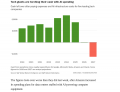
AI spending by Amazon and Google pushed the companies to an ignominious milestone: They lost more cash in the past three months than any other large U.S. companies, according to S&P Global data.
Investment analysts expect Elon Musk’s SpaceX to show even worse cash bleeding this week. You can guess why: SpaceX is spending a fortune on AI.
Artificial intelligence has become a money pit for the United States’ technology superstars.
Five leading AI companies — Amazon, Google, Microsoft, Meta and Oracle — are spending so much on developing AI and delivering it to customers that they’re expected to bleed cash in the coming year, according to a Washington.
AI spending by Amazon and Google pushed the companies to an ignominious milestone: They lost more cash in the past three months than any other large U.S. companies, according to S&P Global data.
Investment analysts expect Elon Musk’s SpaceX to show even worse cash bleeding this week. You can guess why: SpaceX is spending a fortune on AI.
It's called capital investment.https://www.washingtonpost.com/tech...-incredible-reversal-american-tech-companies/
Artificial intelligence has become a money pit for the United States’ technology superstars.
Five leading AI companies — Amazon, Google, Microsoft, Meta and Oracle — are spending so much on developing AI and delivering it to customers that they’re expected to bleed cash in the coming year, according to a Washington.
View attachment 370234
AI spending by Amazon and Google pushed the companies to an ignominious milestone: They lost more cash in the past three months than any other large U.S. companies, according to S&P Global data.
Investment analysts expect Elon Musk’s SpaceX to show even worse cash bleeding this week. You can guess why: SpaceX is spending a fortune on AI.
They see something in the future that we mere mortals may not.
And they might be wrong. But, such is business on the bleeding edge.
| Thread starter | Similar threads | Forum | Replies | Date |
|---|---|---|---|---|

|
asked Chatgpt to recommend some upgrades/modifications for my Akai MPC3000 | General Electronics Chat | 1 |