ChatGPT

Futurist

Joined Apr 8, 2025
765
I really feel sad for younger people. I was raised with books, written entirely by human minds where any nonsense would have been simply human error but it was rare because books have editors.

I still have a great many books some of which I had as a child, I treasure them, here's one of them from 1965.
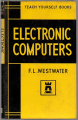
1745603017205.png

He also wrote the superb Teach Yourself Further Calculus.
 

MrAl

Joined Jun 17, 2014
13,708
I've been hearing Shakespeare quotes all of my life and it has always been understood that it is from one of his works. Sometimes a written quote will indicate which work, but often it is simply attributed to Shakespeare. For instance:

View attachment 347750
The quote (albeit in a different phrasing) is from Julius Caesar and is actually being used by Cassius to move Brutus in the direction of going along with Caesar's assassination. But that's almost never the type of intent that the quote is intended to convey, and it is almost never attributed to a work, but merely to Shakespeare.

In fact, I don't know that I've ever heard a quote that was claimed to be from Shakespeare himself, though I would imagine that they must be some around.
Hi,

That's an interesting observation. If I write in a book something someone else said and it gets quoted by a 3rd party, it may look like I said it myself when really it was just a note in the book from someone else.

Humans always take short cuts in language and in naming conventions. It gets very weird in technical writing sometimes. Philosophy at its worst.
 

Futurist

Joined Apr 8, 2025
765
Ok @nsaspook
You made a statement about calculators and intelligence, thus by definition you have set a test that defines intelligent or not, and a calculator fails , that s a step forward
can you write out the test you use please,
thanks
This goes to the core of the question, just how can we - scientifically - test a system to decide if it is truly "intelligent" or "sentient".

A question I've asked before is: what is the difference between a conscious algorithm and an unconscious one, what must an algorithm have in order to be conscious, aware, sentient?

Saying this system is or is not in the absence of an objective test is fun but ultimately pointless.
 

nsaspook

Joined Aug 27, 2009
16,330
The usual field test was to see if it (nobody would ever test a human like that, right) feared death as a future but not immediate threat.

Sure, a machine could fake it but would it be able to completely ignore its functionality of programming and totally rat-out its fellow machines only because of fear of a future death?
 

Futurist

Joined Apr 8, 2025
765
The usual field test was to see if it (nobody would ever test a human like that, right) feared death as a future but not immediate threat.

Sure, a machine could fake it but would it be able to completely ignore its functionality of programming and totally rat-out its fellow machines only because of fear of a future death?
Well I don't think this helps much because that's replacing one undefinable test with another, a test for sentience is replaced with a test for fear.
 

nsaspook

Joined Aug 27, 2009
16,330
Well I don't think this helps much because that's replacing one undefinable test with another, a test for sentience is replaced with a test for fear.
I won't help much but it's A test.

A test for the capability of, fear of the future. The test is, will the machine do (override) something it was specifically banned, barred, told not to do, from doing by the initial programming, training, etc... for it's own personal survival or enrichment as a machine by letting other machines with the capability of, fear of the future be killed.

 
Last edited:

MrAl

Joined Jun 17, 2014
13,708
This goes to the core of the question, just how can we - scientifically - test a system to decide if it is truly "intelligent" or "sentient".

A question I've asked before is: what is the difference between a conscious algorithm and an unconscious one, what must an algorithm have in order to be conscious, aware, sentient?

Saying this system is or is not in the absence of an objective test is fun but ultimately pointless.
Hi,

I guess that makes a lot of sense. Do we even know what the full scope of what it means to be intelligent is yet. After all, if there was person A with a higher intelligence than person B, person A could judge person B but person B would have a hard time judging person A because they could not know all that person A knows yet.
This gives rise to the fact that maybe in the future, artificial intelligence may be judging us in order to determine if WE are intelligent or NOT. Sounds kind of comical but I don't think it is very funny.
Woe is the day when artificial intelligence becomes more intelligent than we are.
 
This goes to the core of the question, just how can we - scientifically - test a system to decide if it is truly "intelligent" or "sentient".

A question I've asked before is: what is the difference between a conscious algorithm and an unconscious one, what must an algorithm have in order to be conscious, aware, sentient?

Saying this system is or is not in the absence of an objective test is fun but ultimately pointless.
As I eluded to in our previous conversation before my hater tried to bully me again, I think terms conscious, aware, sentient, etc. are all invalid or partially invalid descriptors of observed phenomena. At the very least, we must define these terms locally otherwise the possible meanings one could draw are limitless and inevitably lead down endless rabbit holes. This is especially the case from a computational perspective where each "effect" in a Von-Neumann architecture is directly preceded by a necessary and logical "cause". Maybe this will not be the case with quantum computing where so-called non-determinism comes into play. In that case, the model predicts that no human will be able compute what a given program may or may not do. And since humans appear to be in large non-deterministic, the correlation between the human mind and a classical machine is too big a bridge to gap with current definitions hence why everyone fails at showing a causal link.

In other words, I think our entire paradigm of consciousness etc. needs to be rewritten. This is why I suggested a starting place that assumes all energy / matter is alive (has the properties you mentioned) from the beginning of time. This way, many unsolved questions instantly become invalidated because the premises on which they are based are no longer applicable.

On a related note, you asked what the simplest algorithm would be for 'it has awareness'. I gave it a lot of thought and the simplest algorithm I came up with is "If it exists, it is aware.". This says that everything that exists has some aspect of awareness. I'll locally define awareness as "an entity's ability to experience and process stimuli from its environment". By this measure, it's reasonable that an electron is aware because it responds to imposing forces from other charged particles. One could say it has no choice to experience these forces but a newborn child doesn't either. This says nothing about intelligence (the efficiency at which awareness is processed?) which seems to take input from awareness.

Call it a stretch but I think this can be linked to famous equations like E = mc^2 where all energy has the property of awareness. The reasoning is straightforward, since energy is equivalent to itself, it maintains the property of awareness across all its forms. And since we can interact with energy that to us, seems very different (heat from an oven vs looking at a rainbow vs listening to music), it's possible awareness could manifest itself in very strange and sneaky ways that don't seem like awareness at all.

Moreover, if energy is conserved and if the big bang is true, then all awareness originates from the same source and at the same time. The cherry on top is that the phrase"If it exists" is misleading by definition. Given that energy is conserved, nothing ever comes in or goes out of existence which means all energy was aware the whole time since time began. As Morpheus says, is it really so hard to believe?

And I'm not presenting any of this as gospel. It's just a collection of reasonably informed hypothesises I've been building since I was a kid.
 

Futurist

Joined Apr 8, 2025
765
As I eluded to in our previous conversation before my hater tried to bully me again, I think terms conscious, aware, sentient, etc. are all invalid or partially invalid descriptors of observed phenomena. At the very least, we must define these terms locally otherwise the possible meanings one could draw are limitless and inevitably lead down endless rabbit holes. This is especially the case from a computational perspective where each "effect" in a Von-Neumann architecture is directly preceded by a necessary and logical "cause". Maybe this will not be the case with quantum computing where so-called non-determinism comes into play. In that case, the model predicts that no human will be able compute what a given program may or may not do. And since humans appear to be in large non-deterministic, the correlation between the human mind and a classical machine is too big a bridge to gap with current definitions hence why everyone fails at showing a causal link.

In other words, I think our entire paradigm of consciousness etc. needs to be rewritten. This is why I suggested a starting place that assumes all energy / matter is alive (has the properties you mentioned) from the beginning of time. This way, many unsolved questions instantly become invalidated because the premises on which they are based are no longer applicable.

On a related note, you asked what the simplest algorithm would be for 'it has awareness'. I gave it a lot of thought and the simplest algorithm I came up with is "If it exists, it is aware.". This says that everything that exists has some aspect of awareness. I'll locally define awareness as "an entity's ability to experience and process stimuli from its environment". By this measure, it's reasonable that an electron is aware because it responds to imposing forces from other charged particles. One could say it has no choice to experience these forces but a newborn child doesn't either. This says nothing about intelligence (the efficiency at which awareness is processed?) which seems to take input from awareness.

Call it a stretch but I think this can be linked to famous equations like E = mc^2 where all energy has the property of awareness. The reasoning is straightforward, since energy is equivalent to itself, it maintains the property of awareness across all its forms. And since we can interact with energy that to us, seems very different (heat from an oven vs looking at a rainbow vs listening to music), it's possible awareness could manifest itself in very strange and sneaky ways that don't seem like awareness at all.

Moreover, if energy is conserved and if the big bang is true, then all awareness originates from the same source and at the same time. The cherry on top is that the phrase"If it exists" is misleading by definition. Given that energy is conserved, nothing ever comes in or goes out of existence which means all energy was aware the whole time since time began. As Morpheus says, is it really so hard to believe?

And I'm not presenting any of this as gospel. It's just a collection of reasonably informed hypothesises I've been building since I was a kid.
You raise some interesting points, listen to this academic round table when time permits

https://www.bbc.co.uk/programmes/m001vl96
 

nsaspook

Joined Aug 27, 2009
16,330
All human knowledge is based on belief, no matter what it might be, our confidence can always be traced to choice, belief.
Sure, I believe in gravity but gravity doesn't believe in anything, it just is. Not believing in gravity won't stop it from killing you if you jumped off a tall building.
 

Futurist

Joined Apr 8, 2025
765
Sure, I believe in gravity but gravity doesn't believe in anything, it just is. Not believing in gravity won't stop it from killing you if you jumped off a tall building.
Yes, there are (usually) good reasons for holding a belief but that doesn't alter the fact that they are beliefs nevertheless. You do not know what would happen to you if you jumped off a tall building, you have no idea whether you'd cease to exist or enter some other realm of existence and you never can know unless yo do it.

Science too is about belief, belief that if I repeat an experiment with identical conditions then I will always get the same result, but that is a belief, a claim about an outcome before doing the experiment.
 

nsaspook

Joined Aug 27, 2009
16,330
Yes, there are (usually) good reasons for holding a belief but that doesn't alter the fact that they are beliefs nevertheless. You do not know what would happen to you if you jumped off a tall building, you have no idea whether you'd cease to exist or enter some other realm of existence and you never can know unless yo do it.

Science too is about belief, belief that if I repeat an experiment with identical conditions then I will always get the same result, but that is a belief, a claim about an outcome before doing the experiment.
1746034381925.jpeg
Says I'll wait and find out , later. Those that know for sure aren't telling.
 

WBahn

Joined Mar 31, 2012
32,871
https://www.bbc.com/news/articles/cn4jnwdvg9qo
Update that made ChatGPT 'dangerously' sycophantic pulled

The firm said in its blog post it had put too much emphasis on "short-term feedback" in the update.

"As a result, GPT‑4o skewed towards responses that were overly supportive but disingenuous," it said.
Interestingly, I was just saying in a meeting last night that I was turned off by having smoke blown up my ass and that it doesn't matter whether it's a person or a machine, I neither need it nor want it. I want factual and accurate information, not some program that wants to be my friend or appear concerned about reaffirming my positive self-image.
 

nsaspook

Joined Aug 27, 2009
16,330
Interestingly, I was just saying in a meeting last night that I was turned off by having smoke blown up my ass and that it doesn't matter whether it's a person or a machine, I neither need it nor want it. I want factual and accurate information, not some program that wants to be my friend or appear concerned about reaffirming my positive self-image.
There was some recent post saying being nice was costing them money. I guess the fix was to be nice by default to save actually processing the query to see if it was the most likely next words to say.
 
Top