Facebook
 Google
 GitHub
 Linkedin

Hi.
Been charging packs that I have no dedicated charger for by applying a very fixed voltage never exceeding 4.2V times the number of cells to the output terminals of the pack. Always has worked fine from just a dimmer + a selectable winding transformer + rectifier + filtering + voltmeter. (Works up to ~3 Amperes / 85 Volts)
But I wonder how the internal charge manager circuitry works. If a higher voltage is applied to the pack terminals -say 5V times the number of cells-; would the charger manager circuitry keep the cells at the proper voltage under the maximum ?
Is that the way chargers work ? Feeding more voltage than needed and leaving the management to the internal circuit board; or, is the voltage applied hyper regulated at the charger output ?
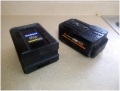
These days am charging half a dozen 40V Kobalt packs. Applying voltage until the pack shows 42.0V and then disconnect.
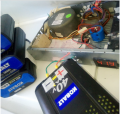
Been charging packs that I have no dedicated charger for by applying a very fixed voltage never exceeding 4.2V times the number of cells to the output terminals of the pack. Always has worked fine from just a dimmer + a selectable winding transformer + rectifier + filtering + voltmeter. (Works up to ~3 Amperes / 85 Volts)
But I wonder how the internal charge manager circuitry works. If a higher voltage is applied to the pack terminals -say 5V times the number of cells-; would the charger manager circuitry keep the cells at the proper voltage under the maximum ?
Is that the way chargers work ? Feeding more voltage than needed and leaving the management to the internal circuit board; or, is the voltage applied hyper regulated at the charger output ?
These days am charging half a dozen 40V Kobalt packs. Applying voltage until the pack shows 42.0V and then disconnect.