Changing input impedance?

Thread Starter

Artie

Joined Jun 7, 2024
7
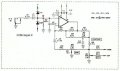
I have an older Peavey 4-input powered mixer. It was designed for "cheap-ish" Hi-Z unbalanced microphones. It has 220k input impedance. I'd like to make one input more guitar-centric, with a 1M input impedance. If you look at the attached schematic, there's an input resistor (R2 - red arrow) that's 220k. Would this be as easy as simply changing that to 1M, without upsetting the balance of the rest of the circuit?
 

Attachments

Ian0

Joined Aug 7, 2020
13,097
Even if it's designed to operate into a 1 meg input?
@LowQCab did some very good plots a while ago which demonstrated very well just how much better a standard 6kΩ+6H guitar pickup performs with various cable capacitances and input impedances.

I don't think that the words "guitar" and "designed" belong in the same sentence.
 

Thread Starter

Artie

Joined Jun 7, 2024
7
Yes, but it will change the frequency response. Consider changing C2 as well.
Change C2 to what? Higher or lower value.

To everyone else, thanks for the input. (No pun intended.)

I based this question on the fact that pretty much every guitar amp I've seen, uses a 1M input Z. Therefore, I thought it was important. But I'm open to other ideas.

Artie
 

LowQCab

Joined Nov 6, 2012
5,101
I give-up ..........
I just have to laugh at the gullible fools that will spend Hundreds, or even Thousands of Dollars,
because their greatest Guitar-Hero-ever, played on that combination once.
I saw a picture of him with xyz ................

The objective is not to duplicate the incredibly bad string of Equipment that was used in a particular instance,
but to eliminate as many variables as is humanly possible,
and then use particular chains of "Effects" to repeatably achieve a desired "Character of Distortion" at will.

When You buy a particular part-number of "Musical-Instrument-Equipment",
You are locking yourself into a particular "Character of Distortion" for ever.

There is no "right" combination that will make You play better.

A LapTop-Computer can do it all, and do it in Stereo !!!
.
.
.
 

sghioto

Joined Dec 31, 2017
8,633
I based this question on the fact that pretty much every guitar amp I've seen, uses a 1M input Z. Therefore, I thought it was important. But I'm open to other ideas.
Artie, I suggest you modify one input since it's no big deal and compare the guitar sound to the other 220K inputs.
 

Thread Starter

Artie

Joined Jun 7, 2024
7
"I give-up .........."

Electronics 101 teaches that for maximum power transfer, you try to match output and input impedances. For a guitar application, you do NOT want MPT. You simply want to transfer signal, (ie., voltage). For that, you want as low an output impedance as you can achieve, going into a high impedance input. A guitar, (with passive pickups), has typically, 15k to 25k output impedance. That's why guitar amps are designed with 1M input impedances. You don't want to "load down" the guitar pups, thus changing their designed sonic character.

While it's true that the audience couldn't give a rat's patootie about this, the player does. Or in my case, just for the fun of it, because it's my hobby to mess with this stuff.

I never mentioned a "guitar hero." I doubt that many of them play into a cheap flea-market church mixer. But sorry if I offended you by wishing to do it myself. It's for fun. Nothing else.

Artie
 

Ian0

Joined Aug 7, 2020
13,097
It is pity that Alan Blumlein wasn't a guitarist. If he were, the guitar-to-amplifier interface would work as well as the balanced line microphone which is unchanged 90 years later.
 

Thread Starter

Artie

Joined Jun 7, 2024
7
It is pity that Alan Blumlein wasn't a guitarist. If he were, the guitar-to-amplifier interface would work as well as the balanced line microphone which is unchanged 90 years later.
Ain't that the truth. Gibson actually made a low-Z output Les Paul variant, quite a long time ago. (I think they called it the "Recording / Recorder"), something like that. But it didn't sell well. Thus, all (passive) guitars are fairly high output Z.

Edit: I didn't mean to imply there that guitars are built the way they are based on Gibsons' one marketing failure. I just meant it as an example of why no one is losing sleep over developing it further.
 
Last edited:

LowQCab

Joined Nov 6, 2012
5,101
"I give-up .........."

Electronics 101 teaches that for maximum power transfer, you try to match output and input impedances. For a guitar application, you do NOT want MPT. You simply want to transfer signal, (ie., voltage). For that, you want as low an output impedance as you can achieve, going into a high impedance input. A guitar, (with passive pickups), has typically, 15k to 25k output impedance. That's why guitar amps are designed with 1M input impedances. You don't want to "load down" the guitar pups, thus changing their designed sonic character.

While it's true that the audience couldn't give a rat's patootie about this, the player does. Or in my case, just for the fun of it, because it's my hobby to mess with this stuff.

I never mentioned a "guitar hero." I doubt that many of them play into a cheap flea-market church mixer. But sorry if I offended you by wishing to do it myself. It's for fun. Nothing else.

Artie
.
No offense is meant,
just some venting over dealing with Guitar-Players and the sometimes wacky "beliefs" they come up with.

Guitar Equipment is a combination of coming in to it's own in the Tube-Era,
and manufacturers wanting to make Equipment that most people could afford at that time.

"High-Fidelity", and conversely, "Intentional-Distortion" were still relatively new concepts at the time.

So, we're stuck with everybody trying to duplicate some really odd Distortion sounds from the late '50's,
and keeping everything "original", because to do otherwise is sacrilege.

The best setup is to eliminate the Cord altogether, and go Wireless.
This includes using Active-Pickups.

Many Wireless setups have superior Volume and Tone-Controls on the Guitar,
personally, I think these on the Guitar Controls only add to
the confusion and possible unpredictability of the final Tone.

All the various Tones and Volume Levels should be set by a MIDI-Foot-Board controlling a LapTop.
This includes Rhythm, Lead, and Bass.
If there's a Keyboardist, he probably has everything figured-out for himself already.
Mics for the Drums are strictly the Engineers responsibility.

The Audio from the LapTop feeds the Main-Mixer and uses the PA-Amp and Speakers, with no "Guitar-Amp".
This setup solves a million problems all in one fell-swoop,
and allows for repeatable, top-notch, production-quality,
instead of having a "by-guess-and-by-golly" crap-shoot that's different every time.

The Engineer is the most valuable member of the Band, ( or in some cases a huge liability ),
and all of the members should be trying to be the best Engineer that they can,
as well as being able to play.

In-Ear-Stage-Monitors eliminate a ton of problems too.
.
.
.
 

Thread Starter

Artie

Joined Jun 7, 2024
7
.
No offense is meant,
just some venting over dealing with Guitar-Players and the sometimes wacky "beliefs" they come up with.
And none taken. I hope I didn't come off that way.

Since I've retired from a Navy Cal Lab, I do guitar wiring on the side. I know the strange, and un-doable, things people ask for. Like, "Can you make my Strat sound like a Les Paul?" And vise-versa.

But it's still fun. I never want to lose that.

Artie
 
Top