CapSense sensing IC recommendation

Thread Starter

bug13

Joined Feb 13, 2012
2,002
Hi team

We need a CapSense solution for user input buttons, is anyone here use any CapSense IC (or MCU), would you like to share your experience?

Thanks guys!
 

nsaspook

Joined Aug 27, 2009
16,258
Need to have a read the link.

Have you used one? If yes, was it reliable?
Yes, I've designed capacitive touch systems with PIC controllers. The key is to correctly design the sensor for the application as the controller hardware and software is pretty standard today. Personally I like some sort of tactile feedback for Industrial control so it's usually not my first choice.
 

nsaspook

Joined Aug 27, 2009
16,258
A old demo of a PIC18 CTMU used in the CapSense mode.


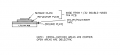
The black box contains three plates. A sense line to the ADC and constant current source, active guard (to direct the e-field) and ground plane.


Most of the external electronics are now included on the controller chip for these types of applications.

Dead Bug construction.:D
 

jpanhalt

Joined Jan 18, 2008
11,087

nsaspook

Joined Aug 27, 2009
16,258
Interesting. My project was more than 10 years ago. The term used at the time was "capaciflector". The NASA papers I saved don't have a citation link, but here is one to Stanford's: http://www-cdr.stanford.edu/Touch/previous_projects/capaciflector/capaciflector.html

Here's the test sensor I built:
View attachment 185524

Worked fine for my hand, but not for the 3/16" diameter rod I needed to detect. Ended up using reflected IR.
These videos are about 9 years old too.

Looks like much the same basic design for using a high impedance voltage unity buffer to drive the reflector shield plate. For my design the charge on the sensor plate was measured with the ADC after a short period of time of being connected to the constant current source. This gives a linear voltage output of the change (increase) of capacitance from the human body near the plate that can be measured as a offset from the 'off' state.

Without the reflector plate the sensor performance was total crap.

The thick insulator is leaded glass from a ion beam chamber view port. I was looking for ways to manipulated electronics inside the vacuum chamber without a feed-through for external wiring. It worked but wasn't as reliable as wired controls.
 
Last edited:

jpanhalt

Joined Jan 18, 2008
11,087
Do you have any resource on how to design the sensor correctly?
Here's the full report that I followed and its bibliography. Unfortunately I cannot find current links to them. I used both the op-amp amplifier and CAV414 in different iterations as I was unfamiliar with MCU's at that time.
 

Attachments

Thread Starter

bug13

Joined Feb 13, 2012
2,002
It looks like there is two ways to detect a finger (or other object):
  • One is using the Csensor to form an oscillation circuit, and use an MCU to get the count
  • The other way is using an constant current source to charge the Csensor, then use ADC to read the voltage.
So which way is better? I am guessing using method 1 is better, as it doesn't rely on a good ADC?

PS: I am not intend to design the circuit from scratch, I just need to understand which way is better for my application.
 
Last edited:

nsaspook

Joined Aug 27, 2009
16,258
It looks like there is two ways to detect a finger (or other object):
  • One is using the Csensor to form an oscillation circuit, and use an MCU to get the count
  • The other way is using an constant current source to charge the Csensor, then use ADC to read the voltage.
So which way is better? I am guessing using method 1 is better, as it doesn't rely on a good ADC?
Better depends on what you need and what you have as they both use the same physics of change in capacitance.
The ADC method can be better for low parts count (just a chip pin connection to the copper sensor pad) as you can use any port on the MCU that will operate as a ADC input pin from the ADC module mux on a PIC with the CTMU unit.

A lowly 10-bit internal PIC ADC will work just fine.
http://ww1.microchip.com/downloads/en/appnotes/01250a.pdf
 
Last edited:

jpanhalt

Joined Jan 18, 2008
11,087
It looks like there is two ways to detect a finger (or other object):
  • One is using the Csensor to form an oscillation circuit, and use an MCU to get the count
  • The other way is using an constant current source to charge the Csensor, then use ADC to read the voltage.
So which way is better? I am guessing using method 1 is better, as it doesn't rely on a good ADC?

PS: I am not intend to design the circuit from scratch, I just need to understand which way is better for my application.
As nsaspook said, "better" is subjective. Do you need to detect a "finger" or something of similar size and mass that is not a finger, e.g., a hot dog?

A "finger" per se will be quite a but more difficult. If you don't need that level of discrimination, you might want to consider reflected IR from an appropriately modulated IR source (e.g., 38 kHz Vishay emitters and detectors).
 

Thread Starter

bug13

Joined Feb 13, 2012
2,002
Here's the full report that I followed and its bibliography. Unfortunately I cannot find current links to them. I used both the op-amp amplifier and CAV414 in different iterations as I was unfamiliar with MCU's at that time.
Thanks for the files, it helps me a lot to understand the basic operation principle.
 

Thread Starter

bug13

Joined Feb 13, 2012
2,002
@nsaspook @jpanhalt

I am just need to detect a finger, it's an replacement of an user button. But I also need to somehow simulate a finger touch, the reason for that is I can do a self-test.
For this reason, I need to first understand fully how that works, and then figure out a way to simulate a finger touch to generate a self-test.

I can draw something up if it's not making sense.
 
Top