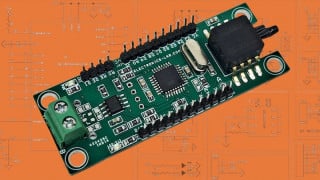
Can you spot the mistake in this li-ion charging circuit?

Thread Starter

ejnarwj

Joined Jan 20, 2023
31
Hi,

Well my preference is to have both built in BMS for the batteries AND for the circuit. That way you have two levels of protection. For a consumer circuit i would definitely do this.
Since your design incorporates built in batteries, you could also include some temperature sensing, which is not really that hard to implement. You could cut of the current if any of the cell temperatures reaches higher than some reasonable limit. This is the way professional fast chargers do it even when the batteries are not built in usually. Measuring the cell temperature is probably one of the best methods for sensing a problem. If the cell temperature goes too high, there is something definitely wrong even if the circuit does not know exactly what it is electrically.
Okay I see. Then that will be, what I will work on. I really do not want to sell products that has any kind of chance of bursting into freaking flames. I am not sure, whether or not I will finish troubleshooting this circuit then. Because this defintely calls for a new chip, and that might take some time. Please tell if you have any reccomendation. But thanks man
 

Ya’akov

Joined Jan 27, 2019
10,356
Okay I see. Then that will be, what I will work on. I really do not want to sell products that has any kind of chance of bursting into freaking flames. I am not sure, whether or not I will finish troubleshooting this circuit then. Because this defintely calls for a new chip, and that might take some time. Please tell if you have any reccomendation. But thanks man
Normally, smaller and inexpensive packs rely on the battery's protection circuit rather than balancing which is much more costly. The issues I mentioned involved degradation of the cells as they age, not risk of fire.

Fires are caused by overdischarge under load followed by charging. The cell protection will isolate the cell if its voltage drops below the maximum discharge voltage and restore it when there is a charging current. If the cell self-discharges to about 1V or less, the protection circuit will prevent any attempts to charge it.

The down side of this arrangement is that, inevitably, one of the cells will eventually degrade to the point where series charging doesn't bring it back up to a safe voltage. This means the pack will die before it needed to, but the initial cost will be considerably less. As a seller, you can make sure the pack is easily replaced and replacement packs are reasonably priced.

All this said, if you are going to sell a product you must be sure to either learn all of the safety considerations yourself by concerted study, or engage a qualified and experienced consultant to vet the design. While I don't expect it is cheap (and I don't know the cost) a "legitimate" product would have a UL rating which ensures a best practices safe design for the consumer.

There is a danger of fire, it is a concern—but I fear that some of my fellow members here may be inflating it a bit—I have no doubt out of a sensible excess rather than deficient caution. I am a very safety-minded person as I expect my corpus here shows, but in this case I find it merely a practical matter. I have used lithium battery packs for decades, both of commercial and my own construction. I have never had a fire or even a scare, and I do use a lot of packs made of series connected protected cells.

It is my rule of thumb not to exceed four cells in this configuration, but that's because I chose to draw the line somewhere, it's not scientific. If you are really concerned about fire, even balanced charging isn't absolute insurance against that possibility. The right solution for that is LiFePO4 which, because it uses a non-flammable electrolyte (and the electrolyte, not the Li is the danger) can't have this problem.

LiFePO4 is a bit more expensive but it does mean no fire, no matter what. At least caused by thermal runaway of the battery, if you fail to properly protect against overcurrent you can certainly set something on fire other than the battery.
 

Thread Starter

ejnarwj

Joined Jan 20, 2023
31
Normally, smaller and inexpensive packs rely on the battery's protection circuit rather than balancing which is much more costly. The issues I mentioned involved degradation of the cells as they age, not risk of fire.

Fires are caused by overdischarge under load followed by charging. The cell protection will isolate the cell if its voltage drops below the maximum discharge voltage and restore it when there is a charging current. If the cell self-discharges to about 1V or less, the protection circuit will prevent any attempts to charge it.

The down side of this arrangement is that, inevitably, one of the cells will eventually degrade to the point where series charging doesn't bring it back up to a safe voltage. This means the pack will die before it needed to, but the initial cost will be considerably less. As a seller, you can make sure the pack is easily replaced and replacement packs are reasonably priced.

All this said, if you are going to sell a product you must be sure to either learn all of the safety considerations yourself by concerted study, or engage a qualified and experienced consultant to vet the design. While I don't expect it is cheap (and I don't know the cost) a "legitimate" product would have a UL rating which ensures a best practices safe design for the consumer.

There is a danger of fire, it is a concern—but I fear that some of my fellow members here may be inflating it a bit—I have no doubt out of a sensible excess rather than deficient caution. I am a very safety-minded person as I expect my corpus here shows, but in this case I find it merely a practical matter. I have used lithium battery packs for decades, both of commercial and my own construction. I have never had a fire or even a scare, and I do use a lot of packs made of series connected protected cells. T

It is my rule of thumb not to exceed four cells in this configuration, but that's because I chose to draw the line somewhere, it's not scientific. If you are really concerned about fire, even balanced charging isn't absolute insurance against that possibility. The right solution for that is LiFePO4 which, because it uses a non-flammable electrolyte (and the electrolyte, not the Li is the danger) can't have this problem.

LiFePO4 is a bit more expensive but it does mean no fire, no matter what. At least caused by thermal runaway of the battery, if you fail to properly protect against overcurrent you can certainly set something on fire other than the battery.
Thank you for making that clear. That has given me some hope to finish the circuit. I do not think that the batteries I am testing currently has built in protection circuits, but I will make sure to order some home for testing, and when it finally works get some second opinions on the safety. Google says that those UL ratings are hella expensive, I wonder if there are any alternatives maybe in europe.
 

MrAl

Joined Jun 17, 2014
13,862
Normally, smaller and inexpensive packs rely on the battery's protection circuit rather than balancing which is much more costly. The issues I mentioned involved degradation of the cells as they age, not risk of fire.

Fires are caused by overdischarge under load followed by charging. The cell protection will isolate the cell if its voltage drops below the maximum discharge voltage and restore it when there is a charging current. If the cell self-discharges to about 1V or less, the protection circuit will prevent any attempts to charge it.

The down side of this arrangement is that, inevitably, one of the cells will eventually degrade to the point where series charging doesn't bring it back up to a safe voltage. This means the pack will die before it needed to, but the initial cost will be considerably less. As a seller, you can make sure the pack is easily replaced and replacement packs are reasonably priced.

All this said, if you are going to sell a product you must be sure to either learn all of the safety considerations yourself by concerted study, or engage a qualified and experienced consultant to vet the design. While I don't expect it is cheap (and I don't know the cost) a "legitimate" product would have a UL rating which ensures a best practices safe design for the consumer.

There is a danger of fire, it is a concern—but I fear that some of my fellow members here may be inflating it a bit—I have no doubt out of a sensible excess rather than deficient caution. I am a very safety-minded person as I expect my corpus here shows, but in this case I find it merely a practical matter. I have used lithium battery packs for decades, both of commercial and my own construction. I have never had a fire or even a scare, and I do use a lot of packs made of series connected protected cells.

It is my rule of thumb not to exceed four cells in this configuration, but that's because I chose to draw the line somewhere, it's not scientific. If you are really concerned about fire, even balanced charging isn't absolute insurance against that possibility. The right solution for that is LiFePO4 which, because it uses a non-flammable electrolyte (and the electrolyte, not the Li is the danger) can't have this problem.

LiFePO4 is a bit more expensive but it does mean no fire, no matter what. At least caused by thermal runaway of the battery, if you fail to properly protect against overcurrent you can certainly set something on fire other than the battery.
Hi,

I myself like to be very cautious with these cells. I've read about problems and seen videos of what can happen, and with the new laws being proposed in New York it makes me even more cautious now.

There has been another issue that has come up in the past few months also. The researchers found that one of the causes of failure is called something like "micro cracks". These are tiny cracks that form inside the cell, i think because of the manufacturing process but i'd have to read that again. If the process is altered this problem can be improved. Maybe you can find something on this on the web.
 
Thread starter Similar threads Forum Replies Date
MrChips Off-Topic 1
Top