Can you amplify a signal with only resistors?

Status
Not open for further replies.

ElectricSpidey

Joined Dec 2, 2017
3,356
I recall a definition of "amplifier" I read in an electronics dictionary when I was in college. I think it was "a circuit used to control the flow of power through a load".
Well, that definition has to be wrong, because power doesn't flow through a load.

The proper terminology would be "controls the amount of power produced in a load".

AKA: The amount of work done in the load.

(I know, I know, don't let actual physics interfere with well established conventions.)
 

B-JoJo-S

Joined Jan 3, 2026
469
Screenshot 2026-05-17 at 9.37.31 AM.png
In this case (thread) the TS wants to amplify a signal; to increase its amplitude. Unless there's something I'm unaware of - you can't increase the amplitude of a sine wave with just resistors.
 

MisterBill2

Joined Jan 23, 2018
27,998
The definitions in post #23 are correct!
The problems arise when "wordsmiths" choose to attack the meanings of words as part of some subversive effort.
 

Papabravo

Joined Feb 24, 2006
22,105
Many people, me included, had trouble wrapping their heads around amplification when the concept was first introduced. Intuitively I imagined a process of taking something small and making it big via some "magical" transformation. It wasn't until I understood that you could take a very large power DC power supply and make a honking big COPY of a very small signal that the process was understood with a sufficient level of clarity.
 

WBahn

Joined Mar 31, 2012
33,075
Many people, me included, had trouble wrapping their heads around amplification when the concept was first introduced. Intuitively I imagined a process of taking something small and making it big via some "magical" transformation. It wasn't until I understood that you could take a very large power DC power supply and make a honking big COPY of a very small signal that the process was understood with a sufficient level of clarity.
I never had any problem with the notion of amplification, even before I was introduced to conservation of energy. I'm not sure why, since that was well over half a century ago now. I imagine that my first introduction to the notion of amplification was when I was introduced to BJT transistors, which was then I and a couple of friends were taking an informal intro to ham radio "class" from someone else. That would have been when I was about fourteen. I pretty sure he would have described them as being a current amplifier (collector current is beta times the base current). I don't know if he is the one that described a way of visualizing the internal behavior as being someone that constantly looks at the current flowing into the base and adjusts the resistance between the collector and emitter until the right amount of current is flowing to maintain the relationship. I know I saw that analogy a few times, but it might have been later. Whether he did or not, the notion that the collector-emitter path behaved as if there were a variable resistor there was not a stretch, since we had covered resistive voltage dividers using potentiometers. Accepting that there was something in the way the transistor was constructed that allowed the base current to change the value of that resistance didn't seem like too much of a stretch. From there, accepting that the relationship was such that the ratio of the two was constant probably didn't even require a blink -- to teens that were just then being introduced to algebra, we didn't know enough to even consider that if might be something else.
 

WBahn

Joined Mar 31, 2012
33,075
Now there's something I STILL don't understand.
There aren't passive resistors that have negative resistance. But there are devices that have regions of operation in which, after the current goes up with voltage, it begins decreasing with additional voltage, usually then to start increasing again at some higher voltage. When operated within that middle region, current decreases with increasing voltage, meaning that, mathematically, it's small-signal behavior is that of a negative resistance.

You can also design active circuits, using controlled sources, that behave like negative resistances.
 

crutschow

Joined Mar 14, 2008
38,680
Now there's something I STILL don't understand.
Perhaps because the term is not necessarily intuitive as to its meaning.
It simply means that it's a device where, as the voltage goes up, the current goes down.
Would "inverse resistance" be a better term?

Tunnel diodes exhibit this behavior over a small portion of the VI curve, and they can be used as amplifiers or oscillators in that region.

Another example is the input of a switching regulator with a constant load.
As the regulator input voltage increases, the input current goes down (since the power output and thus the power input stay essentially constant).
 

MrChips

Joined Oct 2, 2009
35,018
Negative resistance is used in dynamic or regenerative braking.
You can stop a motor by shorting the input to the motor. You can stop the motor more quickly by sucking power from the motor, in other words, by reversing the current through the motor with a negative resistance circuit.
 

LvW

Joined Jun 13, 2013
2,035
Perhaps because the term is not necessarily intuitive as to its meaning.
It simply means that it's a device where, as the voltage goes up, the current goes down.
Would "inverse resistance" be a better term?

Tunnel diodes exhibit this behavior over a small portion of the VI curve, and they can be used as amplifiers or oscillators in that region.

Another example is the input of a switching regulator with a constant load.
As the regulator input voltage increases, the input current goes down (since the power output and thus the power input stay essentially constant).
When we discuss the meaning of "negative resitance" I think we should distinguish between two types:

(a) Dynamic (differential) negative resistance: This device has a falling I=f(V) characteristic which makes the slope (identical to the differential resistance) negative (Example: Tunnel diodes).

(b) Static (fixed) negative resistances: This is an active device (based on opamps) which acts a voltage-controlled current source, in which the current direction is opposite to the direction of the "normal" current.
That is, not from the voltage source to the load, but from the active circuit back to the controlling voltage source.
(Example: Negative Impedance Converter - NIC). For the current magnitude, this device has a rising I=f(V) characteristic .
 
Last edited:

MisterBill2

Joined Jan 23, 2018
27,998
There needs to be an understanding that "negative resistance", as it has been described here, IS ALWAYS INTENTIONAL. It is not accidental, except in some cases of insulation breakdown.
 

wayneh

Joined Sep 9, 2010
18,133
Once again the problem, to the degree that there is one, is language and semantics. The technical meaning of words doesn't always match up with common usage.

We amplify torque on a lug nut by using a breaker bar. Force X Distance is maintained but no extra energy is required. We amplify a tiny signal from a guitar pickup with a huge power supply, adding energy. These are quite different from a physical point of view.

I'll pick on the semantics of @ElectricSpidey
Well, that definition has to be wrong, because power doesn't flow through a load.
I'm not so sure about that.
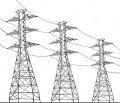
transmission-tower-power-line-electricity-pylons-drawing-illustration-isolated-background-done...jpg
The proper terminology would be "controls the amount of power produced in a load".
Amplification does not per se require control, just ... amplification. Amount of gain could be random but as long as it's greater than 1X, it's still a form of amplification.
 
Status
Not open for further replies.
Top