Facebook
 Google
 GitHub
 Linkedin
Hi experts,
I have developed a Atmega328p based(IR+ Bluetooth controlled) home automation system.The circuit has 6 relays to turn on/off 6 no of loads.It also has a snubberless triac & a zero cross detector circuit for controlling the fan speed(From 0 to full in 5 steps).The ZCD circuit detects the zero cross and let the atmega328p knows (using external interrupt of the atmega) & the atmega delay some time(depending on the Fan speed chosen) & sends out a 100uS High to Low pulse to MOC3021.
I previously built the same circuit(The zero cross detector circuit was a little bit different then & the Triac was BT136 with external snubber consists of 39R + .01uF) and attached to a fan.Now the fan got a permanent noise while it rotates(The previous circuit was disconnected later from the Fan but the sound is still present after moreover 1 year.It sounds like something Mechanical).
Now my question is,did the Triac dimmer damage the fan permanently(Like I got a permanent "Grrrr" sound from the fan while it rotates)?Or the fan was already faulty(Although it didn't have any noise before I added the dimmer circuit)?
Today I attached my 2nd circuit to another fan and it is working perfectly.
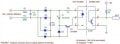
Please tell me as I don't want to ruin my 2nd fan(Currently the circuit is attached to).The Triac dimmer part & the ZCD circuits are attached.I found the ZCD part in "all about circuits"!!The Microcontroller control & the relay driver circuit is not shown here.
The parts value are as follows for the Triac dimmer part:
Triac - BTB16-600BW.(snubberless triac from ST)
R2 - 390R.
R3 - 330R.
R1 - 470R.
C1 - .047uF.

I have developed a Atmega328p based(IR+ Bluetooth controlled) home automation system.The circuit has 6 relays to turn on/off 6 no of loads.It also has a snubberless triac & a zero cross detector circuit for controlling the fan speed(From 0 to full in 5 steps).The ZCD circuit detects the zero cross and let the atmega328p knows (using external interrupt of the atmega) & the atmega delay some time(depending on the Fan speed chosen) & sends out a 100uS High to Low pulse to MOC3021.
I previously built the same circuit(The zero cross detector circuit was a little bit different then & the Triac was BT136 with external snubber consists of 39R + .01uF) and attached to a fan.Now the fan got a permanent noise while it rotates(The previous circuit was disconnected later from the Fan but the sound is still present after moreover 1 year.It sounds like something Mechanical).
Now my question is,did the Triac dimmer damage the fan permanently(Like I got a permanent "Grrrr" sound from the fan while it rotates)?Or the fan was already faulty(Although it didn't have any noise before I added the dimmer circuit)?
Today I attached my 2nd circuit to another fan and it is working perfectly.
Please tell me as I don't want to ruin my 2nd fan(Currently the circuit is attached to).The Triac dimmer part & the ZCD circuits are attached.I found the ZCD part in "all about circuits"!!The Microcontroller control & the relay driver circuit is not shown here.
The parts value are as follows for the Triac dimmer part:
Triac - BTB16-600BW.(snubberless triac from ST)
R2 - 390R.
R3 - 330R.
R1 - 470R.
C1 - .047uF.
Last edited: