Can I resize this BiQuad TV antenna to move the Frequency down?

Thread Starter

Qmavam

Joined Nov 6, 2016
23
In my area I only have channels from 16 to 36. I see this antenna, and would like to optimize it for this frequency range 470MHZ to 608MHz.
The antenna in the webpage is 470 to 760. I want to move the center frequency down from 615MHz to 545MHz. My hope is this shifts the VSWR line to the left to optimize it for my lower frequency need.
Here is the URL showing the dimensions and all the related graphs.
https://3g-aerial.biz/en/optimized-biquad-for-digital-tv
Is this as simple a increasing all the dimensions by a certain percentage?
How would I calculate that percentage?
Thanks Mikek
 

Thread Starter

Qmavam

Joined Nov 6, 2016
23
It is wideband.
You select the center frequency to be in the middle of the desired frequency range.
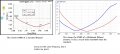
I posted a diagram showing VSWR bandwidth of a biQuad and of a wideband BiQuad below.
You can see the wideband has a much higher bandwidth to cover the whole UHF TV spectrum,
470MHz to 608MHz.


BandWidth.jpg
 

nsaspook

Joined Aug 27, 2009
16,250
I posted a diagram showing VSWR bandwidth of a biQuad and of a wideband BiQuad below.
You can see the wideband has a much higher bandwidth to cover the whole UHF TV spectrum,
470MHz to 608MHz.


View attachment 350333
Pretty much a oranges and limes comparison with different feed impedance (electric and magnetic field distribution on the antenna elements) and frequency ranges (transform the two curves in ratios). There is no magic formula.

Read up on basic transmission line and antenna theory.
https://archive.org/details/in.ernet.dli.2015.6364/page/n217/mode/2up
 

Thread Starter

Qmavam

Joined Nov 6, 2016
23
Pretty much a oranges and limes comparison with different feed impedance (electric and magnetic field distribution on the antenna elements) and frequency ranges (transform the two curves in ratios). There is no magic formula.
I'll try again. The Wide Band BiQuad antenna I originally posted is designed to be wide band, to cover the TV channel spectrum.
The standard biquad is a tuned antenna, tuned to a desired frequency.
I ask Grok a few questions, it says the standard biquad has a bandwidth of 4-5%.
I then ask it to give me the gain characteristic of a standard biquad with a center design frequency of 600Mhz similar to the Wide Band width antenna I posted. Here are a few things it says,

"Gain Variation: The gain peaks at 9.5 dBi at 600 MHz and drops to ~7.4 dBi at 470 MHz and ~6.9 dBi at 870 MHz due to the antenna being optimized for 600 MHz. The 400 MHz bandwidth (470–870 MHz) is much wider than the typical 4–5% bandwidth (~24–30 MHz), so performance degrades at the band edges."

The 4-5% of the standard Biquad as compared to the wide band Biquad with 48% that I can see on the graph, The graph shows flat at 470MHz, but stops so we don't know how much farther it goes before dropping a 1db.

More Grok, " A standard biquad is not ideal for such a wide bandwidth (400 MHz, or 67% of the center frequency)."

You mention different impedance so I had Grok test the idea that a 300 ohm antenna would have wider band width, it said,
"Folded designs increase impedance by a factor related to the conductor geometry, often approaching 300 ohms in free space. Such designs can increase bandwidth slightly (e.g., to 6–8% of the center frequency, or ~36–48 MHz), as the folded structure reduces the Q factor by distributing current more evenly across the antenna."

After running graphs of the CVS files created by Grok, I find that the standard biquad has a parabolic gain curve, but I was surprised the gain does not drop of as much as I had thought, although the gain graphs don't show gain after feed line mismatch. The graph of the high band width antenna shows flat then drops off at the high end.
Whatever, I'm starting to build the ,High Band Width BiQuad for TV channels 16 to 36, I have increased the size about 10% to slide the low VSWR area to 545MHz.
Mikek
 

nsaspook

Joined Aug 27, 2009
16,250
I'll try again. The Wide Band BiQuad antenna I originally posted is designed to be wide band, to cover the TV channel spectrum.
The standard biquad is a tuned antenna, tuned to a desired frequency.
I ask Grok a few questions, it says the standard biquad has a bandwidth of 4-5%.
I then ask it to give me the gain characteristic of a standard biquad with a center design frequency of 600Mhz similar to the Wide Band width antenna I posted. Here are a few things it says,

"Gain Variation: The gain peaks at 9.5 dBi at 600 MHz and drops to ~7.4 dBi at 470 MHz and ~6.9 dBi at 870 MHz due to the antenna being optimized for 600 MHz. The 400 MHz bandwidth (470–870 MHz) is much wider than the typical 4–5% bandwidth (~24–30 MHz), so performance degrades at the band edges."

The 4-5% of the standard Biquad as compared to the wide band Biquad with 48% that I can see on the graph, The graph shows flat at 470MHz, but stops so we don't know how much farther it goes before dropping a 1db.

More Grok, " A standard biquad is not ideal for such a wide bandwidth (400 MHz, or 67% of the center frequency)."

You mention different impedance so I had Grok test the idea that a 300 ohm antenna would have wider band width, it said,
"Folded designs increase impedance by a factor related to the conductor geometry, often approaching 300 ohms in free space. Such designs can increase bandwidth slightly (e.g., to 6–8% of the center frequency, or ~36–48 MHz), as the folded structure reduces the Q factor by distributing current more evenly across the antenna."

After running graphs of the CVS files created by Grok, I find that the standard biquad has a parabolic gain curve, but I was surprised the gain does not drop of as much as I had thought, although the gain graphs don't show gain after feed line mismatch. The graph of the high band width antenna shows flat then drops off at the high end.
Whatever, I'm starting to build the ,High Band Width BiQuad for TV channels 16 to 36, I have increased the size about 10% to slide the low VSWR area to 545MHz.
Mikek
See, it helps to actually try to learn something (even from a AI) instead of just asking for answers. Antenna design is usually an approximation even with the best math (EM field approximations and simulations). There are always compromises and interactions in real world installs that make onsite tuning for optimization necessary if you want the last bit of performance.

These are antenna construction RULES not LAWS. Things like the surface conductivity and size of the conductors affect the end result, these simple programs make a lot of assumptions when they give results that are a starting point, not the end result in some cases.
 

Thread Starter

Qmavam

Joined Nov 6, 2016
23
Well :) Do agree with the assessment that the standard BiQuad has a 4–5% bandwidth? I saw more than one reference to that number. Then if you compare it to a Wide Band Biquad, specially designed to broaden the gain Band Width for use with the TV channel spectrum, you see it has 10 times the Band Width.
 

Thread Starter

Qmavam

Joined Nov 6, 2016
23
BTW, I did make contact with the page owner and he said soon he will update the site with modified dimensions for an antenna optimized for the 470MHz to 608MHz TV UHF band.
 

nsaspook

Joined Aug 27, 2009
16,250
Well :) Do agree with the assessment that the standard BiQuad has a 4–5% bandwidth? I saw more than one reference to that number. Then if you compare it to a Wide Band Biquad, specially designed to broaden the gain Band Width for use with the TV channel spectrum, you see it has 10 times the Band Width.

I take all of those claims, measurements and calculations with a huge grain of salt as you should with my responses. If it works for you, then it's all good. There are no hidden tricks. Read that book I linked to really understand.
 

Thread Starter

Qmavam

Joined Nov 6, 2016
23
There are no hidden tricks. Read that book I linked to really understand.
There be a few new tricks since 1945, the BiQuad is a new trick developed in the 21st century! I built my first one around 2007-8 then a few years later focused a parabolic dish on it. It was fun.
 
Top