Facebook
 Google
 GitHub
 Linkedin

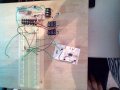
One quick and easy way to build up circuits is the breadboard. They are available from many sources at various prices, size and features. You can add to this as you want. common add-ons are power sources, commonly used circuits, meters and what ever.
Power - You seldom need Amps of power. Wall warts are suitable. 5 V @ 300 mA to 500 mA, regulated for digital. +12 V or adjustable @ 100 mA or so for general use. Pos and neg 5 V to 15 V for op amps @ 100 mA.
For digital exercises you might find commonly used circuits useful. Clean switch inputs. Simple switch inputs. Pulse generators. LED outputs. BCD display.
Each of these will be covered in following posts.
Power - You seldom need Amps of power. Wall warts are suitable. 5 V @ 300 mA to 500 mA, regulated for digital. +12 V or adjustable @ 100 mA or so for general use. Pos and neg 5 V to 15 V for op amps @ 100 mA.
For digital exercises you might find commonly used circuits useful. Clean switch inputs. Simple switch inputs. Pulse generators. LED outputs. BCD display.
Each of these will be covered in following posts.