Bosch PSR 1200 conversion to lithium Ion batteries

Thread Starter

peterhull418

Joined Feb 2, 2025
14
Hello.
Thank you for allowing me join this forum.
I am a retired Agricultural Engineer .

I would appreciate s little more help and advice with a small project.

I am trying to convert an old model of Bosch cordless 12 volt drill , a PSR 1200. It was originally fitted with ni cad batteries and we all know the problems associated with this old technology.

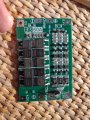
I have all the materials to complete the job including 18650 lithium Ion cells . I intend using 6 , 2 series connected packs of 3 in parallel . I have a BMS board which says it will take 60 amps which has discharge and recharge connections.

What I am unsure of is can the existing Bosch charger be used to charge the new lithium pack or do I need to modify that as well .
 

LowQCab

Joined Nov 6, 2012
5,101
Probably not,
but of course that's just a guess.

It would be a better plan to build a
purpose-built Charger-Board to go inside the original Charger-Case.

A Schematic of the BMS-Board will be required.

Does the BMS-Board have a built-in Charge-Controlling-Circuit ?????

Li-Ion-Cells will catch on FIRE if they are not Charged correctly,
and nothing but a big pile of Sand will put it out.

You must really be partial to that old Drill, the latest models are far superior in performance.
.
.
.
 

Thread Starter

peterhull418

Joined Feb 2, 2025
14
Probably not,
but of course that's just a guess.

It would be a better plan to build a
purpose-built Charger-Board to go inside the original Charger-Case.

A Schematic of the BMS-Board will be required.

Does the BMS-Board have a built-in Charge-Controlling-Circuit ?????

Li-Ion-Cells will catch on FIRE if they are not Charged correctly,
and nothing but a big pile of Sand will put it out.

You must really be partial to that old Drill, the latest models are far superior in performance.
.
.
.
Thanks, I bought it some time ago with the intention of buying a small lead acid battery to power it direct for use on my boat. I could then charge it from the main boat battery.

I changed my mind recently. It's really a learning exercise to get to know more about this technology . It's a .bit of a challenge for me .

It does have a charge control circuit yes.
I will try to post a picture of it. Not sure if I can find a schematic for it though.

I seen some videos on Utube which show a 2nd board inside the battery case and a C type USB socket to charge the battery directly from a USB supply without a dedicated charger.
 

Attachments

Last edited:

LowQCab

Joined Nov 6, 2012
5,101
This is not a project whereby You can "guess", or get "close-enough".

A Schematic-Diagram of the BCM-Board is absolutely required, no exceptions,
which must also contain specific Battery-Connection(s), and Operating Instructions.

Since this Drill is intended for use exclusively on a Boat,
You can run the Drill directly connected to a ~12-Volt-DC-Outlet with no Batteries.
Use only 14-Gauge "Lamp-Cord", ( Zip-Cord ),
smaller Gauge Wires will not be adequate for heavy-Loads.
.
.
.
 

Thread Starter

peterhull418

Joined Feb 2, 2025
14
This is not a project whereby You can "guess", or get "close-enough".

A Schematic-Diagram of the BCM-Board is absolutely required, no exceptions,
which must also contain specific Battery-Connection(s), and Operating Instructions.

Since this Drill is intended for use exclusively on a Boat,
You can run the Drill directly connected to a ~12-Volt-DC-Outlet with no Batteries.
Use only 14-Gauge "Lamp-Cord", ( Zip-Cord ),
smaller Gauge Wires will not be adequate for heavy-Loads.
.
.
.
Ok but the boat is 20ft long. My idea was to connect it to 7 Amp Hour motorcycle battery in a small shoulder bag so I could reach all parts of the boat.

But I want to convert the drill to lithium batteries . I installing the batteries is not a problem, it's charging them I need help on. I will try and get a schematic it must exist.
 

bassbindevil

Joined Jan 23, 2014
918
If you wire up the protection board correctly, it should protect against shorts and gross overcharging, but it does not regulate the voltage and current appropriately for charging a lithium-ion battery, and neither will the nicad charger. There's modules which step-up from 5V USB-C, some which work as buck converters from higher voltage sources, and wall-wart or brick styles that just plug in.

It sounds like you plan to wire the pack 2S3P, so it'll be 8.4 volts when fully charged. That's not going to make a 12V drill very lively. 3S2P would give you 12.6 volts when full. If you search for 12.6 volt lithium-ion charger, that should find appropriate things.
 

Thread Starter

peterhull418

Joined Feb 2, 2025
14
If you wire up the protection board correctly, it should protect against shorts and gross overcharging, but it does not regulate the voltage and current appropriately for charging a lithium-ion battery, and neither will the nicad charger. There's modules which step-up from 5V USB-C, some which work as buck converters from higher voltage sources, and wall-wart or brick styles that just plug in.

It sounds like you plan to wire the pack 2S3P, so it'll be 8.4 volts when fully charged. That's not going to make a 12V drill very lively. 3S2P would give you 12.6 volts when full. If you search for 12.6 volt lithium-ion charger, that should find appropriate things.
Ok thanks. I did in fact originally intend to use a 3S 2P , but now I am going to use 3S only as the 6 cells won't fit into the original battery case.
Not familiar with brick converters wall wart or brick styles, can you explain please. I am in UK
 

Ya’akov

Joined Jan 27, 2019
10,226
Welcome to AAC.

Lithium-ion and other lithium chemistry cells use a charge strategy called CCCV (Constant Current, Constant Voltage). For cells with some form of protection against overcharge—such as your BMS—this method is pretty simple.

The two things a safe charger must do are:

1. Ensure the cell voltages do not exceed 4.2V
2. Ensure charge current does not exceed ~1.5A

Using a CC (Constant Voltage) supply of sufficient voltage output and limited to ~1.5A or less, combined with OVP (Over-Voltage Protection) of the BMS, accomplishes this. For example, this small and very inexpensive switching supply provides 1.25A at 12V, and has an adjustable voltage output that will allow you to set it for the 12.6V appropriate to your drill’s battery.

I would house the power supply separately from the old charger and run the output into the charger’s housing, wiring directly to the terminals. If you want to get fancy you can, as a separate project, make the charger’s LED indicator operate as it used to.

As @bassbindevil suggests, your proposed 2S3P configuration will make for a very anemic tool, and the 3S2P arrangement will easily be tolerated by the drill and drive it to full RPM, with more current than was available with the NiCd pack.

I would strongly encourage you to adopt the latter—I can tell you from experience that even only a single volt below the expected operating voltage of a drill can make a very noticeable difference in performance.

SOME SAFETY INFORMATION
Lithium chemistry batteries are potentially
* very dangerous! They are the source of many fires, due to conditions that can cause them to overheat and go into thermal runaway.

There are two common paths to battery fires:

1. Physical insult to a cell or cells in a state of charge that causes a short circuit, making the cell heat up until the highly flammable electrolyte in the cell ignites. This, in turn, causes the adjacent cells to overheat, spraying electrolyte which is ignited by the flames from the first in a cascade that may not stop until the fuel (electrolyte) is depleted.

2. Attempting to charge a cell that has been overdischarged (below ~2.5V, the specific voltage depends on the specific chemistry)—or overcharging via a different mechanism, can form lithium metal dendrites inside the cell. The relatively benign result of the dendrites is to isolate parts of the lithium in the cell reducing the amount of metal available for charging.

The very dangerous version is when the pointy dendrites pierce the separator inside the cell creating a short circuit as in the case above. The result is the same—thermal runaway and a fire that is very hard to extinguish. After a lot of struggle, firefighters have developed a method for extinguishing lithium battery fires, though.

At first it was assumed they were metal fires but the normal methods of extinguishing a metal fire didn’t work. There is, in fact, very little lithium metal in a Li-Ion cell. So little that it makes no difference. The hazard is the electrolyte, and the extreme heat. The best way to put out a battery fire is with water.

Robbing the fire of heat is the effective way to put it out, and that takes a lot of water. In the case of a small battery like what you are building, dropping it in a large bucket of water would work. If you can‘t do that, or something equivalent (hurling it overboard, for example), then allowing it to burn out on a heat resistant surface is the next best option.

The danger of fire is almost exclusively during charging unless you are attempting to discharge the cells at very high rates (you wouldn’t be) or you have been abusing them for an extended time causing dendritic inclusions that finally pierce the separator. The danger during charging comes from heating due to the short circuit of a dendrite, the power coming from the charger, not the cell.

Adopting the strategy above prevents this, though, since you will not be overdischarging or overcharging your cells.

Nonetheless, I suggest that you do not charge the battery on board, and instead place the charger on a heat and fire resistant surface well clear of flammable materials when charging. This is a precaution taken not because fire is likely but because the consequences are so grave.

Since your expecting pack has a “T” terminal, which is for a thermistor designed to prevent attempting to charge an overheated pack or to shut down charging if the pack is overheating, you could incorporate it into your design. It wouldn‘t be very hard, but it should probably be relegated to a second project, maybe along with the indicator LED.

Good luck with this project, I get the idea it is not for its practical value but as a challenge. Despite the scary warnings above, I don’t think you will be doing something dangerous as long as you apply a modicum of due diligence and understand how the charging process works and why it can fail. I look forward to hearing about the outcome.

*No pun intended—unless you laughed, in which case I intended it.
 

Ya’akov

Joined Jan 27, 2019
10,226
Ok thanks. I did in fact originally intend to use a 3S 2P , but now I am going to use 3S only as the 6 cells won't fit into the original battery case.
Not familiar with brick converters wall wart or brick styles, can you explain please. I am in UK
3S1P will provide better performance than the NiCd or MiMH of the original cells and probably more run time as well, so it’s fine.
 

Thread Starter

peterhull418

Joined Feb 2, 2025
14
3S1P will provide better performance than the NiCd or MiMH of the original cells and probably more run time as well, so it’s fine.
Thank you so much for taking the time for a very comprehensive reply. I knew there would be someone out there who had a lot of knowledge and experience for me to use. Thank you.
 

Ya’akov

Joined Jan 27, 2019
10,226
Thank you so much for taking the time for a very comprehensive reply. I knew there would be someone out there who had a lot of knowledge and experience for me to use. Thank you.
You are most welcome. Others in this thread also have this knowledge and experience—they just don’t spew as much as I do.
 

Thread Starter

peterhull418

Joined Feb 2, 2025
14
You are most welcome. Others in this thread also have this knowledge and experience—they just don’t spew as much as I do.
Your reply has been the most comprehensive and very useful so far. I was aware of the fire hazard yes and I do take it seriously . That is why wanted more information on the charging by more knowledgeable persons , thank you , regards Peter
 

Thread Starter

peterhull418

Joined Feb 2, 2025
14
Your reply has been the most comprehensive and very useful so far. I was aware of the fire hazard yes and I do take it seriously . That is why wanted more information on the charging by more knowledgeable persons , thank you , regards Peter
Just ordered the switchable supply you mention 1.25amp at 12v model
 

Thread Starter

peterhull418

Joined Feb 2, 2025
14

Attachments

Thread Starter

peterhull418

Joined Feb 2, 2025
14
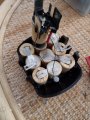
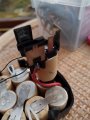
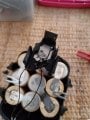
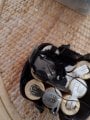
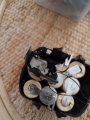
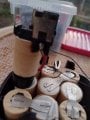
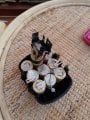
Attached photos of the original battery with NiCad cells in place. There are 4 metal terminals. 2 wide ones either side which are the +ve and -ve terminals and two more. One quite thin terminal on the side and another at the rear of the battery. There is what appears to be I think is a thermistor which monitors the battery temperature . But the wires are very thin ,I guess to take small signal currents. There is no thick black wire. I think the smaller thinner terminal pictured is grounded on the -ve terminal of the battery.

My new BMS has a +ve and -ve discharge terminals as well as + be and -ve charging terminals. I would appreciate some help and advice on how to wire the + ve and -ve discharge and recharge terminals to the battery itself from the BMS.


5
 

Thread Starter

peterhull418

Joined Feb 2, 2025
14
012v 1A Lithium-Ion Battery Charger Switching (Red / Green Indicator) - UK Stock! It cost about £7 advertised on eBay.

I wondering if I could install a socket inside the battery case to connect directly with the BMS charging terminals inside the battery case. What do you think?
 

Ya’akov

Joined Jan 27, 2019
10,226
012v 1A Lithium-Ion Battery Charger Switching (Red / Green Indicator) - UK Stock! It cost about £7 advertised on eBay.

I wondering if I could install a socket inside the battery case to connect directly with the BMS charging terminals inside the battery case. What do you think?
If you have the space, it’s fine.
 

bassbindevil

Joined Jan 23, 2014
918
Not familiar with brick converters wall wart or brick styles, can you explain please. I am in UK
These are power supplies which have the particular voltage and current regulation needed for safely charging lithium ion batteries. They almost always have a two-colour LED to indicate charging/charge-completed, and say lithium ion charger on the label. Searching by the required voltage (12.6 for 3S) and lithium charger should find them on your favourite online shopping site, or if you're patient enough you may find one at thrift store or recycling depot. They don't include balancing; that's a function of the protection board.

There are also hobby chargers made for radio control models that have a multi-conductor connector for charging packs that don't have internal balancing. They're useful tools to have around, since universal types like Imax B6 can handle just about any battery chemistry and size.
 

Thread Starter

peterhull418

Joined Feb 2, 2025
14
These are power supplies which have the particular voltage and current regulation needed for safely charging lithium ion batteries. They almost always have a two-colour LED to indicate charging/charge-completed, and say lithium ion charger on the label. Searching by the required voltage (12.6 for 3S) and lithium charger should find them on your favourite online shopping site, or if you're patient enough you may find one at thrift store or recycling depot. They don't include balancing; that's a function of the protection board.

There are also hobby chargers made for radio control models that have a multi-conductor connector for charging packs that don't have internal balancing. They're useful tools to have around, since universal types like Imax B6 can handle just about any battery chemistry and size.
Thanks.
I have an iMax B6 because I did dabble in RC for while but I wanted a dedicated charger.
As the BMS has charging terminals as well as discharge terminals. I am planning to install female socket inside the battery case and plug the lithium charger directly into the BMS charging terminals.


There is a lithium charger on eBay which is rated at 12v 1A. With red and green light to show state of charge. That sounds like your description. Less than ,£10. I will buy it.
 
Top