Bonding 0 volts of input and output

Thread Starter

gray-b

Joined Aug 4, 2025
84
Not sure what to do here.

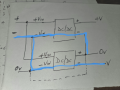
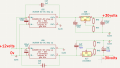
But I have 2 dc dc converters (isolated from each other) with the outputs connected in series, giving a +v 0v -v.

Do I connect the 0v connections on the output circuitry back to 0v on the input circuitry?

If I keep them separate, must I always ensure the 0v never becomes connected?
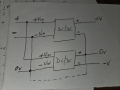
20251225_211157.png

Any advice is sought please.
 

nsaspook

Joined Aug 27, 2009
16,249
It depends on the need for galvanic isolation (as opposed to just having it) of possible potentials between the 0V input reference and the output 0V reference.
 

MrChips

Joined Oct 2, 2009
34,626
Not sure what to do here.

But I have 2 dc dc converters (isolated from each other) with the outputs connected in series, giving a +v 0v -v.

Do I connect the 0v connections on the output circuitry back to 0v on the input circuitry?

If I keep them separate, must I always ensure the 0v never becomes connected?

Any advice is sought please.
If the two sources are isolated from earth ground, why do you need to connect the output 0 V common?
Where is earth ground in this picture?
What is connected to the ±V output?

Note that -V is not necessarily a negative voltage. It just means that the difference between +V and -V is 2V.
 

Jon Chandler

Joined Jun 12, 2008
1,560
If Vin– is common to Vout– in the boost converter (i.e., non-isolated), using one power supply for both isn't going to work. The negative terminal from the "positive" converter will be a dead short across the "negative" converter when connected to its Vout+ terminal.

20251225_211157.png
 
Last edited:

Thread Starter

gray-b

Joined Aug 4, 2025
84
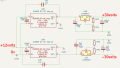
The input to the converter is totally isolated from the output. And each converter is isolated from each other.

Screenshot 2025-12-26 204218.png
 

MisterBill2

Joined Jan 23, 2018
27,159
There are BOTH types of inverters available, isolated and non-isolated. I am quite grateful for that!!
Returning to the first post question, for that specific application, it does no harm to connect the "zero volts" line from the linked outputs to the zero volts inputs. THAT will allow the circuits powered by the split supply to work with the circuits powered by the 12volt supply.
MANY years ago I had to work with recorders and instrument systems that used exactly that scheme. It worked very well.
 

Jon Chandler

Joined Jun 12, 2008
1,560
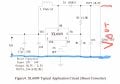
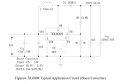
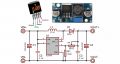
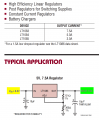
If the thread starter used the common boost modules using the chip in his schematic, I believe the negative input and output are common. The schematic shown above from the datasheet shows the typical non-isolated circuit.

Again, 10 seconds with an ohm meter will confirm or disprove my concerns.

My comments are based on the thread starter's second schematic, which shows the boost converter chip, which appears to show it as a module. That type of module which I have has a common negative connection.
 

MisterBill2

Joined Jan 23, 2018
27,159
If somebody making a post describes a component as having properties that seem believable and reasonable, I am not inclined very often to research the validity of that claim. That is not always correct. My error this time.
 

Thread Starter

gray-b

Joined Aug 4, 2025
84
Checking if the negative input and output terminals are common would be a good starting point.
That is very interesting.

I will need to check that when I get my hands on the modules.

But in checking photos etc I think now I am totally incorrect in what I said. The -Vin and -Vout are common, that is it is non-isolated .

What effect does this have ?? on where I am going

Also interested in Vout=1.25(1+R2/R1) I must take note of that.
 
Last edited:

Thread Starter

gray-b

Joined Aug 4, 2025
84
OK I am looking for guidance on this now.

But from two DC-DC converters to get split rail

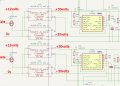
I have altered it to accommodate my requirements. Any thoughts please. I will have to breadboard it. But I assume I can connect all the EARTH's together, maybe not the 12v earth.

The 2 regulators are 3Amp positive and 3Amp negative adjustable up 32volt max in TO-220 packages.

Screenshot 2025-12-27 205537.png
 

Attachments

panic mode

Joined Oct 10, 2011
4,864
as already stated several times, you can do that IF the converter is isolated.

but... XL6009 is not isolated: VIN- and VOUT- are already connected internally.
so any time you connect any other power rail to it, you are creating short circuit.
1766869525004.png


in your case, U26 already has internally shorted IN- and OUT- (2 and 3).
since IN- is tied to "Earth", connecting U26 pin 4 to "Earth" is that short circuit.
 

MisterBill2

Joined Jan 23, 2018
27,159
If you purchase from AN HONEST SUPPLIER their product description will include a description of any isolation ,or lack of it. AND the descrition will also state the withstand voltage of the isolation.
 

panic mode

Joined Oct 10, 2011
4,864
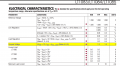
and that is not the only problem. you cannot get 30V out from a linear regulator that is powered by 30V. these linear regulator have minimum voltage drop of 1.5V minimum. so to get some regulated voltage out, input voltage must be at least 1.5V higher than that expected output voltage.
if the desired output is 5V then input voltage must be at least 6.5V
if the desired output is 12V then input voltage must be at least 13.5V
...
if the desired output is 30V then input voltage must be at least 31.5V
1766870358891.png
1766870233721.png


the other problem is that 30V as input is too high... 30V is the absolute maximum, in other words, this is when this regulator goes kaboom. you always want to have some safety margins like 10% or so. next, this regulator also has minimum load current of 10mA that you probably did not consider.
 
Last edited:

MrChips

Joined Oct 2, 2009
34,626
But in checking photos etc I think now I am totally incorrect in what I said. The -Vin and -Vout are common, that is it is non-isolated .

What effect does this have ?? on where I am going
This is the deal breaker. You cannot do what you are doing. In other words, you cannot wire the two converters in series to produce a split +ve and -ve supply.
 
Top