Boeing 737 MAX - software wouldn't fix faulty airframe

Tonyr1084

Joined Sep 24, 2015
9,744
A Toroid shaped intake versus a Fish Mouth shaped intake makes for better fuel economy. Also, the longer landing gears make for a smoother landing. True, the 737 will have greater ground effects, but every time I've ridden on a 737 it has always been a rather loud thump and bump upon touchdown.

To be honest, I've never liked the 737. When landing it tends to come down like a leaf on a breeze, swinging left and right, back and forth. The types of jets I most prefer are T-Tail types. Having the horizontal stabilizers flying in clean air makes for a smoother flight. Having the engines on the fuselage also makes for a smoother flight. Bit more noise, but headphones usually take care of that.

Well, those are my opinions. And I'm sticking to them. Until someone logically proves otherwise.
 

nsaspook

Joined Aug 27, 2009
16,389
It's relative.
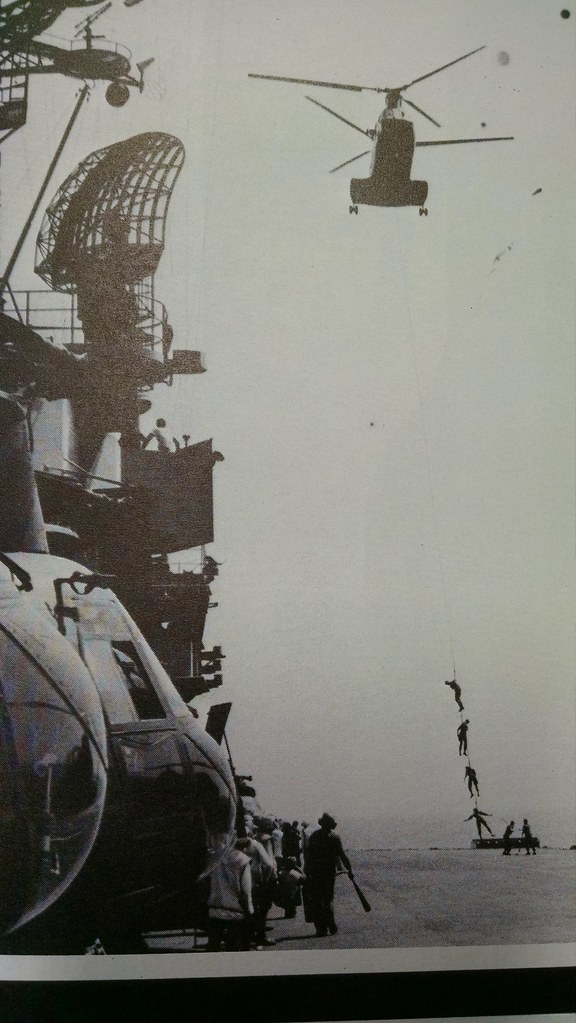
Planes only give me a bit a worry on takeoff and landings. Helicopters were sheer terror for every second we were an inch above ground or water.:eek:

10110315.jpg
 
Last edited:

Tonyr1084

Joined Sep 24, 2015
9,744
Helicopters were sheer terror for every second we were an inch above ground.:eek:
When living in Connecticut, I saw the aftermath of a SeaHawk that lost its main rotor. I guess someone forgot to torque a bolt or put a pin in. Brand new. Test flight. And it went down nose first. Wasn't very high, but it was high enough.

I've never been on a chopper. The wife wanted to take a Grand Canyon tour out of Las Vegas once in a chopper, but the cost was a little prohibitive. Most of our money was dedicated to supporting the Casino's and restaurants.
 

nsaspook

Joined Aug 27, 2009
16,389
Well, I thought I heard the main rotor became detached. Or that was how I remembered it.

Sad story but instructive about there is little margin for error in a flying brick filled with fuel. I've flown in the big CH-53 bird, she was actually pretty nice with a smooth ride.
We (not the pilots) had a few beers on a transport (of three pallets of beer) run while in the air once and drop-kicked the empties off the loading ramp to see how far they would go before falling out of sight. o_O

Try this for absolute terror: :eek:
 
Last edited:

WBahn

Joined Mar 31, 2012
33,021
You will always lose safety when making economically driven decisions.
Even if we stipulate that this is categorically the case, so what? It's a nearly vacuous claim; we all live in the real world, whether we believe it or choose to admit it or not, and in the real world, nearly every decision we make is driven at some level by the economics involved.

How many have people have installed fire-suppression systems in their homes? How many people would have them if they were free? So I guess people make an economically-driven decision not to have a fire-suppression system in their home. Do those people lose safety for themselves and their families because they made an economically-driven decision? Sure. Does that mean that they should make a different decisions since economically-driven decisions always result in a loss of safety?

Should the owner of an apartment building install a fire-suppression system in every apartment and hire an EMT to be available 24/7 on site and a thousand other things? Why don't they? Could it be because it is economically infeasible to do so? Don't we lose safety because they made an economically-driven decision? So are they bad landlords because they made an economically-driven decision that results in a loss of safety?
 

bloguetronica

Joined Apr 27, 2007
1,544
In the case of an airplane, saving too many costs may end up in resulting in hundreds of deaths. How many mistakes does one have to do before he learns? You may find that my statement is so obvious that it has vacuum in it, but it is no less true. I agree with you, because it is just one of those truths.

I bet than nearly every aviation accident or incident was caused or somewhat motivated by economic reasons (say, an airport manager saving on the tarmac maintenance, or a company saving on parts, a flawed and yet cheaper design, sub-par air worthiness compensated with automation, and the list goes on and on).

Kind regards, Samuel Lourenço
 
Last edited:

jpanhalt

Joined Jan 18, 2008
11,087
In the case of an airplane, saving too many costs may end up in resulting in hundreds of deaths. How many mistakes does one have to do before he learns? You may find that my statement is so obvious that it has vacuum in it, but it is no less true. I agree with you, because it is just one of those truths.

I bet than nearly every aviation accident or incident was motivated my economic reasons (say, an airport manager saving on the tarmac maintenance, or a company saving on parts, a flawed and yet cheaper design, and the list goes on and on).

Kind regards, Samuel Lourenço
The American tort system tends to put a damper on the avarice of commercial entities -- unlike what exists for airplanes made by international consortiums.

As for the underlined, the vast majority of aviation accidents are due to weather and/or pilot error. Economic considerations (e.g.,structural design defects to save money, tarmac defect, or saving fuel) are insignificant in comparison.
 

Tonyr1084

Joined Sep 24, 2015
9,744
In the end it's economic considerations that drive down the level of safety. Unfortunately it's the body count that drives it back up again. Balance is so elusive a thing that tendencies still lean to sacrificing quality and safety to save a buck.

Back when I worked DC-10's American Airlines cut maintenance costs by using a fork lift to remove wing engines and pylons despite the specific instructions that said you use a crane with a weight scale to lift the weight of the engine only, and then unbolt it from the pylon. Then once the engine is removed, the same process is done to remove the pylon. AA decided it was quicker and cheaper to just cradle the engine and unbolt the pylon / engine as a single entire unit. That was what lead to the fracturing of the rear mount joint. Upon take-off, I think it was out of Chicago, could be wrong, but the joint failed and allowed the thrust of the engine to pull the pylon up and over the top of the wing resulting in a horrendous crash.

Yes, most accidents are human error. But sadly there's a large percentage of crashes that occur because of poor maintenance procedure following. Cutting corners in the aviation arena can lead to cutting short lives.

I still don't like the 737 in any of its configurations. I'll fly it because chances are good I'm going to make my destination. But if not - - - it won't be a problem for long for me. If it happens it happens. I'd rather it not. But it does happen.
 

bloguetronica

Joined Apr 27, 2007
1,544
In the end it's economic considerations that drive down the level of safety. Unfortunately it's the body count that drives it back up again. Balance is so elusive a thing that tendencies still lean to sacrificing quality and safety to save a buck.

Back when I worked DC-10's American Airlines cut maintenance costs by using a fork lift to remove wing engines and pylons despite the specific instructions that said you use a crane with a weight scale to lift the weight of the engine only, and then unbolt it from the pylon. Then once the engine is removed, the same process is done to remove the pylon. AA decided it was quicker and cheaper to just cradle the engine and unbolt the pylon / engine as a single entire unit. That was what lead to the fracturing of the rear mount joint. Upon take-off, I think it was out of Chicago, could be wrong, but the joint failed and allowed the thrust of the engine to pull the pylon up and over the top of the wing resulting in a horrendous crash.

Yes, most accidents are human error. But sadly there's a large percentage of crashes that occur because of poor maintenance procedure following. Cutting corners in the aviation arena can lead to cutting short lives.

I still don't like the 737 in any of its configurations. I'll fly it because chances are good I'm going to make my destination. But if not - - - it won't be a problem for long for me. If it happens it happens. I'd rather it not. But it does happen.
The infamous accident that caused a whole engine to fly apart. If I recall correctly, the maintenance decided to unbolt the whole pylon because they had to remove less screws. Perhaps, that fact that there were less screws fastening the pylon and the wing was the main motive why the engine should be unbolted from the pylon first. This is a case where maintenance decides they know better than the manufacturer.

There is another case, related with an elevator coming loose, due to improper maintenance procedure. A maintenance team swap, and the improper log keeping, was the culprit. They literally left one of the elevators hanging on threads, and then it came loose mid-flight. I don't remember the flight number, the airplane, or the company.

Kind regards, Samuel Lourenço
 

nsaspook

Joined Aug 27, 2009
16,389

nsaspook

Joined Aug 27, 2009
16,389
Yea, that's the root problem. Pilots that recognized (the majority of automation created incidents) the fault(s) as runaway trim early had time to disconnect (using the runaway trim switch procedure as taught in the book since the 1960's) and manually re-trim the aircraft, those that didn't, crashed. :( They didn't need to know WHY it was happening, only WHAT was happening. Pilots needed to be aware of the MCAS system and briefed on what it did to the aircraft during a failure.

https://www.reuters.com/article/us-...ve-imperiled-planes-experts-say-idUSKCN1R322M
The Lion Air pilots flew for about five minutes by using the elevator to counteract the stabilizer every 15 or 20 seconds, said Hansman, based on readings from the flight data recorder. After that, the pilot tried pulling back hard on the controls.

“That’s what suggests that the crew didn’t understand the system. They thought they were shutting MCAS off and didn’t,” Hansman said. “Whereas any time during the entire sequence, they could have reached to the middle console and just shut it off.”
 
Last edited:

SamR

Joined Mar 19, 2019
5,513
I should have posted it but there was a recent article discussing the pilots involved in both fatal accidents "Lack of Aviator's Skill". The pilots coming out of some of the "large aircraft" training schools have had 0 flight experience before going to school. NEVER flow a plane by the seat of their pants or navigated with nothing more than a compass and a map. Full of book and simulator knowledge but Zero Aviation Skill. Exactly as were those "pilots". In fact, most airline pilots today only take the "Stick" on landing and takeoff, the rest of the time the computers do the flying.
 

nsaspook

Joined Aug 27, 2009
16,389
I should have posted it but there was a recent article discussing the pilots involved in both fatal accidents "Lack of Aviator's Skill". The pilots coming out of some of the "large aircraft" training schools have had 0 flight experience before going to school. NEVER flow a plane by the seat of their pants or navigated with nothing more than a compass and a map. Full of book and simulator knowledge but Zero Aviation Skill. Exactly as were those "pilots". In fact, most airline pilots today only take the "Stick" on landing and takeoff, the rest of the time the computers do the flying.
At least the FAA is trying to do something about that. What other countries and carriers do to build and maintain flying skills is unknown to me.
https://content.govdelivery.com/attachments/USAFAA/2017/05/11/file_attachments/815236/SAFO17007.pdf
 

SamR

Joined Mar 19, 2019
5,513
Dated 5/17 and requiring actual stick time while flying and hands-on non-simulator training in various actual aircraft types! Obviously, FCC certified pilots would have been much better experienced and equipped to handle the emergency. That makes me feel much better about US flights. Ethiopia made a big deal out of their pilots not being at fault after the accident. The article I referred to painted a completely different picture. Yes, they had plenty of "Cockpit Hours" but actually only flew for a very limited number of minutes per flight and had questionable Aviation Skill due to lack of actual flying experience.
 

nsaspook

Joined Aug 27, 2009
16,389
Dated 5/17 and requiring actual stick time while flying and hands-on non-simulator training in various actual aircraft types! Obviously, FCC certified pilots would have been much better experienced and equipped to handle the emergency. That makes me feel much better about US flights. Ethiopia made a big deal out of their pilots not being at fault after the accident. The article I referred to painted a completely different picture. Yes, they had plenty of "Cockpit Hours" but actually only flew for a very limited number of minutes per flight and had questionable Aviation Skill due to lack of actual flying experience.
Just wait until the next generation of almost self-driving car drivers gets into a jam that needs quick manual control. It might look like this:
 
Top