Best Location for Line Amplifiers and Bandpass Filters for 2.4Ghz and 5.8Ghz Tower Mounted Antennae.

Thread Starter

Chaos Theory

Joined Aug 29, 2020
13
Greetings and hallucinations good sirs. I plan to build a tower-mounted antenna rig sporting one antenna each for 2.4 GHz and 5.8 GHz, and for this project, I procured two 100-foot lengths of coax cable, along with line amplifiers, connectors, and bandpass filters specific to 2.4Ghz and 5.8Ghz.

With negligible RF theory under my belt, I would like to enquire from this forum's RF gurus whether the line amplifiers should be installed close to the antennae atop the tower, or alternately at the ground-level end of the coax cable. Likewise, I would like to ascertain the validity of my presumption that the bandpass filters are best installed at the antenna end of the coax cable.

Finally, my recollection of SWR meter usage is minimal, so I would like to ask whether the SWR meter readings should be taken by interrupting the coax cable at the antenna end of the cable, or the ground-level end of the cable. If possible I would also like to learn what SWR readings would be deemed acceptable for this tower antenna setup when it is powered up.

While I concede to being a complete ignoramus when it comes to RF alchemy, I did earn a puny BSEE way back when pterodactyls roamed the skies, meaning that I should be in a position to comprehend at least the rudiments of any technical advice that might be generously offered by the brain trust of this esteemed website.
 

Ya’akov

Joined Jan 27, 2019
10,226
Welcome to AAC.

Unfortunately, what you plan to do is almost certainly illegal due to regulations on those bands. Because they are subject to an international treaty, there is very little variance in regulations among jurisdictions with the only exception being more stringent limitations.

Your proposal is contrary to limitations on antennas for unlicensed band devices. These devices rely on strict adherence to regulatory compliance—including testing with the supplied antenna(s). There are also limits on ERP (Effective Radiated Power) that will be exceeded by such an installation.

So, unfortunately, it is not possible to assist you with this project. Sorry about that. However, there are possible workarounds.

Consider the idea of placing the devices in an appropriate enclosure at the top of the tower and running the data down the dower instead of the RF. This avoids the regulatory misdeeds and may also perform better. Consider the loss in 100’ of feedline at the target frequency. Any amplifier will have to overcome that loss which is already starting with a big handicap—and this is before including losses due to SWR mismatch.

At 5.6GHz, the loss at 100’ is prodigious. Even a very high quality feedline intended for microwave use will have a 16dB loss—and that would be more than $1200.00 worth of coax. Lesser feedline would be doing well with 63dB loss over 100‘. Consider the gain of your amplifiers (and don’t count of more than half their ratings unless you’ve paid a lot of money for them.

Remotely mounting the device itself will require careful attention to weatherproofing and the effects of temperature variation but considering the cost of the alternative it’s much more sensible. if you really need to tower mount the antenna, do it with the device attached—it will work better in the end.

By the way, if this is for WiFi, you are far better off using a commercial, outdoor AP. These are designed so they can (legally) use external antennas, and they are built in weatherproof enclosures designed for this sort of thing. Keep in mind that if you are using an omnidirectional antenna those designed to be used on APs/routers not mounted on towers will have a flat or upward facing take off angle.

This means most of the power (transmit and recieve) is not going to be pointed down at the ground but into the sky. You need a special downward facing antenna for that application. And, if you are using a directional antenna—for example a Yagi–Uda or a corner reflector—you will be risking violation not only of the prohibition of using a non-approved antenna but of exceeding the ERP limits.

These concerns are not just about “the law”, rather about the reason for the law. Unlicensed band operation depends on careful balancing of user‘s needs. When you exceed the regulatory limits you are setting yourself up to be a source of interference. For example, you can become a “hidden transmitter” unable to comply with protocol mechanisms that prevent interference.

This happens when you have transmit farther than you can hear. Your node will have no way to know that it is interfering with other users of the channel since it can’t participate in the CSMA/CA (Carrier Sense Multiple Access/Collision Avoidance) part of the protocol that would prevent it from simply transmitting over another station trying to use the channel.

Please consider these issues (and others I have not gone on about) before choosing to use brute force. Good luck.
 

Thread Starter

Chaos Theory

Joined Aug 29, 2020
13
Mr. Ya'akov sir the deep knowledge of antenna theory that is evident in this response you have kindly posted will take me some careful re-reading to comprehend despite my analog electronics background, but I decided to express my gratitude now for your having taken the time to explain the technicalities of this project from the perspective of the law, as well as from the standpoint of the cost and degree of difficulty I would encounter in attempting this project.

Your wise and insightful admonition has certainly given me pause to reconsider my initial enthusiasm about this idea, even though I already shelled out a sizeable chunk of money in acquiring the components and coax cable that I anticipated would be required for this project.
 

LowQCab

Joined Nov 6, 2012
5,101
If You can't find a "Geek" oriented channel on the Internet that routinely plays with this sort
of arrangement, and use of this type of equipment,
then don't don't even dream of having any part of it working,
it will be a huge fail, every time.

If You will ask for the best way to accomplish a detailed and specific goal, you'll get great advice here.

Sorry, but You just lost a sizable chunk of money because of lack of research, and too much enthusiasm.
.
.
.
 

Thread Starter

Chaos Theory

Joined Aug 29, 2020
13
This reply is appreciated LowQCab sir, and I apologize if my initial enquiry did not provide sufficient detail about the goal of this project . I reside on a farm settlement way out in the sticks of a Third World country where FAA and CAA regulations are not applicable, and the purpose of this project was to extend the range of outgoing RC control inputs and incoming video feedback from my trusty old DJI Mavic 1 Pro quadcopter, which has in the past proved itself to be the most effective means of keeping tabs on land boundary encroachment and timber poaching.

Presently, standing atop a 60-foot water tower has been the only way I have been able to maintain a video feedback from the drone as it autonomously follows the vertical and horizontal aspects of meandering flight plans that range 6 miles out over rural countryside, using a flight planning app called Litchi. Replacing the stock Mavic 1 Pro batteries with after-market 6,380mAh batteries from Ali Express, this drone's reach has been extended from 6 miles round trip to well over 13 miles round trip.

Getting up in my years and not being too keen on heights, I had hoped to convert the drone's RC controller's external antenna connectors so that they can be connected by coax cable whereby I could connect the RC controller with two separate omnidirectional whip antennae rated for for 2.4GHz and 5.8GHz, that would be affixed atop my purpose built 100-foot tower.

With such a mast-mounted setup my goal was to monitor the drone's camera view while seated indoors, which would be far safer and a good deal more comfortable than my current practice of climbing to the top of the water tower that stands right beside my thus far unused antenna mast. The components for this project that I ordered were selected after I read up on this subject in a drone forum a couple of years back. Unfortunately the hobbyists who have succeeded in setting up this type of extended range antenna did not furnish the specific connection information that I seek, which led me to enquire in this forum.

I thank you kindly for taking a moment to read though my ramblings today, and once again I apologize for my poor understanding of RF and microwave theory.
 

Thread Starter

Chaos Theory

Joined Aug 29, 2020
13
My initial inspiration for this project was this discussion that I stumbled on in the RC Groups forum, that was posted by a contributing writer who goes by the handle Benderfly. During winter months in upstate New York, this creative hobbyist relaxes indoors while flying his RC aircraft out over the countryside, often while in formation with other fliers. This idea really caught my imagination and I have sough to replicate the concept with a taller mast, if practicable.

https://www.rcgroups.com/forums/showthread.php?1676689-Antennas-on-the-roof-of-my-house
 

LowQCab

Joined Nov 6, 2012
5,101
As suggested by Ya’akov .............
"" Consider the idea of placing the devices in an appropriate enclosure at the top of the tower and running the data down the dower instead of the RF. ""

How do You plan to get to the top of that ~100-foot-tall Tower ?

The Tower can easily block Reception or Transmission in a particular general direction.
The High-Frequency antennas MUST BE mounted ABOVE the Tower for even 360-degree Coverage.

Lightening-Strikes are a very serious consideration to keep in mind.
.
.
.
 

Thread Starter

Chaos Theory

Joined Aug 29, 2020
13
Here is the setup described in the above discussion thread dating back to 2018 in the RC Groups forum

1725193705487.jpeg
 
Last edited by a moderator:

Thread Starter

Chaos Theory

Joined Aug 29, 2020
13
I have pondered the danger posed to this rig by lightning even if I do get it working. This is a real concern as my home sits atop a hill which in past years resulted in the roof's lightning arrestors being defeated during tropical thunderstorms that typically intensify during late August and September each year as the rains taper off and migrate south.

I suppose a dedicated lightning arrestor that is installed higher up the mast than the antennae could offer the protection all that sensitive gear will need, but this is merely optimistic speculation on my part.

Installing the gear atop the tower is an aspect of this project that I will entrust to a cellphone tower climber as I don't plan on pushing my luck by attempting such a precarious ascent, yet that is the least of the challenges I will encounter in trying to actualize this ambitious but slightly mad concept.
 

Ya’akov

Joined Jan 27, 2019
10,226
My initial inspiration for this project was this discussion that I stumbled on in the RC Groups forum, that was posted by a contributing writer who goes by the handle Benderfly. During winter months in upstate New York, this creative hobbyist relaxes indoors while flying his RC aircraft out over the countryside, often while in formation with other fliers. This idea really caught my imagination and I have sough to replicate the concept with a taller mast, if practicable.

https://www.rcgroups.com/forums/showthread.php?1676689-Antennas-on-the-roof-of-my-house
So that thread—insofar as it offers specific, practical advice—echoes what I said, without addressing legalities. The problem is, aside from the operating frequency for the FPV video (5.6GHz), and the fact that there is something flying around, your DJI drone is nothing like an FPV fixed wing aircraft or a racing drone.

The technical differences are many and vast, not the least of which is the proprietary control system and video feed of the DJI. You will somehow need to diplex the two operating bands (2.4GHz and 5.6GHz so they can share the antenna. then you would need an amplifier on the transmitter overcome the insertion losses of the feedline., diplexer, and antenna mismatch (some is inevitable) which, optimistically, will add up to >40dB for the 2.4GHz control frequency of the DJI controller. On the way down, you will need to boost the signal for receive to overcome a >60dB loss for the 5.6GHz video.

That you would be receiving and transmitting on the same feedline makes the diplexer’s quality critical—and it won’t be cheap.

As far as the FCC and FAA go, while you might not be in the jurisdiction of either, as I said, the ISM (Industrial, Scientific, and Medical) bands where these two allocations fall are the subject of international treaty. Some countries further restrict their use but any country that is a signatory to the ITU (International Telecommunication Union) treaty will not be more laissez faire than that baseline regulation.

Concerning the FAA—US UAS regulation is of average stricture and what you propose would be completely illegal here. If you do pursue this please first check with your country’s regulator because UAS regulation is the subject of much scrutiny in light of current events and the potential for harm.

I wish I could suggest something for you but this just seems to be impractical. Maybe you could do something like a light tent structure as a shelter outdoors for more comfort. Keep in mind, though, your regulator probably requires you to have visual contact with the drone while it is flying.
 

Ya’akov

Joined Jan 27, 2019
10,226
Concerning lightning protection a lightning rod that will discharge the potential to ground is your only hope. There isn’t a chance the DJI remote would survive a strike or even a near strike for that matter.

What is the brand and part number of the coax you’ve purchased? What are the amplifiers?
 

Thread Starter

Chaos Theory

Joined Aug 29, 2020
13
This response is appreciated, Mr. Ya'akov sir. I will rummage through my parts collection and list the items I have bought for this project within the next hour. Bought the parts a year or so ago and I'll need to refresh my memory by getting them out of storage in a room of my house that looks disturbingly like a hoarder's collection room.
 

Thread Starter

Chaos Theory

Joined Aug 29, 2020
13
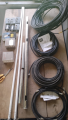
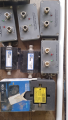
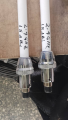
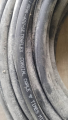
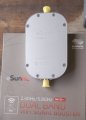
These are the initial findings of my archaeological dig to unearth the components I have been accumulating over the past few years in furtherance of this drone ground station dream I have been nursing out here in the boondocks. I haven't located the 5.8 GHz antenna, and the band pass filters I procured to clean up the signal for both 2.4GHz and 5.8GHz, but they are lurking somewhere in my storage room, awaiting imminent discovery.
1725198828559.png


1725198913735.png

1725199002933.png

1725199086509.png

1725199137509.png


Any comments about this collection of parts would be appreciated as I muddle along with this idea that refuses to die. I haven't the foggiest idea what those stainless steel tubes are intended for, but they were shipped with the omnidirectional antennae.
 

Thread Starter

Chaos Theory

Joined Aug 29, 2020
13
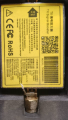
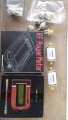
Found the bandpass filter and that all important RF power meter, ready for when I string this contraption together. Oh how I wish I could hire an expert here to work the magic while I sit back twiddling my thumbs and offering advice. Alas, there aren't any such experts in this neck of the woods, which leaves yours truly as the trial-and-error installation tech.

For some reason I am reminded of a quote attributed to late comedian Groucho Marx : "I'd never dream of joining any club that would accept people like me as members".

1725201320372.png
 

sagor

Joined Mar 10, 2019
1,046
You show a picture of coax similar to LMR-400-UF (Ultraflex), which has a loss of about 13dB at 5.8Ghz for 100 feet (also about 8dB/100ft at 2.5Ghz). If your amplifier gain(s) is more than that, mounting everything at the top of the tower would give the best benefit.
Using the non-flexible type of LMR-400 would gain you a few more dB, as it is not as lossy as the flexible version.
Every connector, filter, etc. adds more loss to the overall run.
Also, old cable may not be worth keeping or re-using. If anything like moisture/water got into the coax, it may be useless as coax.

The stainless tubes are usually used to mount the vertical antenna. It slips into the base and fastened with a set screw. This also shields the coax connector from direct weather like rain. You then clamp around the tube, usually with a clamp designed for the tube, looking like a double clamp, one around the tube, the other to go around a mast. There are usually two sets of clamps per antenna.
 

Thread Starter

Chaos Theory

Joined Aug 29, 2020
13
These facts and figures about signal attenuation in the coax cable I purchased are enormously helpful, Mr. Sagor, and I thank you kindly for taking a moment to clarify these key facts that will inform my decision as to how much in-line amplification will be required to preserve transmitted signal integrity.

The cable shown in my photographs above has never been used, and has always been stored indoors, despite the dust that has accumulated on them during the time I had them stored on a shelf while I tried to seek advice online. I am also grateful for the explanation of the purpose of those stainless steel tubes. I am not out of the woods just yet, and I will no doubt have further questions that will bring me back to this learned forum.

Once again this technical knowledge you and others have generously shared here is appreciated, and I am better informed now than I was before seeing the above responses to my novice questions, of which there will no doubt be a few more before long.
 
Top