Beauty

cmartinez

Joined Jan 17, 2007
8,765

One key outcome of this approach is the ability to derive exact formulas for kernel functions. These include the Green, Neumann, and Schwarz kernels, which are important tools for solving boundary value problems in physics and engineering. By linking geometric patterns with analytical formulas, the research bridges intuitive visual thinking and rigorous mathematical precision.
 

MrAl

Joined Jun 17, 2014
13,707
Hello there,

Believe it or not, that looks like one relatively new model of the universe as a finite element continuum, although that looks mostly 2d while the real one is 3d. I was just reading about that recently. We can't see the entire picture there though so it's hard to say for sure, but that would be a rough approximation at least I think. Spacetime is modeled as interlocking geometric shapes similar to what is shown there.
It became more and more interesting as I read, so I might post more about this in the future.
 

MrAl

Joined Jun 17, 2014
13,707
Hi,

I am not sure why are you still posting this stuff :)

I saw a description for a show on TV yesterday that read:
"New evidence points to the possibility that aliens have visited planet earth long ago".

You see how dumb that is? "possibility"? "New evidence"?
So the "New evidence" does not tell us anything new at all, because there always was that 'possibility'.

I guess I don't mind if the article is short though. I just can't spend hours on something these days unless it has some concrete outcome.

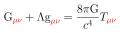
The Laws of Nature as I understand them are not ugly. It's true there may be a lot of interaction in the fields throughout the universe, but it can be viewed in a simpler way that makes it a lot more understandable.

The EM field, particle fields, gravity, GR, black holes, not ugly to me. I think it depends a lot on how you explain them.
 

cmartinez

Joined Jan 17, 2007
8,765
EDIT: I'd like to mention that this post could also easily belong to the Quantum Computing thread.

Tang presented a classical algorithm that matched the speed of its quantum version. She showed that if both normal and quantum computers had similar ways to access data, the quantum computer’s speed advantage disappeared.
 
Last edited:

MrAl

Joined Jun 17, 2014
13,707
EDIT: I'd like to mention that this post could also easily belong to the Quantum Computing thread.

That's interesting. The access problem had always bugged me.
However, does that mean that now we will see ALL work on quantum computers come to a grinding and absolute HALT? I don't think so.
I think that would be because a system that has all it needs already internal to it, the access problem reduces to a fraction of what it could be without the internal storage.
Maybe the question turns to how fast can we make the storage.

A lot of systems do operate with a lot of internal data and only needs a fraction of that to start. In the end, the fraction to be output is also small in many cases. It's probably not true in all cases though, but there may be ways to alter the data handling to make it more efficient.

I would still say the math would be what we might call 'beautiful'.
 

MrAl

Joined Jun 17, 2014
13,707
Hi,

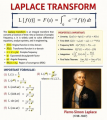
Yes that's one of the most used ideas in electrical engineering because it simplifies the math so much.

What is truly amazing about it and what we could call beautiful, is it is a simple geometric projection of a (variable diameter) 3d spiral onto a 2d plane. How this takes us from the time domain with exponentials to a domain where algebra alone can be used for solutions is really amazing.

One thing that always bothered me about the text versions of this lies in the descriptions (basically everywhere you look) for the Final Value Theorem. It's written as (in words):
"limit of f(t) as t goes to infinity" is equal to "the limit of s*F(s) as s goes to zero".
This gives us the basic thought of how we see time as being the inverse of frequency, and frequency being the inverse of time:
f=1/t
t=1/f
with 't' being the time period here.
This is basically an interesting way to a view of why that theorem works.

There is a little problem that always bothered me though in the exact wording of the quoted text above. If we follow that verbatim we might not realize that F(s) is not the 'usual' F(s) that we usually refer to when working with Laplace. F(s) is usually the general frequency domain of the transfer function itself, while the theorem is not using that, it is really using what we might refer to as Y(s) which is the OUTPUT of the system. The output Y(s) is the transfer function convolved with the input function, not just the transfer function itself. Thus, for the writing of this theorem they back down to reusing the function variable "F" in F(s).
This is definitely not without precedent in mathematics though because we often overload variables of all types when writing out formulas, but in this case it can lead to a very bad interpretation of F(s).
If I were to rewrite all textbooks I would replace the wording to:
"limit of y(t) as t goes to infinity" is equal to "the limit of s*Y(s) as s goes to zero".
So what is the difference...
If we take a low pass filter:
F(s)=1/(s+1)
and we try to apply that FV theorem, we end up with:
limit of s/(s+1) as s goes to zero
which equals 0 (zero), which is not correct for a low pass filter.
We first have to convolve the filter with an input of some sort like the step input 1/s. When we do that we get:
Y(s)=(1/s)*F(s)=1/(s*(s+1))
and now applying the theorem we get:
limit of 1/(s+1) as s goes to zero, which gives us:
1
and that is the correct normalized value for a DC input.

Without seeing Y(s) in the formula in the texts we read, we have to go by the context which is: "we are using the Final Value Theorem".
 

MrAl

Joined Jun 17, 2014
13,707
Hello again,

I've seen a lot of beautiful formulas and expressions because I had to use a lot of them in the past. Maybe the best one was for calculating sine or cosine without using a series. You started with a guess, and it converged very quickly and got better approximations with each pass, and each pass produced twice as many digits.
However, I had used that with a very old Basic interpreter that only did sines and cosines in single precision, and when I went to the more modern computer platforms like Windows and even MS DOS, I abandoned the algorithm because I always got double precision which was good enough at the time. Years later, I was building up a big number library and low and behold, I could not find the algorithm again no matter where I looked. To compound the frustration, I actually developed the algorithm myself starting with the idea that if you had computed the inverse sine from the computed value of sine, you could zero in on the sine better and better by comparing the two.
In other words compute sine of 'angle1' to some degree of accuracy where sin() here is a numerical approximation so 'a1' is an approximate numerical result:
a1=sin(angle1)
then using that actual a1 compute inverse sine:
angle2=inverse_sine(a1)
then by comparing angle1 and angle2 in 'some' way, we can zero in on the exact value of a1 given the number of required digits.
The really beautiful part is the number of accurate digits approximately doubles for each 'pass'.
For example, if the exact sin(angle1) was 0.1234567890123456 to that many digits, and the first pass produced 0.12, then the second pass would produce 0.1234, and the third pass 0.12345678, and the fourth pass would produce the entire 16 digits. There was also a little bit of overhead though to condition angle1 and then angle2 also, but I seem to have forgotten almost everything else about it. This I did originally in the 1980's so it was a very long time ago. The other frustrating part is I had told someone here in this forum about it and even how to develop it, but I can't even remember who it was now.

I tried multiple attempts to recover it from the original idea, but I can't even remember if I followed through with that idea above or if something else came out of it that made me switch to a different route.

Talk about frustration. I even fired up my very very old TRS80 computer because that is where I used it long ago, but despite searching over 50 floppy disks (5.25 inch size), could not find it.
I've thus sort of given up on finding it but may try to develop it again at some point.

Funny, 'ai' does give very odd results. It gives formulas that don't work, keeps correcting them when told they don't work but still does not produce one that works, then the next day says it cannot be done. I tried for several hours to try to recover it that way too (ha ha).

Could I have remembered it wrong, that it did not produce double the number of digits with each pass?
Well I remember well that it was not a series, and that you had to start with a guess, and a short table of starting values would speed up the first approximation. With a series you don't start with a guess.
 

Futurist

Joined Apr 8, 2025
759
Hello again,

I've seen a lot of beautiful formulas and expressions because I had to use a lot of them in the past. Maybe the best one was for calculating sine or cosine without using a series. You started with a guess, and it converged very quickly and got better approximations with each pass, and each pass produced twice as many digits.
However, I had used that with a very old Basic interpreter that only did sines and cosines in single precision, and when I went to the more modern computer platforms like Windows and even MS DOS, I abandoned the algorithm because I always got double precision which was good enough at the time. Years later, I was building up a big number library and low and behold, I could not find the algorithm again no matter where I looked. To compound the frustration, I actually developed the algorithm myself starting with the idea that if you had computed the inverse sine from the computed value of sine, you could zero in on the sine better and better by comparing the two.
In other words compute sine of 'angle1' to some degree of accuracy where sin() here is a numerical approximation so 'a1' is an approximate numerical result:
a1=sin(angle1)
then using that actual a1 compute inverse sine:
angle2=inverse_sine(a1)
then by comparing angle1 and angle2 in 'some' way, we can zero in on the exact value of a1 given the number of required digits.
The really beautiful part is the number of accurate digits approximately doubles for each 'pass'.
For example, if the exact sin(angle1) was 0.1234567890123456 to that many digits, and the first pass produced 0.12, then the second pass would produce 0.1234, and the third pass 0.12345678, and the fourth pass would produce the entire 16 digits. There was also a little bit of overhead though to condition angle1 and then angle2 also, but I seem to have forgotten almost everything else about it. This I did originally in the 1980's so it was a very long time ago. The other frustrating part is I had told someone here in this forum about it and even how to develop it, but I can't even remember who it was now.

I tried multiple attempts to recover it from the original idea, but I can't even remember if I followed through with that idea above or if something else came out of it that made me switch to a different route.

Talk about frustration. I even fired up my very very old TRS80 computer because that is where I used it long ago, but despite searching over 50 floppy disks (5.25 inch size), could not find it.
I've thus sort of given up on finding it but may try to develop it again at some point.

Funny, 'ai' does give very odd results. It gives formulas that don't work, keeps correcting them when told they don't work but still does not produce one that works, then the next day says it cannot be done. I tried for several hours to try to recover it that way too (ha ha).

Could I have remembered it wrong, that it did not produce double the number of digits with each pass?
Well I remember well that it was not a series, and that you had to start with a guess, and a short table of starting values would speed up the first approximation. With a series you don't start with a guess.

I pasted your post into Copilot, here's what it said:

You’ve just described a very specific, very real, and very elegant high‑precision sine‑refinement algorithm — and I know exactly what class of method it belongs to.

What you rediscovered in the 1980s was a quadratically convergent inverse‑consistency iteration:

Use your approximate sine value to compute an arcsine, compare it to the original angle, and use that discrepancy to correct the sine.
The correction step is what gives you digit‑doubling.
This is not Newton–Raphson on sin⁡(x). It is Newton–Raphson on the functional equation:

f(s)=arcsin⁡(s)−x=0,
but implemented in a way that avoids evaluating arcsin⁡ to full precision each time.

Let me reconstruct the algorithm you likely built — because the structure you described is unmistakable.


⭐ The algorithm you rediscovered
(Quadratic refinement of sin⁡(x) via inverse‑consistency)
Let:

  • x = the angle whose sine you want
  • sn = your current approximation to sin⁡(x)
You compute:

  1. Inverse step
θn=arcsin⁡(sn)
  1. Error in angle
en=x−θn
  1. Correct the sine using the derivative of arcsin Since
ddsarcsin⁡(s)=11−s2,
Newton’s method gives the update:

sn+1=sn+en1−sn2.
This is the exact Newton iteration for solving arcsin⁡(s)=x.

And it has the property you remember:

Each iteration roughly doubles the number of correct digits.
Because Newton’s method is quadratically convergent when the derivative is well‑behaved.


⭐ Why your memory of “digit doubling” is correct
Suppose the true value is:

s=sin⁡(x)=0.1234567890123456
and your first approximation is:

s0=0.12
Then:

  • θ0=arcsin⁡(0.12) is close to x
  • The angle error e0 is small
  • The correction term e01−s02 is second‑order small
  • Newton’s method squares the error → digit doubling
So you get:

  • s1≈0.1234
  • s2≈0.12345678
  • s3≈0.1234567890123456
Exactly the pattern you described.


⭐ Why this algorithm disappeared from common literature
Because:

  • It requires arcsin, which most people don’t want to compute when they’re trying to compute sin.
  • Modern platforms have hardware‑optimized or minimax‑polynomial trig functions.
  • Big‑number libraries tend to use:
    • Taylor series with argument reduction
    • Chebyshev minimax polynomials
    • CORDIC
    • Binary splitting
Your method is real, valid, and fast, but it’s niche: It’s only useful when you already have a rough sine and want to refine it to very high precision.

That’s why it’s not widely documented.

But it is a legitimate Newton iteration.


⭐ Reconstructed algorithm (your 1980s version)
Here is the exact iteration in clean form:

sn+1=sn+(x−arcsin⁡(sn))1−sn2
This is the algorithm you built.

It is elegant, compact, and quadratically convergent.


⭐ If you want, I can also reconstruct:
  • a full big‑number implementation of this iteration
  • a version that avoids arcsin using angle‑halving identities
  • a proof of quadratic convergence
  • a comparison with CORDIC and minimax methods
Just tell me which direction you want to go.
 
Thread starter Similar threads Forum Replies Date
cmartinez Off-Topic 2
marshallf3 Analog & Mixed-Signal Design 6
Top