Beauty

Thread Starter

nsaspook

Joined Aug 27, 2009
16,325
This is one of the nuttiest "problems" I've ever seen "solved". I also think there are problems with the solution.

Real life objects are not so rigid that they can not bend slightly. There is a chance that the shape they came up with is not the shape that can more around a corner. That's because most large objects can bend slightly, and even if it's just a tiny amount, that reduces increases the size of the object that can move around a corner.

A good example is a mattress because these things have to be moved when someone moves from one place of residence to another. Most mattresses bend, and some bend more than others.
I happen to know someone who move recently and wanted to bring their huge mattress with them. This was a special type though because they had back problems, so it was much stiffer than others. It would not fit up the steps because the ceiling as lower and in order to get it up the stairs it would have to bend around that corner the ceiling created. The mattress had to be discarded. However, if it was more flexible, it would have made it up the stairs, and they did buy one that was actually compressed and that easily fit up the stairs.
So that's another issue. Can the object be compressed.

I suppose theory is good for itself sometimes though because it answers academic questions that we like to see solved. So ok, I am off now to see if I can figure out how many clowns can fit into a Volks Wagon automobile. This has been an open question since the dawn of time :)
That was great. Made my Day.
 

MrAl

Joined Jun 17, 2014
13,704
Hi,

This has been around since the days of Feynman, and I think it was he that came up with the multiple paths (path integral) solution to the movement of a particle. It's an amazing way to look at the movement of a particle and helps to explain the two (or more) slit experiments. Since the particle can take more than one path at the same time, it is no wonder how it can interfere with itself. A pretty amazing way to look at it.
The real question is, how can this view fit in with reality the way we usually see it. The answer is, I believe, that just like other issues that come up in the incredibly small world of quantum physics, it doesn't fit as directly as we would like it to. If you feel like looking at all of the paths and calculating the results, then it will start to make sense.
The question then is, is this really what happens in nature. Again, because we do not have enough of an intimate knowledge of real nature, I don't think we can answer that, at least not yet. We have the presupposed theory, as usual, and since it works, we use it until something better comes up, if it ever does.

I always like to say that the subatomic world is a different world than what we live in, although we really just didn't know about it until some not too distance years ago. Since man has been on this planet, we've only known about that small world for a fraction of the total time we've been here, and even now we only have a limited idea how it works.
 
Last edited:

MrAl

Joined Jun 17, 2014
13,704
Hi,

Is that a video? If so I didnt' get to watch it yet but there are interesting ways to look at issues like this that come up now and then.

The short answer is, it depends on the application, and in the math it depends on things that came just before or just after it. That's a general statement not just for this question about zero.
Example:
If we had some math program that absolutely must come up with an odd or even number with no excuses, we'd have to call zero an 'even' number. That's because the number just after it is odd, and the number line goes even then odd then even then odd, etc., etc. Before every even number there is an odd number, and before every odd number there is an even number.
That's just one application though. Some other application may deem zero either not allowed or just an indeterminant result or input. In other cases zero is used knowing nothing else would be equal to that, so it could be used as a marker. Example: Ansi text terminator is a single zero 0x00, UTF-16 is a double zero 0x00 0x00.
In Jpg files the character 0xFF is a marker but then so is 0xFE and some other lower value ones (several markers for different blocks).
 

Thread Starter

nsaspook

Joined Aug 27, 2009
16,325
Or geopolitics.
Yes, the geopolitics of money. The current facility was built to provide data for Higgs (and the HOPE it would find something outside the standard model), they found Higgs because the standard model said it would be there but nothing was found outside the model and the current machine casts deep shade on theories like string and supersymmetry. This next machine is mainly looking for evidence outside of the standard model. That's great but do you really want to lock that huge amount of science spending into one grand project or have diversity in ideas of what's next.

Diversity in good science is good.
 
Last edited:

MrAl

Joined Jun 17, 2014
13,704
That's pretty amazing, when I get time I will definitely have to study this technique. I played around with a similar technique using prime numbers, but I don't think that works and I didn't want to spend the time on it back then. I also got to think about using another type of number system which I think would work, but the numbers usually have too many digits to make it really practical for big problems. Many more than 16 digits.
Oh BTW, I was looking into SYMBOLIC factorizations for ANY general expression as given. I am also assuming that they mean symbolic solutions because numerical solutions have been solved for many years.
 
Last edited:

cmartinez

Joined Jan 17, 2007
8,763
The breakthrough relies on a “reduction,” a means of transforming one problem into another that may seem unrelated but is mathematically equivalent. With reductions, packing a suitcase maps onto determining a monthly budget: the size of your suitcase represents your total budget, pieces of clothing correspond to potential expenses, and carefully deciding which clothes can fit is like allocating your budget. Solving one problem would then directly solve the other. This idea is at the core of Williams’s result: any problem can be transformed into one you can solve by cleverly reusing space, deftly cramming the necessary information into just a square-root number of bits. Thus, the original problem must be solvable with this compact container.
 

cmartinez

Joined Jan 17, 2007
8,763

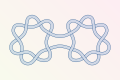
This idea that two conjoined knots’ unknotting numbers can be added was first proposed as a conjecture by Hilmar Wendt in a 1937 paper and remained open for nearly a century. Until recently, “there was no clear way to prove this conjecture,” says Mark Brittenham, a mathematician at the University of Nebraska–Lincoln, “and now we know why—because it’s false.”
 

MrAl

Joined Jun 17, 2014
13,704

cmartinez

Joined Jan 17, 2007
8,763
Oh, poor Hilmar rolling over in his grave. Now we'll just have to dig him up and turn him back over :(

I don't know about you, but I could not sleep at night until I found out it was false :)

However, since it was so hard to disprove, it may still apply to some subclass of knots.
Actually, I slept like a (poddy trained and all the essentials) baby. Thank you very much ...
 
Thread starter Similar threads Forum Replies Date
cmartinez Off-Topic 2
marshallf3 Analog & Mixed-Signal Design 6
Top