If it will operate at 3.7V, you could use a Li-ion battery with higher power density than NiMH. If you supply the Arduino from Vin, you're going to be wasting power in the voltage regulators.
Operating from 3.7V may require some slight modifications to the Uno, but you could bypass the 5V regulator and likely disable the 3.3V regulator.
If it will operate at 3.7V, you could use a Li-ion battery with higher power density than NiMH. If you supply the Arduino from Vin, you're going to be wasting power in the voltage regulators.
Operating from 3.7V may require some slight modifications to the Uno, but you could bypass the 5V regulator and likely disable the 3.3V regulator.
If you want to bypass the regulator, then you feed the Arduino through its 5V pin. No need to modify the Arduino. I’m not as sure about the 3.3V regulator, but if you feed 5V through the 5V pin and see if there’s 3.3V on the 3.3V pin. If not, then this wiring also bypasses the 3.3V regulator.
It’s a common technique and actually part of the design.
There are four ways of powering an Arduino. USB, the 5V pin, Vin and the barrel jack. The first two bypass the 5V regulator and requires a stable 5V. The last two uses the regulator and accepts 7-12V.
I finished assembly last night and have powered it temporarily with 3 x alkaline AAs currently delivering 4.54V unloaded for safety. I will replace with 4 x NiMH 2500 mah AAs when my latest order arrives, and decide whether to drop that slightly.
The 328 is now mounted on a 28 pin IC socket (with the appropriate additional components) and pin 7 (‘Vcc’) receives the battery voltage. Now assembling the music tracks, handicapped by the one major disadvantage of this DFRobot MP3 module, its 128 MB capacity. I had spent a week trying to get the much more popular high capacity micro SD module (DF1201S) working reliably, but with the deadline approaching I gave up and switched to this one.
Forgot the photo I’d intended last night, but will take one within next couple of days.
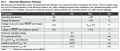
If you apply that voltage to the Vcc pin, don't blame us if you kill the microcontroller. The datasheet specifies an absolute maximum operating voltage of 6V typical. That's a bogus specification. They should give you the maximum voltage that the part will survive as long as you never exceed that voltage (by even a small amount). Giving a typical voltage is BS. In my experience, many microcontroller datasheets suffer from imprecise electrical specifications.
To be safe, I'd stick with this:
As 5.5V is the maximum voltage that can be provided by USB-B.
I've powered uno using 5v and the dropout to the to the 5v pin is less than 1v and has worked for all my modules. I didn't notice any difference between that and the 9v jack for my applications.
I've also used a buck boost with an Arduino and it worked well. I paid $15 for it and the pcb measures 1" x 2.5".
.
I've powered uno using 5v and the dropout to the to the 5v pin is less than 1v and has worked for all my modules. I didn't notice any difference between that and the 9v jack for my applications.
. . .
I’m glad it’s worked for your modules. But it won’t for all modules. Anything in your system that may cause a voltage sag will give your Arduino fits. I developed something using a Mega with several shields that gave me fits when powered with 5V. YMMV
I’m glad it’s worked for your modules. But it won’t for all modules. Anything in your system that may cause a voltage sag will give your Arduino fits. I developed something using a Mega with several shields that gave me fits when powered with 5V. YMMV
The datasheet is vague on the absolute maximum voltage allowed, but it did give an operating voltage range of 2.7-5.5V. Without a more definitive maximum, I wouldn't apply more than 5.5V to pin 7; and I'd make certain that the voltage was never above 5.5V.
Boost converters follow Ohm’s law. The higher the voltage differential, the lower current available. Power must be conserved, less losses in the boost circuit. Assuming a current draw of 250mA for a 5V supply to the Arduino (maximum is 500mA, so I picked a conservative value). This results in a 1.56W power requirement assuming 80% efficiency (typical). Also assume a 4V input to the boost converter , which would have to provide 1.95W. That is 488mA input to get a 250mA output.
My system ran 11 hobby RC servos, SD card, music player and amplifier plus a custom shield.
If there’s further discussion, remember that the project has moved on since its UNO stage. All power now goes exclusively to the 328 and the DFRobot Mini MP3 module.
Status: Frantic last minute effort to isolate cause of unacceptable instability. Turned out to be a poor solder joint. And, off-topic, I’d also grossly underestimated how long it would take to choose, edit and organise some 200 or so MP3s for the 128 MB storage.
Gift wrapped and working fine since opened. Still using the 3 alkaline AAs. Voltage measured at the barrel jack socket is 4.5V. When that declines below operating level I‘ll remove lid and install 4 AA NiMh, recharging subsequently through barrel jack. May need further discussion about my options before installing those if, as I expect, their initial voltage exceeds 5.5V. Boost converters have arrived but want to avoid using one for this project now. May also futher edit the Arduino program while lid is off, but that’s OT for this thread.

 Facebook
 Google
 GitHub
 Linkedin