Basic question about antenna/ariels.

SamR

Joined Mar 19, 2019
5,491
Ground rods come in various sizes and materials, 6-10', galvanized steel, copper-clad steel, foundation rebar, metal water pipes, etc. The bottom line is having a good ground and to test that you need a Megger. Not just on installation either. We had ground (rod) testing at the plant on the maintenance schedule. IF or when the ground rod was out of spec then additional rods in 3' intervals were daisy-chained together. Also, there is "Salting" a ground rod with Rock Salt or other various chemicals to increase soil conductivity. It also increases the corrosiveness of the soil.
 

Ylli

Joined Nov 13, 2015
1,092
...having a good ground and to test that you need a Megger. Not just on installation either. We had ground (rod) testing at the plant on the maintenance schedule.
OOC, what did you use as a reference ground? To what did you measure your ground rods?
 

SamR

Joined Mar 19, 2019
5,491
Meggers have up to 4 "test stakes" placed around the rod. It introduces voltage into the ground circuit and measures the resistance between the ground rod and each of the test stakes. I personally did not perform the test as it was done by our plant maintenance electricians. Was our Plant Standards required practice and even required by NEC for residential ground rod installs if I remember correctly. Used to be a hand-cranked generator in the Megger but now battery operated and automated.
 

Thread Starter

ApacheKid

Joined Jan 12, 2015
1,762
I'm gonna take the radio outside, switch it on, attach a long piece of steel wire to the red input, then find a station on some shortwave band.

Next I'll attach the ground (black input) to a metal fence that runs along my yard - is the volume louder or quieter.

That'll be my empirical way for now, of getting some basic reception.

We also have four steel posts buried into the ground (supporting a shade sail for our chickens) one of these may also do a basic reasonable job as ground, not sure how deep they go, but I can ask the guy who did it...
 

Ya’akov

Joined Jan 27, 2019
10,248
I'm gonna take the radio outside, switch it on, attach a long piece of steel wire to the red input, then find a station on some shortwave band.

Next I'll attach the ground (black input) to a metal fence that runs along my yard - is the volume louder or quieter.
The metal fence will act as an image antenna to a greater or lesser extent. A tuner is pretty important for a random longwire, unless you get lucky about resonance.

Worth testing, though. Have fun!
 

SamR

Joined Mar 19, 2019
5,491
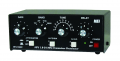
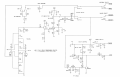
Here is a neat toy to have with long wire antennae. Active tuner, noise attenuator, and pre-amp. Not to be used with XMTRs over 125W. Gives 20dB gain.
1614700173112.png
1614700737559.png
 

Ylli

Joined Nov 13, 2015
1,092
Atten and gain control ahead of the preamp????? Put a 3 dB pad in front of a preamp and you have just increase the Noise Figure of that preamp by 3 dB. Gain controls should always be after the preamp, so as to not mess up the NF. Exeption would be if you need attenuation in front of the preamp to prevent overload - but if the signal is strong enough to overload, then you probably don't need the preamp in the first place.
 
Top