Anti Static Humidity Sensitive Air Tight Container

Thread Starter

Secan

Joined Sep 20, 2024
205
But the device has ESD warning. See

esd safety eeg.jpg

The input of all EEG is ESD sensitive. I'd like to know the following. Can static jump? For example. If I'd just bought an air tight plastic container for humidity control (putting silica gel inside). Supposed the plastic container has static. Can the static jump to the input or must it be in physical contact? Because if it should be in physical contact, the pin in the socket is inside so it can't touch the container plastic directly.

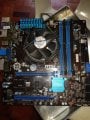
The reason I'm concerned about all this is because I have a computer motherboard I stored in attic. 2 weeks ago I got it to try running a software, after a few days, the motherboard got defective probably from the corrosion (caused by average of 80% humidity for many years) shorting a component causing permanent damage.
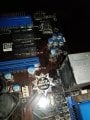

mobo corrode.jpg
 

Tonyr1084

Joined Sep 24, 2015
9,744
"Under certain circumstances ESD may build up on your body." Does that mean we need to keep you in a sealed anti-static container?

I take some issue with this statement: "To prevent damage, you should discharge static electricity from your body before you interact with any of your device." First issue: Not good English. Shows a potential lack of understanding.

Another issue is this "You can protect against ESD and discharge static electricity from your body by touching a metal grounded object (such as the potential equalization)." Again, poor English. While yes this works and does discharge static charges but the problem isn't discharging it's more about generating static. Just walking across a manmade fiber carpet can generate a lot of static. So if you go into the kitchen and touch the stove or sink - yeah, you've discharged potentially as much as 50KVS (Kilo Volts Static) charge. But on the way back to the machine you're generating just as much static as before. Even your clothing generates static as it rubs against your body.

OK, so they have an ESD warning. But honestly, if the engineers didn't take user ESD into account then they should go back to working at McDonalds. While I'm not an engineer, I've worked with many. Some know their snot. Others don't know snot. If this machine is susceptible to ESD then it's not worth $1900.oo. If anything - the machine, when plugged in, should be grounded. So that when you handle it you're grounded too. The sensors you use are in direct contact with your body. If you didn't touch the machine during setup then - well - I'm shaking my head. You shouldn't have to be worrying about ESD. And IF ESD rears its ugly head then the machine is of poor design.
 

Thread Starter

Secan

Joined Sep 20, 2024
205
usbamp price.PNG

The unit alone costs $17700. Not $1900. 1 Euro = 1.17 U.S. Dollars.

This is the reason I want to take care of it because I bought it used and still working. I plan to sell it in future without any ESD damage.

I read in google that static can discharge in air. Sometimes the AI only combine word salad. If the air tight plastic container has too much static, can the static discharge fly to the input pins inside the socket? If not. then Id buy an air tight plastic container later and just store the $17700 unit inside with silica gel to avoid the constant 80% relative humidity. How low can the humidity get inside the container? This would work isn't it? I can't find air tight metal container.

static air.jpg
 

MrChips

Joined Oct 2, 2009
34,889
Static charges can build up even in gases. Contact with a solid object is not a requirement for ESD.

Lightning is caused by charge separation in the air. What we see and hear as lightning is the ultra-high current discharge between the air and ground and more commonly between two air or cloud masses.

You don't need to touch the device to cause ESD damage. You don't need to feel a "zap" to cause ESD damage.
The ESD damage occurs within the microscopic structure of the semiconductor device. This is where the "zap" happens and you don't even see it happen or know that it happened until the device fails many years later.

Your best approach is to eliminate the risks of it happening. Unfortunately, humidity has two opposing consequences. High humidity reduces the likelihood of ESD. Unfortunately, it accelerates oxidation and corrosion.

The best advice I can give you is to wrap the unit with aluminium foil and put it away in a cardboard or wooden box.
 

MrChips

Joined Oct 2, 2009
34,889
Another tip is to put about 300g of uncooked rice in a paper bag into the storage box along with the unit.

The next time you use the device, replace the rice with fresh supply (and cook what you remove for your next meal).
 

Thread Starter

Secan

Joined Sep 20, 2024
205
Static charges can build up even in gases. Contact with a solid object is not a requirement for ESD.

Lightning is caused by charge separation in the air. What we see and hear as lightning is the ultra-high current discharge between the air and ground and more commonly between two air or cloud masses.

You don't need to touch the device to cause ESD damage. You don't need to feel a "zap" to cause ESD damage.
The ESD damage occurs within the microscopic structure of the semiconductor device. This is where the "zap" happens and you don't even see it happen or know that it happened until the device fails many years later.

Your best approach is to eliminate the risks of it happening. Unfortunately, humidity has two opposing consequences. High humidity reduces the likelihood of ESD. Unfortunately, it accelerates oxidation and corrosion.

The best advice I can give you is to wrap the unit with aluminium foil and put it away in a cardboard or wooden box.
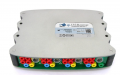
So the purpose of the aluminum foil is to avoid ESD? I can't detach the active electrode box always so can't wrap them in aluminum foil. So I'll just look for a metal box that can fit them. Why do you keep mentioning about cardboard or wooden box? Why cardboard? is it to avoid humidity? The unit looks like this. total cost over $20,000 U.S. dollars. I plan to sell it for $8000 2 years from now in pristine condition.

Pls tell me. If I open aircon to wait humidity to go down to 60%. Put them inside air tight metal box with silica gel. The next day what will be the humidity inside the box if the humidty outside is 80%

eeg set.png
 

MrChips

Joined Oct 2, 2009
34,889
A cardboard or wooden box has enough moisture content to prevent ESD.
80% relative humidity reduces the chance of electrostatic buildup. At 80% RH, corrosion is a greater concern than ESD.
Putting the unit in a cardboard box with some uncooked rice is all I would do.
 

Thread Starter

Secan

Joined Sep 20, 2024
205
A cardboard or wooden box has enough moisture content to prevent ESD.
80% relative humidity reduces the chance of electrostatic buildup. At 80% RH, corrosion is a greater concern than ESD.
Putting the unit in a cardboard box with some uncooked rice is all I would do.
Ok got it. I read that a sealed container with silica gel will get the Relative Humidity lower than 10% and all those static storm brewing inside. But then if the sealed container is metal, it should dissipate all the static, would it not? how much static would remain?

Let's assume 100% static are gone in sealed metal container. But then right after you open the box, your fingers may introduce static inside, however, how fast can humidity travel to inside the open box? If the box is a vacuum, air can instantly get in How about humidity, that does it diffusion behave... because if humidity travels slower than your fingers, then static can be introduced inside before humidity populate it. But if humidity travels faster than your finger, then it can work.
 

MrChips

Joined Oct 2, 2009
34,889
Standard anti-ESD practice requires you to ground yourself before touching any electronic components or device. The recommended practice is to wear an anti-ESD wrist band that is properly grounded.

80% RH reduces the likelihood of generating static buildup. The purpose of a conducting package or container is that any static buildup is dissipated as soon as you touch the package. As long as you are properly grounded, there is no risk of ESD.

As soon as you open the sealed container the humidity will enter.

I think that you are overthinking this problem, both from the risk of ESD and damage from high humidity.

It is better to be proactive but don’t stress yourself out by going to extreme measures.
 

Thread Starter

Secan

Joined Sep 20, 2024
205
board before cleaning.jpg

In 2019 I put my PC in my attic since I used laptop. When I got it a month ago. It has thick dusts. I used it a few days, then it malfunctioned by rebooting randomly. Someone told me the dusts (above) and high humidity of 80%+ cause shorts. So I washed it with 1.5 gallon of 99% isopropyl alcohol (below) After installing it back. It reboots even after changing power supply, memory and processor. So the long term humidity has corroded the board causing short and failure.


board after cleaning.jpg

I need to know the following (last questions).

1. If humidity averages 82%. Does it guarrantee to corrode all electronic parts? Or only some parts affectted?
2. In the case of my EEG. The Pcb is inside the casing with no holes (see below). If the humidity outside is 82%. Is the humidity inside the unit also 82%? I was hoping it was like 60% iside the unit hence stoppng me from getting the best solution, a dehumidifier because we don't know how your cardboard would function, it can increase humidity when it is saturated already.

gusbamp.PNG
 
Last edited:

MisterBill2

Joined Jan 23, 2018
27,683
A conductive container will avoid the static potential build-up. THAT is the motivation for the anti-static mats.
And certainly there are well-understood systems for preventing corrosion in electronic equipment: Consider all of the military surplus electronics left over from WW2 that still have not failed from corrosion. So it IS POSSIBLE to add corrosion resistance to electronic equipment.
Given that an accumulation of static-electric charge, which is an increase in potential energy, consider that the production of a static build up must require an energy input, usually in the form of motion. Moving air masses generate the charge to produce lightning. So storing your electronic devices on an anti-static mat in a conductive enclosure will protect it .
 

MrChips

Joined Oct 2, 2009
34,889
Dust and high humidity will cause corrosion.
In my garage, I have a workbench with lots of hand tools on racks and on hooks, screw drivers, wrenches, etc.
I also have a lot of wood working machinery, table saw, router, lathe, sander, etc., that generate a lot of fine dust. Dust attracts moisture from the air and cause even stainless steel to rust. I have to frequently vacuum all the tools and equipment to prevent the rusting.
 

Thread Starter

Secan

Joined Sep 20, 2024
205
To use my unit, I have to open aircon until humidity decrease to less 55% from 80%. But I heard the following.

1. Decreasing temperature rapidly can cause condensation.. does this occur inside the gadget?
2. Decreasing humidity rapidly can cause condensation, does this occur inside the gadget?

It's very difficult to use cardboard, aluminum foil because if the cardboard got saturated with vapor, it can act as source of more moisture. Therefore if both decreasing temperature and humidity can form condensation inside the unit (does it??), then this is worse than using it at 80%. And I may just get a dehumidifier. My room is 65 square feet. Is a 3.17 (12 L) gallon dehumidifier, ok? How many minutes after turning it off would it start to turn on again? Perhaps it needs to be on almost all day and night. Don't you experience huge electric bills from use of dehumidifier?

carrier dehumidifier.PNG
 

meth

Joined May 21, 2016
304
Bro just put it in an ESD bag with few silica gel bags , and then put it in whatever additional container you want.
The case of the device as I see is almost 100% sealed. If they built so expensive unit I am sure they took in consideration it's durability. Especially if it is medical device or some high-level science gadget.
As someone else mentioned you are probably overthinking this.
 

Thread Starter

Secan

Joined Sep 20, 2024
205
Due to insufficient data to determine if the hands or humidity can travel faster inside the 10% humidity container. I just ordered the Dehumidifier and it's arriving tomorow. Please let me know guys since you are familiar with my setup. What ambient relative humidity must I set the rest of times I don't use the product, 50% 60%? and when in use, what humidity must I set? 60%, 70%? noting that increased humidity can lessen ESD during working with the device it. So it shouldn't be 50% or so like in ambient.
 

wayneh

Joined Sep 9, 2010
18,124
To use my unit, I have to open aircon until humidity decrease to less 55% from 80%. But I heard the following.

1. Decreasing temperature rapidly can cause condensation.. does this occur inside the gadget?
2. Decreasing humidity rapidly can cause condensation, does this occur inside the gadget?
An air conditioner works by rapidly (inside the A/C) cooling air passing through it. Water condenses on the evaporator coil and is routed to a drain. This is usually outdoors for a window-mounted unit. The water does NOT condense on objects in the room. Only a surface with a temperature below the dew point will see water condense onto it. So if a surface is not actively cooled, it won't be below the dew point and will not see condensation.
I have no idea about #2 being possible.
And I may just get a dehumidifier.
I think that, or an A/C, is the best idea. If you need the room temperature to stay nearly the same and not get cooler from air conditioning, then the DH is the better choice. The power it uses will heat your room slightly. If you want a cooler temperature along with dryer air, then the A/C would be better.
My room is 65 square feet. Is a 3.17 (12 L) gallon dehumidifier, ok?
Yes, that should be fine for that small space.
How many minutes after turning it off would it start to turn on again?
That's unpredictable and will depend on water vapor intrusion through air leaks, vapor from cooking and showering, etc. Even breathing.
Perhaps it needs to be on almost all day and night. Don't you experience huge electric bills from use of dehumidifier?
No. The duty cycle is a bit unpredictable as I mentioned. But you can look up the power consumption of any unit. It'll be in the range of a few hundred watts and that translates to pennies per hour. Unless you pay an outrageous electrical rate? Of course that's while it's running. It'll draw next to nothing when idle.
 

Tonyr1084

Joined Sep 24, 2015
9,744
My last word on this subject:
https://resources.pcb.cadence.com/blog/what-is-the-best-humidity-level-for-pcb-assembly
Undoubtedly, a medical device (machine) PCB will have been conformal coated to protect against moisture. That coating doesn't protect against ESD so that should be your primary concern. However, engineering of medical devices are routinely designed to be self protecting against ESD, the sort that would be encountered by normal use by the human element.

Yes, you're overthinking the whole thing.

Oh, and to call you out - the PCB you show, posts #28 & #35 - there's no way that PCB came out of that device. The pictures look like generic pictures you got from somewhere.
 
Last edited:

Tonyr1084

Joined Sep 24, 2015
9,744
Somebody has to stop me!
Never heard of a "Class 4" board or assembly. Doesn't mean they don't exist, just I never heard of it.
Screenshot 2025-07-14 at 8.07.27 AM.png
The only classes of electronic assemblies I've known are Class 1 - toys, Class 2 - home electronics & machines, Class 3 - Automotive, Medical and Aerospace. Class 3 is for those "Mission Critical", "Medical - Life Critical" devices. "Automotive" is considered Life Critical because of the potential for loss of life if something fails. Aviation is also "Life Critical". You don't want jet airliners falling out of the sky. (somebody needs to talk to Boeing)

OK, I'm done!
 

Thread Starter

Secan

Joined Sep 20, 2024
205
An air conditioner works by rapidly (inside the A/C) cooling air passing through it. Water condenses on the evaporator coil and is routed to a drain. This is usually outdoors for a window-mounted unit. The water does NOT condense on objects in the room. Only a surface with a temperature below the dew point will see water condense onto it. So if a surface is not actively cooled, it won't be below the dew point and will not see condensation.
I have no idea about #2 being possible.
I think that, or an A/C, is the best idea. If you need the room temperature to stay nearly the same and not get cooler from air conditioning, then the DH is the better choice. The power it uses will heat your room slightly. If you want a cooler temperature along with dryer air, then the A/C would be better. Yes, that should be fine for that small space. That's unpredictable and will depend on water vapor intrusion through air leaks, vapor from cooking and showering, etc. Even breathing. No. The duty cycle is a bit unpredictable as I mentioned. But you can look up the power consumption of any unit. It'll be in the range of a few hundred watts and that translates to pennies per hour. Unless you pay an outrageous electrical rate? Of course that's while it's running. It'll draw next to nothing when idle.
What I mean to say by condensation is this. When you have very cold glass of water, the air outside can condense on the external surface of the cold glass. What happens if you bring out from cabinet a device into a very cold aircon room, wouldn't the internal part of the device condense because the air inside the device is hotter than the room?

Thanks for the 60C setting tip of the dehumifidier. I have 6 pcs of EEG device, not just one. I'm experimenting on BCI (Brain Computer Interface) to control drones. Imagine a soldier with backpack holding a tactical drone, he would have no time to use joystick to control it so needs the brain to control it and engage the submachine gun in the drone as he clears the blind spots in buildings in urban guerilla warfare. In years to come, wars would be 5 to 10 times more. So the best business to invest now for you guys too is the military industrial complex.
 
Top