Another Constant Current Load

Thread Starter

bertz

Joined Nov 11, 2013
327
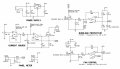
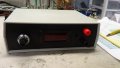
I built this piece of equipment in order to get some experience working with op-amps and MOSFETs. This goal was met as this was a good learning experience. Details for this project are all described in the attached pdf file along with a circuit diagram. If there is any interest I can also post the DipTrace files. If I had it to do over the one thing I would change is to used two pass transistors (MOSFETs) and put them on a larger external heat sink.

Added DipTrace files

DSC00278.JPG
Constant Current Load Circuit.jpg
DSC00278.JPG Constant Current Load Circuit.jpg
 

Attachments

Last edited:

JohnInTX

Joined Jun 26, 2012
4,787
Nice job!
And sure, the DipTrace files would be most helpful. A print of the board traces would help those who roll their own or use another PCB package..
Thanks for submitting!
 

PeteHL

Joined Dec 17, 2014
580
This is a great presentation that looks like what one might read in an electronics magazine including polish by the magazine's editor and staff.

Without having thoroughly read the description and not quite understanding how the device functions, I find calling the main circuit of the device a current source to be misleading. A better name I think would be current regulator. A current source I think is generally understood to mean a constant current source, that is, current drawn is the same regardless of resistance or impedance of the load that is connected to the source.
 

Thread Starter

bertz

Joined Nov 11, 2013
327
This is a great presentation that looks like what one might read in an electronics magazine including polish by the magazine's editor and staff.

Without having thoroughly read the description and not quite understanding how the device functions, I find calling the main circuit of the device a current source to be misleading. A better name I think would be current regulator. A current source I think is generally understood to mean a constant current source, that is, current drawn is the same regardless of resistance or impedance of the load that is connected to the source.
Thanks for the kind words Pete. I am a retired process engineer and electronics is my retirement hobby. However the presentation is no accident. I spent many years writing technical articles and training manuals so this sort of comes naturally.

I received a lot of help from others on this forum and one of the issues that came up was terminology with respect to the current sink portion of the circuit. I do not disagree with your interpretation of the nomenclature. Others have pointed this out as well. However, it is what it is and those who have a need for a device such as this will readily understand and interpret the terminology correctly.
 

BR-549

Joined Sep 22, 2013
4,931
I think your project was titled correctly. It does exactly what it says. That's always the right way.

Excellent work.
 

JimLev

Joined Feb 21, 2017
2
Did you mean to label the input of the power supply at the J1 connector 12vac?
Pretty sure this was just a typo as there are no rectifiers before the 7805.
 

Thread Starter

bertz

Joined Nov 11, 2013
327
Did you mean to label the input of the power supply at the J1 connector 12vac?
Pretty sure this was just a typo as there are no rectifiers before the 7805.
Good catch my friend! Thanks for pointing that out and yes it is a HUGE typo. In the documentation I point out the fact that I originally intended to power this with a 12 VDC wall wart. But since it will be used so infrequently I decided to power it with a 3s LiPo (approx. 11.1 volts).
 
Top