Facebook
 Google
 GitHub
 Linkedin

As I finished my bachelor's a while ago I had some trouble analysing this circuit. I am aware of Kirchhoff's law.
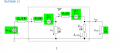
Given here is that the absolute value of Av is zero, which leads, as far as I understand, to a short circuit on Zout and Yin.
Required is Vout. As far as I understand there are two equations, first:
Vout,n = Iout * Zl
Second:
Iout(Zg+R1+R2+Zl) = Vg-Vn,1 + Vn,2
and we are supposed to substitute the second eq. in the first to solve for Vout.
However, the solution had another way of describing Vout which is:
Vout = -IR2 + Vn,2
Can some one explain this misunderstanding?
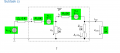
Given here is that the absolute value of Av is zero, which leads, as far as I understand, to a short circuit on Zout and Yin.
Required is Vout. As far as I understand there are two equations, first:
Vout,n = Iout * Zl
Second:
Iout(Zg+R1+R2+Zl) = Vg-Vn,1 + Vn,2
and we are supposed to substitute the second eq. in the first to solve for Vout.
However, the solution had another way of describing Vout which is:
Vout = -IR2 + Vn,2
Can some one explain this misunderstanding?