Analog EFI using 555 chip: A schematic and questions

I would like to inject a few comments here:

#1
Car sensors are ratiometric to the supply voltage of usually 5V. The reference is whatever Vcc is divided by 2. The sensors cannot reach 0 or 5V

#2
I personally had this MAP sensor experience.
Replaced a bad MAP sensor in a car. Two days later a family member took the car out. Car would not keep running at idle without foot on gas. ECM would not recognize a bad MAP sensor. I was able to DISCONNECT the MAP sensor and get into limp mode. I replaced the sensor in the parking lot of the automobile supplier.

Check out AD22057: https://www.analog.com/media/en/technical-documentation/data-sheets/AD22057.pdf (Sensor to ½ supply)

For your summing amp to work, V1 and V2 have to be low impedance sources.
 

Ed McGuirk

Joined Mar 30, 2018
13
I'm not sure how to modify the "into Pin 5" circuit so the mixture knob adds/subtracts from the MAP voltage signal, rather than using it as a multiplier. I think what is needed is to retain the existing POT and use it in tuning/setup of the EFI (so the MAP sensor's input has the desired effect on the pulsewidth under expected conditions) and what we need in the cockpit is a separate POT that adds/subtracts voltage to Pin 5.
You can choose the injector size so the MAP signal converts to full rich or just above and the pot just needs to reduce the MAP signal to stoic or lean. Your trim pot can be labeled -10 to +10 even though it is only reducing the MAP signal (it doesn't have to 'go to 11' - Spinal Tap reference). I think you need a division not a subtraction because the MAP signal and the air/fuel targets are all ratios and all changes are going to follow a slope from zero to max. That can be done with a simple voltage divider or a buffer circuit.

You might need an offset voltage at Pin 5 to allow for latency in the injector but I don't think you should need a cockpit control of that.

A MAP failure could yield full voltage or zero and a MAP bypass switch between MAP or Vcc for the trim pot reference should give you emergency manual control of mixture. Although sensitivity MAP vs manual might be a problem. It all requires testing testing testing.
 

Thread Starter

vigilant1

Joined Jun 20, 2020
16
#1
Car sensors are ratiometric to the supply voltage of usually 5V. The reference is whatever Vcc is divided by 2. The sensors cannot reach 0 or 5V
Thanks. To check/restate your point based on my state of near-zero knowledge: If the Freescale MAP sensor signal will be 0 to +5v, we can't use the supply voltage of +15v as shown in the original schematic. Instead, we'd need the supply voltage to be about 5v. If I've got that right, it seems like a fairly important thing that may bring into question the other values shown on the schematic.

#2
I personally had this MAP sensor experience.
Replaced a bad MAP sensor in a car. Two days later a family member took the car out. Car would not keep running at idle without foot on gas. ECM would not recognize a bad MAP sensor. I was able to DISCONNECT the MAP sensor and get into limp mode. I replaced the sensor in the parking lot of the automobile supplier.

Check out AD22057: https://www.analog.com/media/en/technical-documentation/data-sheets/AD22057.pdf (Sensor to ½ supply)
One "challenge" to using the very sophisticated digital EFI systems on some engines is that it's hard for the user to know when the "limp home" mode will be triggered and the power level that can be expected. The OEM "limp home" mode is generally intended to save the engine and allow partial power. In aircraft use, if the "limp home" power is less than the "needed to stay in the air" power, then you don't really have a "limp home" mode, you have a "crash into the trees" mode.
You can choose the injector size so the MAP signal converts to full rich or just above and the pot just needs to reduce the MAP signal to stoic or lean. Your trim pot can be labeled -10 to +10 even though it is only reducing the MAP signal (it doesn't have to 'go to 11' - Spinal Tap reference). I think you need a division not a subtraction because the MAP signal and the air/fuel targets are all ratios and all changes are going to follow a slope from zero to max. That can be done with a simple voltage divider or a buffer circuit.

You might need an offset voltage at Pin 5 to allow for latency in the injector but I don't think you should need a cockpit control of that.

A MAP failure could yield full voltage or zero and a MAP bypass switch between MAP or Vcc for the trim pot reference should give you emergency manual control of mixture. Although sensitivity MAP vs manual might be a problem. It all requires testing testing testing.
Ed, thanks. I had intended to use a fixed offset voltage that corresponded to the minimum fuel-per-rev pulsewidth needed to remain airborne, then add the MAP adjustment. As you point out, maybe it is more straightforward to just use MAP scaling all the way down to (theoretically) zero. As a default, I will want to stay on the "rich" side of stoichiometric at all times:
1) This provides "best power," which is important.
2) It helps in keeping CHTs and (esp) exhaust valve temps within limits in these air cooled engines
3) It provides a buffer to assure we get acceleration when we open the throttle more (important if we aren't going to use a TPS).
In your described approach, the in-cockpit knob would effectively be a "leaning-from-the-MAP-derived-PW" knob, but that would be fine as long as the MAP derived pulsewidth is consistently on-target or richer than needed. If I ever need to "go to 11" ( thanks, Spinaltap!), well, I'll figure that out during bench testing.
It all requires testing testing testing.
Indeed. Designing my low-tech test setup will be fun.

Thanks, again.
Mark
 
They are not 0 to 5V sensors.

Take a look at thi`s https://www.nxp.com/products/sensor...ressure-sensor:MPXx6115?tab=Documentation_Tab datasheet.

Why? It is an automotive qualified sensor outside of the official package, It also has the gel to protect the sensor.

Pressure is a wierd phenomenon. There is Gauge and absolute pressure. You yupically have a 1 Bar sensor for naturally aspirated engines. 2 and 3 Bar for turbo engines.

You need to examine the transfer function CAREFULLY. it shows relative to 5V, but it isn't. it could be 4.9, 5 or 5.2. The absolute reference is always changing slightly.

The processor can reference it's A/D to Vref/2 without worrying about absolute numbers

It's not say a 0-10psi sensor with a 0-5V output where 0V = 0PSI and 5V = 10 psi. If Vdd happens to be 5.1V at the time of the measurement, then 5.1V/2 is 5psi. If Vdd happens to be 4.9V, then 4.9V/2 is 5 PSI.

There are units of PSIA and PSIG. A PSIA sensor at sea level is about 14.7PSIA or 0 PSIG.

The other gotcha is that the weather bureau normalizes all reported barometric pressure readings to sea level.
 
Last edited:

Ed McGuirk

Joined Mar 30, 2018
13
Someone with more electronic experience should propose a superior circuit but I think the following should work.

1 - The MAP sensors I am familiar with work from a 5v supply.
2 - The mosfets I am familiar with want 10v on the gate and no more than 20v. (approximately) A logic level mosfet is possible but finding a cheap, readily available, high voltage, high current logic level mosfet is not worth the effort.
3 - I suspect that the electrical environment in an aircraft is not hugely different from automotive. The battery voltage will be approximately 12v and the alternator voltage will be approximately 15v but there could be noise spikes up to 200v.
4 - The RC charge time relation to the 555 threshold voltage is not linear, it is logarithmic.

In that case I would attempt to use a 10v voltage regulator or buck converter to bring the 12-15v system voltage down to a 10v supply used to drive the 555 timer and the mosfet gate. Then another voltage regulator or buck converter to bring the 10v supply down to 5v for the MAP sensor and trim pot circuit.

The 555 timer threshold pin varying from 0-5v is down in a more linear portion of the 10v supply voltage RC curve. So that allows the 555 to directly drive the mosfet and also have a reasonably linear response to the MAP and trim pot.

If we assume that the engine redline is 4000, and that fuel injectors do not like to run at more than 80% duty cycle, there are only 12 milliseconds available for fuel injection per revolution at redline. Further assumption that the torque (or BSFC) at redline is 80% of the torque peak (or BSFC minimum) would yield a 15 millisecond maximum injector time. Therefore a 5v maximum MAP signal should generate a 15mS pulse from the 555 timer (or divide that by the the number of pulses per revolution). Also the fuel injector should be sized to deliver maximum HP at 15mS (actually half that because there are two revolutions per power stroke).

If we assume maximum rich fuel will be 10:1 and maximum lean will be 20:1 (for mathematical simplicity), the trim pot range should be 5v to 2.5v. If the engine vacuum at idle at sea level is 22 inches, that converts to .75 on the MAP signal so the MAP signal should range from 5v to 3.75v. And the whole MAP-trim pot signal should range from 5v to 1.875v at the 555 threshold pin. I think that using the trim pot as a simple voltage divider on the MAP signal feeding the 555 threshold pin would be adequate.

That would be my first attempt at a 555 EFI circuit.
 
Your missing the understanding of the output of the MAP sensor.

The system should be designed to run at a lower voltage. on the order of 8V, I would think to take care of voltage drops during starting.

Your misunderstanding the spikes in the automotive electrical system. https://m.littelfuse.com/~/media/el...utomotive_tvs_diodes_application_note.pdf.pdf

In the followin senspr

Normal Transfer Value:
VOUT = VS x (0.009 x P – 0.095)± (Pressure Error x Temp. Factor x 0.009 x VS)
VS = 3.0 ± 0.3 VDC

Note that Vs appears in the transfer function for Vout. Vs can vary. You use the current value of Vs. Hence Ratiometric to the supply voltage.
Ripple included.

Basically, in order to output 3V, you need a supply bigger than 3V. In order to output 0V, you need a slightly negative supply.
 
Last edited:

Ed McGuirk

Joined Mar 30, 2018
13
I understand that a voltage regulator is not really a noise and spike suppressor but the system voltage is not a constant and the 555 supply voltage will be a reference compared to the MAP voltage which will be related to a different 5v supply. It seems best to take control of the two voltages to be related for measurement. It's not ideal especially since the 10v is being compared to the 5v ratiometric MAP output but I assume it is in the ballpark for being linear (maybe I am too optimistic). The 10v supply will also remove the danger of an errant spike killing the mosfet gate. A TVS or other spike suppression will have to exist somewhere, it might as well be at the input to the 10v regulator.

The 10v supply could be lowered to 8v for better startup response and 8v will probably be sufficient for most mosfet gates.

The alternative would be to run the 555 at 5v and reduce the MAP / trim pot signal to some lower linear range and use a transistor or mosfet driver between the 555 output and the mosfet gate. (plus proper overvoltage protection) It adds to the part count but maybe it's worth it.

Oops, I forgot that the likely MAP sensor will probably not be a 1Bar sensor.

I also recognize that the MAP will not output a full 5v or ground but almost nothing ever does. If you need accuracy all the way to the end, the end needs to be extended a little so that the end is never used in normal circumstances. The two main MAP sensors used in amateur EFI systems are the MPXH6400A and the MPX4250 series of sensors both of which run close to 0-5v output. I believe the GM automotive MAP sensor (cheaper but physically much larger) is similar. If the MAP sensor is a 250kPa or a 400kPa sensor, sea level ambient pressure will not generate a 5v output.

All those exceptions could be easily rolled into my previous calculations.
 
Last edited:

Thread Starter

vigilant1

Joined Jun 20, 2020
16
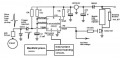
1593741224791.png

Here's one of the schematics from the OP. The listed LM78LO5 has an output voltage of 4.9v to 5.1v (datasheet). The allowable input voltage is up to 30V, so the aircraft's 12-15V should be within limits.
1 - The MAP sensors I am familiar with work from a 5v supply.
It looks like that the 5V from the LM78LO5 is the Vs for the 555 (pin 8) and (it seems to me) that it could also feed the MAP sensor.
2 - The mosfets I am familiar with want 10v on the gate and no more than 20v. (approximately) A logic level mosfet is possible but finding a cheap, readily available, high voltage, high current logic level mosfet is not worth the effort.
?Ed, is this about the fet ("NTE67") that feeds the injector? That one is getting the 12v-15V from the airplane's system (though all those supplies need protection--I suspect there's quite a spike when the starter motor's field collapses). Suitable?
3 - I suspect that the electrical environment in an aircraft is not hugely different from automotive. The battery voltage will be approximately 12v and the alternator voltage will be approximately 15v but there could be noise spikes up to 200v.
The electrical environment I anticipate will be much like a car. FWIW, I expect the EMI is a bit worse due to these way these engines make power for the ignition system ("Magnetrons"). But the answer to that is shielding.
In that case I would attempt to use a 10v voltage regulator or buck converter to bring the 12-15v system voltage down to a 10v supply used to drive the 555 timer and the mosfet gate. Then another voltage regulator or buck converter to bring the 10v supply down to 5v for the MAP sensor and trim pot circuit.
Sorry, I'm not following. "Drive the 555 timer"--pin 8? Isn't it getting 5V from the LM78LO5? Should it be getting 10V?
If we assume that the engine redline is 4000, and that fuel injectors do not like to run at more than 80% duty cycle, there are only 12 milliseconds available for fuel injection per revolution at redline. Further assumption that the torque (or BSFC) at redline is 80% of the torque peak (or BSFC minimum) would yield a 15 millisecond maximum injector time. Therefore a 5v maximum MAP signal should generate a 15mS pulse from the 555 timer (or divide that by the the number of pulses per revolution). Also the fuel injector should be sized to deliver maximum HP at 15mS (actually half that because there are two revolutions per power stroke).
Yes. I'd plan for an injection event each revolution, so two per induction cycle. No attempt to synchronize them with the intake valve opening (so, no need for a camshaft position sensor). I might trigger these using a pickup coil on the spark plug wire and a variable reluctance circuit--inject on the spark and the wasted spark. 15 HP per cylinder for the small industrial engines, 20 HP per cylinder for the VWs. Some of the available motorcycle injectors or smaller car injectors should serve well.
[/QUOTE]

Re: MAP sensor: Since I won't be using any boost, probably the readily available MPX4250 would be best. Then I could at least have something in common with the Speeduino crowd!

That would be my first attempt at a 555 EFI circuit.
Thank you for that work. And thanks to all for your patience.

Mark
 

Ed McGuirk

Joined Mar 30, 2018
13
Sorry, I'm not following. "Drive the 555 timer"--pin 8? Isn't it getting 5V from the LM78LO5? Should it be getting 10V?
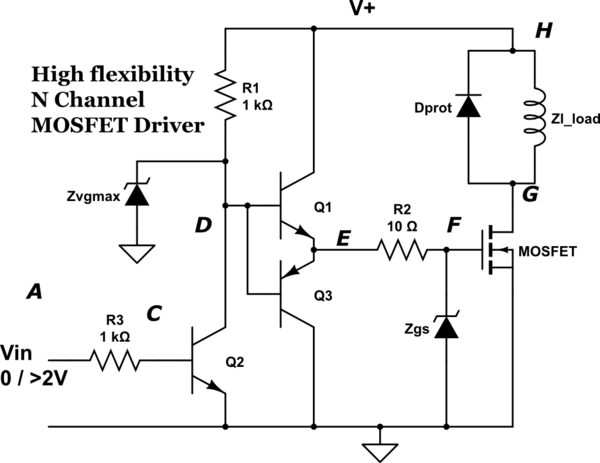
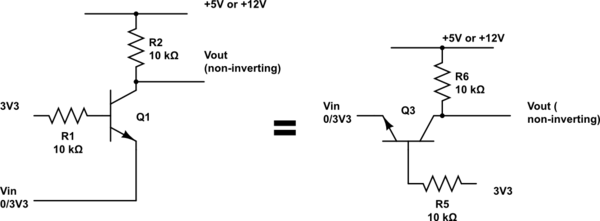
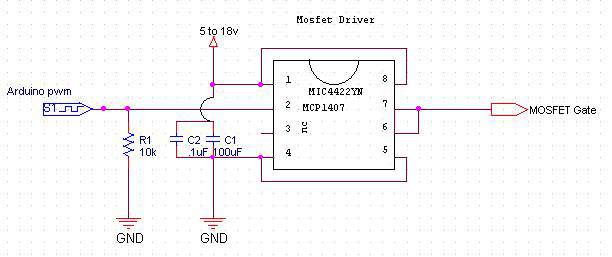
Running the 555 with 10v on pin 8 will allow the 555 to directly control the mosfet gate. However that will mean that the RC charging time will be based on 10v while the MAP will be based on 5v. That's not really a problem if those voltages are noise free. The nice thing about running both the 555 and MAP on 5v is that any noise on the 5v supply will be automatically compensated in the MAP signal since both the MAP signal and the RC charging circuit have the same reference. Unfortunately 5v output from the 555 to the mosfet gate will either require a logic level mosfet or it will require some additional circuitry to get that 5v up to a nice 10-15v on the mosfet gate. That's not a big deal, low frequencies like 4000 RPM could easily be handled by a couple of transistors (because you want it non-inverting) or a mosfet driver chip. Perhaps something like this or this.

Also, if the 555 is running on 5v, the 5v MAP signal will be mostly up in the nonlinear portion of the RC charging curve. You will need to reduce the 5v MAP signal down to a more linear portion of the RC charging curve. Below 2.5v might be good enough. I would try a 10k resistor on the MAP signal into a 10k trim pot to ground. Or a 1k resistor to a 1k pot. The wiper of the trim pot goes to the 555 threshold pin for a 2.5v to 0v swing at the 555.

Obviously, compensate if MAP sensor has more range than the engine. A 250kPa MAP sensor on a normally aspirated engine will only output 2v. Maximum expected MAP/trim pot signal due to maximum boost at sea level still corresponds to 15mS divided by the number of pulses per revolution.

Note that the NTE67 is not a logic level mosfet. It may work with only a 5v gate voltage but it will tend to run hot.

I am just guessing here, someone with more experience could improve or refute my suggestions.
 

Thread Starter

vigilant1

Joined Jun 20, 2020
16
So, that would be a decision to be made:
1) Operate the 555 on 10 V, or operate it on 5V.
Also, if the 555 is running on 5v, the 5v MAP signal will be mostly up in the nonlinear portion of the RC charging curve. You will need to reduce the 5v MAP signal down to a more linear portion of the RC charging curve. Below 2.5v might be good enough.
But, as you note, in a normally aspirated engine the 250kPa MAP sensor should always be seeing less than 14.7 PSI (approx 100kPa), and outputting less than 2V. So, in the linear zone for the 555s charging curve. Maybe okay? As a practical matter, the output range of the MAP sensor would be very limited (maybe just 0.8v to 2.0V if it sees 35-100 kPa in use), which might be a problem.
Note that the NTE67 is not a logic level mosfet. It may work with only a 5v gate voltage but it will tend to run hot.
As you suggested earlier, perhaps I should be considering the stp62ns04z, with the ancillary bits as shown in the Speduino "Injector 1" schematic you provided.

I gotta say--all the drama over the MAP sensor voltage had me longing again for the simplicity of just using a throttle position sensor and Alpha-N logic. :) Just kidding, as then I'd still have the challenge of incorporating altitude compensation.
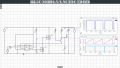
For those interested, here's a video of the feed from the Briggs and Stratton OEM EFI system in use.
Lots of instrumentation (MAP, throttle position, etc, etc), all sent wirelessly. At the end of the video are some screen captures that are a little easier to read. The street price for engines with EFI is ony about $300 more than the carbureted versions. It's a pity I can't just use this, as it is a lot of nice capability. But, unsuited to use in a plane.

Thanks again for the valuable input.
 
Last edited:

Ed McGuirk

Joined Mar 30, 2018
13
Unless somebody with more knowledge chimes in, you are at a point of 'test it and see'.

Unless your .8v to 2v range is in danger of getting close to your noise floor, you should have a nice sweep on your trim pot. I don't think that's a problem.

There are a lot of different mosfets that would be equally good. You just need high voltage and high current. High voltage is a function of flyback voltage. A simple flyback diode would keep the flyback voltage low but it would also hold the fuel injector open for a few milliseconds. A flyback resistor would close the injector faster but the voltage would be higher. Some EFI designs seem to worry about flyback voltage when turning off the fuel injectors but some do not. It seems the stp62ns04z is specifically built to handle that without extra flyback protection. It's cheap and readily available. It's probably a good choice.

You are at a point where you have an idea of a nearly linear circuit (or a few similar circuits) and you hope it will match up to a nearly linear engine operating range. Maybe it will work well, maybe it will not be a good match.

I think the circuit is simple and cheap enough to slap together a breadboard in an hour and wire up to an engine in a few hours. (ok, real world learning as you go, substitute weeks for hours) Then do some basic bench tests to see how close it comes to being useful.

You are trading the possibility of a fuel mapped EFI system for something so dead simple that it appears to be more reliable even if it is less accurate (but also very cheap). Only extensive testing will prove if it is a worthwhile alternative. I believe early aviation carburetors were just pilot controlled fuel pumps. You are not far off that.
 

Thread Starter

vigilant1

Joined Jun 20, 2020
16
It seems the stp62ns04z is specifically built to handle that without extra flyback protection. It's cheap and readily available. It's probably a good choice.
Agreed. I think using the Speeduino injector circuit takes advantage of what they've learned. And, it is a plus that I won't have to guess about the value of the damping resistor in the original circuit (labelled "Ask JCP" ??)

I think the circuit is simple and cheap enough to slap together a breadboard in an hour and wire up to an engine in a few hours. (ok, real world learning as you go, substitute weeks for hours)
I have a time estimate formula I use for my home improvement projects: Make an estimate, double it, square the result, and then go to the next higher common time unit. E.g. The kitchen drain is slow, I need to fix it. Initial estimate: 5 minutes to run the small drain snake down there. (5 x 2)^2 = 100, and go from minutes to hours. 100 hours. That covers everything: Can't find the small drain snake, trip to Lowe's, break out the rusty old trap, remove it, badly gash hand on rusty trap, go to ER for sutures and a tetanus jab, can't reach the clog with the small snake, rent the bigger power auger, etc, etc. About 100 hours.

You are at a point where you have an idea of a nearly linear circuit (or a few similar circuits) and you hope it will match up to a nearly linear engine operating range. Maybe it will work well, maybe it will not be a good match.. . . . You are trading the possibility of a fuel mapped EFI system for something so dead simple that it appears to be more reliable even if it is less accurate (but also very cheap). Only extensive testing will prove if it is a worthwhile alternative. I believe early aviation carburetors were just pilot controlled fuel pumps. You are not far off that.
Yep, that's it in a nutshell. My present airplane has a floatless slide throtte carb descended from the infamous Lake Injector and Posa carbs. It's not much more than a calibrated fuel leak into the intake runner. As the throttle slides open, a tapered metering pin is withdrawn from fuel orifice allowing more gas to flow in as the throttle opens wider. There are a number of pins available to choose from to achieve different idle and ramp-up fuel flows. There's in-flight mixture control provided by a small valve upstream of the fuel orifice. All gravity fed, so the "drip" varies a bit depending on the level in the tank. The back side of the metering pin is ground flat, so a small low pressure area is created that does somewhat increase fuel drip rate with higher induction airflow rates, but it's not a big "signal" and that's the only demand linkage between airflow/power and fuel flow--otherwise it's all based on throttle position. Hundreds of planes use this carb, as primitive as it is. It's popular because it is relatively inexpensive, it is largely immune to carb icing (no venturi), no fuel pump is required (one less thing to fail), and it is reliable once set up properly. Setting it up can be a challenge. I see some similarities with this analog EFI approach.

Thanks!
 
Last edited:

Ed McGuirk

Joined Mar 30, 2018
13
I thought I would be able to share my simulation but I don't know how to do that. So here is a picture of a circuit I threw together as a test.
Swap in whatever voltage regulator or buck converter circuit for the 5v source.
RPM is the trigger source. Swap in whatever crank sensor circuit is necessary there.
MAP is a pot that stands in for the sensor.
Trim is a pot representing the trim pot.
R5 is the fuel injector.

The values could probably be tweaked a bit but it seems to be in the ballpark. (also did not include decoupling capacitors)

I thought the voltage input on the mosfet gate should be 15v but it is only 5v in the simulation. I don't really understand what my error is so maybe someone could correct that.

Screenshot from 2020-07-04 17-48-25.png
 

Thread Starter

vigilant1

Joined Jun 20, 2020
16
I thought I would be able to share my simulation but I don't know how to do that. So here is a picture of a circuit I threw together as a test.
Swap in whatever voltage regulator or buck converter circuit for the 5v source.
RPM is the trigger source. Swap in whatever crank sensor circuit is necessary there.
MAP is a pot that stands in for the sensor.
Trim is a pot representing the trim pot.
R5 is the fuel injector.

The values could probably be tweaked a bit but it seems to be in the ballpark. (also did not include decoupling capacitors)

I thought the voltage input on the mosfet gate should be 15v but it is only 5v in the simulation. I don't really understand what my error is so maybe someone could correct that.

View attachment 211390
Ed, thanks for this. I don't know about the 15v vs 5v at the mosfet gate--it's hard for me to know if it is a real glitch or a problem with the simulation.
I suppose the next step is for me to build a breadboard--I won't get to that for a week or so. I hope to not be a pest with the questions that I'll have.
One nit to solve would be the crank trigger issue. The first engine I'll be working on (my test mule) is a Briggs and Stratton single cylinder (very similar in most ways to the twins, and the twins require a separate induction (incl injector) and exhaust for each cyl anyway). There's a lot of magnetic activity on that flywheel--that's where the "magnetron" ignition magnets are, also the alternator magnets and coils, etc. The industrial engine now on airplanes have the same setup, generally. With all that going on, it seems easier, lighter, and more reliable to avoid a Hall Effect sensor triggered by anything on the flywheel and instead just use an inductive pickup on the ignition wire (wasted spark, so two pulses per engine cycle). I think I've got a lead on some hardware and circuitry that could work for this. Yes, it creates a single point of failure and I'll lose fuel injection if the ignition fails, but without spark I won't have much use for fuel anyway.
 
Last edited:

Ed McGuirk

Joined Mar 30, 2018
13
I changed R3 to 25K and the simulation brought the mosfet gate voltage up to 10v.

I don't like randomly changing values to make a simulation give me the results I want but I guess that's what I get for stealing a circuit from stackexchange without fully understanding the circuit. I assumed that when the 555 is low, Q1 would be on and the mosfet gate would be grounded (that works). Then when the 555 is high, Q1 should be off and the mosfet gate should go to 15v (apparently not).

I do not know whether the simulation is correct or if it is chasing some theoretical anomaly. That is what breadboarding is for I guess.
 

Thread Starter

vigilant1

Joined Jun 20, 2020
16
For consideration: The 555 analog EFI circuit here was built by a gentleman in Finland a few years ago and used successfully to run his 1966 Dodge Dart and apparently a Harley. The evolution of the system is described in a series of posts on the Dodge Slant Six Forum ( here ). It's got some sophistication that wouldn't be needed in an airplane (lambda sensor, etc). It also has the advantage of having been used and refined. He used inductive pickups on the ignition wires as a trigger, so I guess it can work.
He used a Honeywell pressure sensor (26PCFFS2G) for his MAP input. It is a board-mount DIP package, sells for about $36, and doesn't have a built in connection for a tube to the intake manifold, so it would be a little less desirable in some respects than the Freescale MPX4250.

Anyway, I'm sure he thought of and fixed a lot of things that haven't even occured to me yet.
 
Top