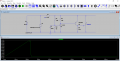
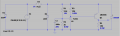
An over-voltage protection that sits in parallel with the rail

Thread Starter

Shamoooot

Joined Apr 3, 2023
62
Hello

I have a PCB I use for testing some electronic circuits that contains several negative and positive power rails, with maximum voltages possible being -20v and 20v. The power supplies sources are LM2673 IC's and the current is limited to around 1A.

I am looking for an over-voltage protection that sits in parallel with the rail (no series FET, fuse, etc..). Because the 5v rail is powering a lot of things on the PCB and the I have the top copper of the PCB connected to it as well.

I connected an SK34 diode cathode to the 5v and anode to ground and it does clamp to 5v against negative shorts with the 5v, but I need a solution against positive overvoltage.
 

BobTPH

Joined Jun 5, 2013
11,463
The only thing you can do across the output is short it and overload the supply. Combined with a fuse, that is called a crowbar circuit.

Why do you think your regulator would suddenly put out a higher voltage?
 

Thread Starter

Shamoooot

Joined Apr 3, 2023
62
The only thing you can do across the output is short it and overload the supply. Combined with a fuse, that is called a crowbar circuit.

Why do you think your regulator would suddenly put out a higher voltage?
The fuse is the issue I was hoping to find a solution around.
And actually no it's not that the regulator might give higher voltage, but due to human error, the 5v rail might accidentally gets shorted to other rails..
 

Thread Starter

Shamoooot

Joined Apr 3, 2023
62
There are crowbar ICs, like the MC3423, which trigger a hefty SCR to short the output to protect sensitive equipment. A fuse would then blow up.
Check figure 4 in the data sheet.
Looks like the IC was discontinued and does require a fuse in series for this application...
 

panic mode

Joined Oct 10, 2011
4,864
Why do you think your regulator would suddenly put out a higher voltage?
regulator would not do that, but various faults can rise regulated rail above specs and cause damage. in one of cases i encountered it was a clumsy tech that dropped live 24V wire. and as Murphy would have it, it managed to get through cooling slots, fan, travel some 60mm deep into enclosure and somehow touch board in a just the right spot... everything fried (CPU, memory, logic gates, transceivers, IO...)

Rev 1.1 - added TVS and made sure to put filter... :rolleyes:
 
Last edited:

panic mode

Joined Oct 10, 2011
4,864
Looks like the IC was discontinued and does require a fuse in series for this application...
fuse is only needed if the protection cannot handle full fault current.it is easy to get SCR that handle high current.
everything has a limit. and you need to know what the fault current is.

we use 24VDC supplies everywhere, usually 10-40A. even the largest ones are only 80A. they all have short circuit protection (either foldback or trip). many 600W TVS will handle 65A but there are larger ones.

solutions that use IC to trigger SCR respond on the order of 1us. TVS responds on the order of 1ps.

https://www.linkedin.com/pulse/tvs-diodes-complete-guide-circuit-protection-amit-pandey-gaqjf
 

panic mode

Joined Oct 10, 2011
4,864
that is something he needs to explore based on risks and overall architecture.
LM2673 may have current limit but if this is powered from something that han supply much larger current... and get in contact with 5V rail, this 1A limit is pointless. and in some cases there may be multiple sources. shunt protection (crowbar, TVS) would protect regardless where the disturbance comes from.
 

Thread Starter

Shamoooot

Joined Apr 3, 2023
62
I would like to thank you guys for your valuable inputs.

I have thought more about it and I have clearer understanding of what is needed.

The sources are supplied from LM2673 regulators with current limited to 1A except for the +5v which has 3A current limit and used to power a microcontroller (VCC: 2.7-5.5V) and different IC's.
All regulators share the same ground.

The over-voltage protection circuit should:
- Protect the 5V rail powered sensitive components.
- Clamp overvoltage at the output to 5V.
- No ground disturbance (in case of no faults) as I am making measurements referenced to ground.
- As low dropout for the +5V as possible between in and out.
- Response should be microseconds-ish.
- The fault could happen continuously, and the circuit will have to dissipate power essentially or blow a fuse or use a resettable fuse.
- Not using tiny QFN packages etc.
 
Last edited:

Thread Starter

Shamoooot

Joined Apr 3, 2023
62
What's the purpose of D1, which wasn't in my circuit (was it)?
This is the diode I mentioned at first:
I connected an SK34 diode cathode to the 5v and anode to ground and it does clamp to 5v against negative shorts with the 5v, but I need a solution against positive overvoltage.

I hope it is ok!.
 

crutschow

Joined Mar 14, 2008
38,316
This is the diode I mentioned at first:
I connected an SK34 diode cathode to the 5v and anode to ground and it does clamp to 5v against negative shorts with the 5v, but I need a solution against positive overvoltage.

I hope it is ok!.
Yes that's fine, but you should put that at the output of the fuse also.
 
Top