i have a 20 LEDs in parallel 4 of which i need to have a delay of about 4 seconds and all the leds need to fade on. any ideas how i can do this. im reading up on electronics at the moment but i find it difficult to find exactly what im looking for
i have a 20 LEDs in parallel 4 of which i need to have a delay of about 4 seconds and all the leds need to fade on. any ideas how i can do this. im reading up on electronics at the moment but i find it difficult to find exactly what im looking for
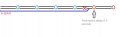
Could you draw and post a small schematic. Hand drawn and cell-phone picture is fine. Nothing fancy. Draw the LEDs that you have and the note which LEDs need to come on and when.
__________ _________ __________ ____________ ___________ _________ || || ___ _____ _____ _____
__________I>_________I> __________I> ___________I> ___________I> _________|| Delay of 2 seconds ||___I> _____I>_____I>_____I>
3V(2AA) || from here on ||
sorry best i can do atm.
very simple i know. i know i could use a 555 for the delay, but i feel as the thats like swatting a fly with a nuke (over kill). there must be a simply way of achieving this. pehaps some sort od capacitor/ transistor combo
__________ _________ __________ ____________ ___________ _________ || || ___ _____ _____ _____
__________I>_________I> __________I> ___________I> ___________I> _________|| Delay of 2 seconds ||___I> _____I>_____I>_____I>
3V(2AA) || from here on ||
sorry best i can do atm.
very simple i know. i know i could use a 555 for the delay, but i feel as the thats like swatting a fly with a nuke (over kill). there must be a simply way of achieving this. pehaps some sort od capacitor/ transistor combo
Could you draw and post a small schematic. Hand drawn and cell-phone picture is fine. Nothing fancy. Draw the LEDs that you have and the note which LEDs need to come on and when.
Is this string of LEDs a commercial product? Can you run one additional wire to the point before where you want the delay to display? The commercial strips have built in current limiting resistors. And they often are wired in a combo of serial and parallel wiring. I have a drawing on my laptop and will attach later.
Is this string of LEDs a commercial product? Can you run one additional wire to the point before where you want the delay to display? The commercial strips have built in current limiting resistors. And they often are wired in a combo of serial and parallel wiring. I have a drawing on my laptop and will attach later.
yeah its a typical commercial product, however iv stripped off the leds for parts (cost effective) so no resistors i suppose. i didn't realize then had them, how would i need to add them. i'v done this before, didn't use resistors and i had no problems? very strange
First, the commercial LED strips are often wired similar (note the caveat) to this:
That is, they are divided into groups of LEDs connected serially with a current limiting resistor in series. These strips often say, "can be cut anywhere, as long as it is cut between groups of three (or four, or five, etc...) Since you disassembled yours for parts, this information can be useful for making your own strip as described.
What I have been trying to say is that you can break your strip at a certain point and run one extra wire. Then, you power your first 16 LEDs normally, through an LED fading circuit. The remaining four have the delay circuit before the fade-in.
I'm not going to describe the fade circuit here, but if you use the forums search function for "LED fade", you will get several good references. In Bill Marsdren's blog, there is an excellent reference, LEDs, 555s, PWM, Flashers, and Light Chasers
If the LEDs are white or blue then 2 AAs will be inadequate to power them without using a DC-DC boost converter.
What initiates the fade sequence?
Is fade out also required?
In post #1 you say 20 LEDs. In post #5 you say 15. Which is it?

 Facebook
 Google
 GitHub
 Linkedin



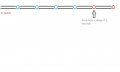
 will mine do or do you want me to moch it up with the new symbols