Alkaline AA Battery Failures in Low Current Application

Thread Starter

jrjbridges

Joined Sep 15, 2025
2
Hello,

I am new to this forum. We have a circuit that uses the following current:
Sleep Mode - 15uA
Standby - 200uA
Operation - 30mA, Max Duty Cycle 1% (10mS every second)

The circuit is powered by 2 AA Alkaline batteries, (Zn/MnO2, data sheet attached). We are experiencing premature failures on about 3% of the batteries.

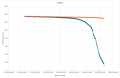
A sample of 10 circuits were modified to measure the voltages on each battery. During the test, the circuit never goes into Sleep mode. The attached graph is an example of a recent battery failure while operating. Only about 12 days worth of data is included in the graph. The initial battery voltages were ~ 1.55V. The problem only occurs one battery. In the example, the voltage on one battery rapidly drops, while the other is fine. The strange thing is, the bad battery started dying at what should be a healthy voltage, ~ 1.25V. No additional current was measured during the event.
After the failure the open circuit voltages were:
Batt1: 1.35V
Batt2: -.75V (Negative)

After the test the 1.35V, (open circuit) battery still works under load, the -0.75 battery does not.

Hardware and firmware problems have largely been ruled out. Ten events very similar to this have been observed over the last four months. Our leading theory is that we have a battery problem or possibly the wrong battery chemistry for our application. Has anyone else experienced this type of issue with primary AA alkaline batteries? Thank you!
 

Attachments

WBahn

Joined Mar 31, 2012
32,760
What is your source of batteries? How old are they? How have they been stored? There are a lot of variables that come into play before you even put the battery into the device.

How many mAh are you getting out of the batteries that failed?

Looks like it started dropping after about 10 days, which would be 240 hours. The data sheet shows about 3000 mAh at 25 mA draw. Using that value, you would reach it at an average current of about 12 mA.

If your test circuit is running at the 1% duty cycle you mentioned, I'd expect the average draw to be around 0.5 mA, so that's well over an order of magnitude less. It sure doesn't seem like you are pushing them very hard.

Unfortunately, the data sheets from battery manufacturers are not really that informative and they don't provide anything like minimum performance specifications.

Sadly, my experience has been that the quality of batteries has dropped dramatically over the last couple decades. I don't know if this is because of cost-cutting measures or reflective of changes driven by things like getting rid of mercury. They don't last as long and how long they last seems erratic, including failures very quickly like you are experiencing. Worse, alkaline batteries (from the sources I typically used, mostly Duracell and Engergizer) never leaked, even if they had been installed for twenty years sitting in a closet. Now leaking is the norm and sometimes from the start (like, within days of installing them).

So, I'm really not surprised by what you are experiencing -- and I don't know of any way to test a battery up front to detect if it's likely to fail quickly.
 

MrChips

Joined Oct 2, 2009
34,700
The only reason I can see for your observations is that you have a batch of new batteries with about 3 in 100 batteries are used or defective batteries that got mixed in with the new ones.

I quick test of the batteries before putting them into service might reveal their health. Measuring the voltage at 1C load (1 or 2 Ω) should give an indication of the health of the battery, i.e. the internal resistance of the battery.
 

WBahn

Joined Mar 31, 2012
32,760
The only reason I can see for your observations is that you have a batch of new batteries with about 3 in 100 batteries are used or defective batteries that got mixed in with the new ones.

I quick test of the batteries before putting them into service might reveal their health. Measuring the voltage at 1C load (1 or 2 Ω) should give an indication of the health of the battery, i.e. the internal resistance of the battery.
And each second of the test will reduce battery life by about an hour or so in the application. May be tolerable, but needs to be considered.
 

MrChips

Joined Oct 2, 2009
34,700
And each second of the test will reduce battery life by about an hour or so in the application. May be tolerable, but needs to be considered.
So the 1-second test reduces the operational life from 240 hours to 239 hours?
Or are we talking 1 hour less than 3000 hours at 30 mA at 1% duty cycle?
 

nsaspook

Joined Aug 27, 2009
16,273
...
Sadly, my experience has been that the quality of batteries has dropped dramatically over the last couple decades. I don't know if this is because of cost-cutting measures or reflective of changes driven by things like getting rid of mercury. They don't last as long and how long they last seems erratic, including failures very quickly like you are experiencing. Worse, alkaline batteries (from the sources I typically used, mostly Duracell and Engergizer) never leaked, even if they had been installed for twenty years sitting in a closet. Now leaking is the norm and sometimes from the start (like, within days of installing them).
...
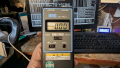
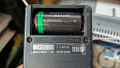
The quality is almost gone. Found this while looking for something else in the junk box.
1768856996669.png
1768857034083.png
 

MisterBill2

Joined Jan 23, 2018
27,318
If the problem is not a quantity of defective batteries, and if the battery failure is always in the same position in the battery holder, I would suspect either a mechanical problem such as excessive clamp force, or some unintended electrical connection that effects the power drawn from one cell more than the other. That used to happen on rare occasions in the very early transistor radios that used a string of AA cell batteries, as well as at least one much later "Boom Box" that used a quantity of "D" cell batteries. Corrosion products had formed a leakage path dicharging part of the string even with power off. A serious cleaning fixed the friend's problem.
 
Top